Assignment 3 – Idea and Method
Summer has nearly gone and it feels like I’ve sat on my hands for 6 weeks. I can’t work out if I’ve spent too long mulling stuff over in my head or too little time actually bloody doing. Indecisive indeed.
I have taken a risk or at least it seems like it to me anyway. The images I decided on that have taken about a month to put together and are unlike anything I would even consider shooting previously. In a past life I would look at the likes of Martin Parr or William Eggleston with nothing but a shrug but as I started photographing for this series I found myself more and more drawn to their work. Partly I suspect because shooting ‘decisive moments’ was not really an option I wanted to consider – hanging around Cambridge or another local town is not the same as it was – there is less interaction, it feels quiet and weird and frankly, I didn’t want to be there.
I had thought about taking ‘decisive’ images or perhaps rather ‘important’ images from a person’s past and putting them in new indecisive images of them (e.g. A wedding picture in an image of sitting down to dinner, or a newborn baby image next to an older couple sitting). I wasn’t sure this really fit the brief properly but may come back to it later.
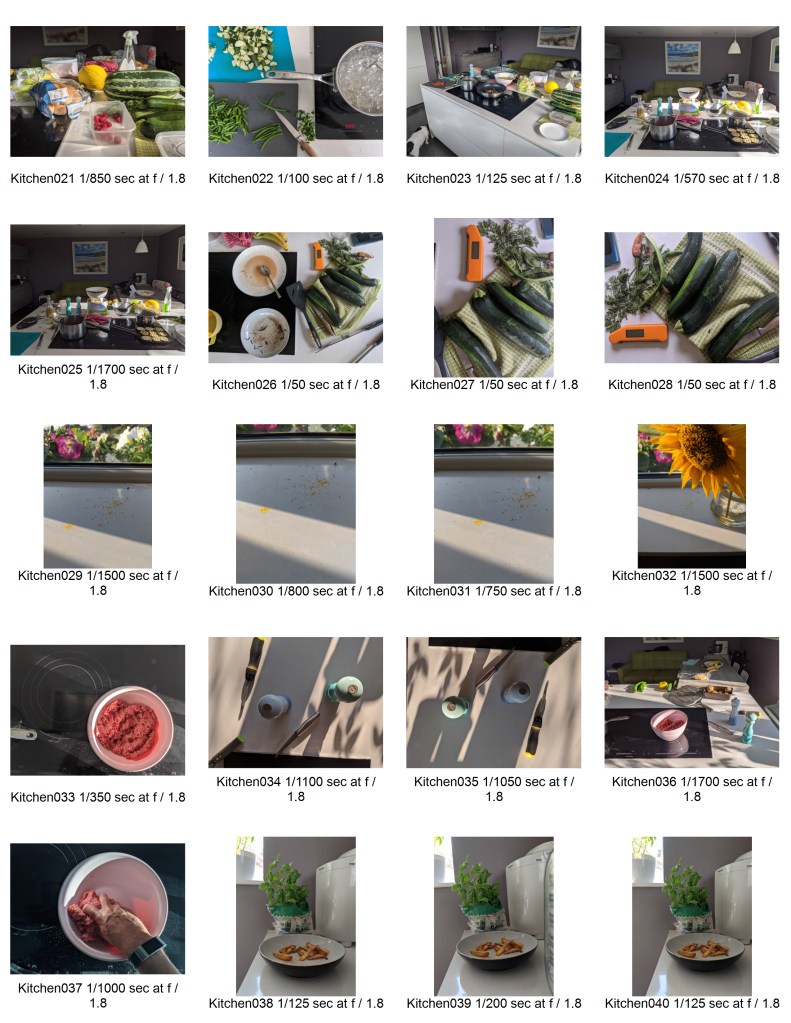
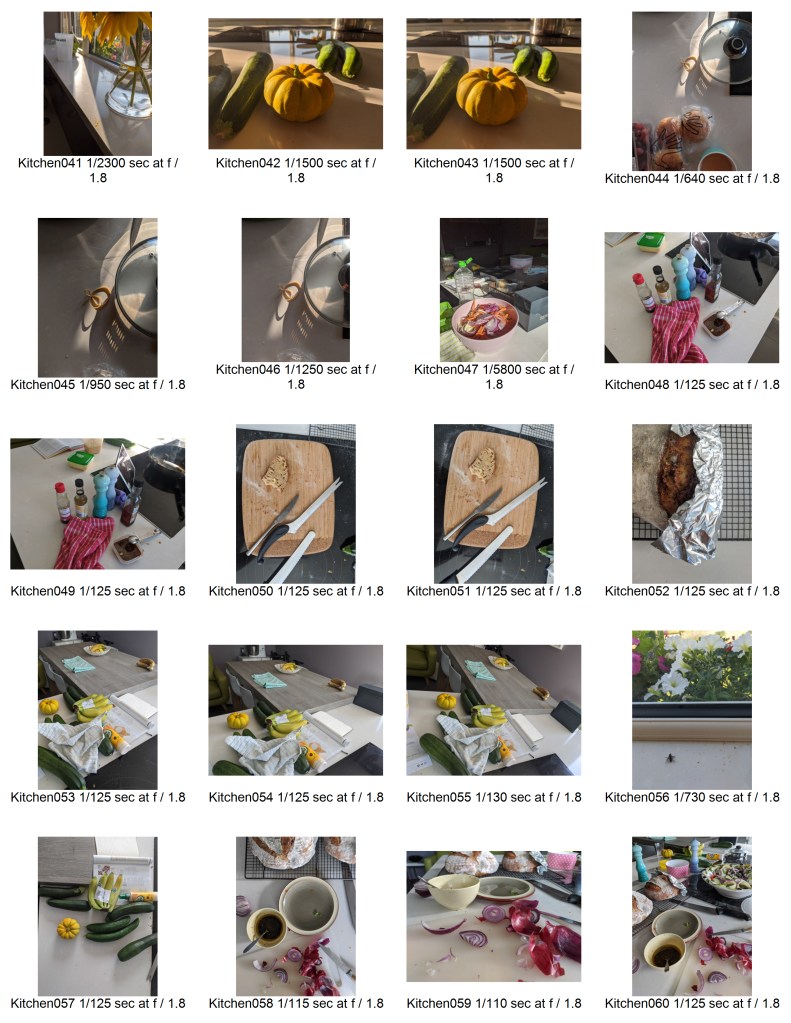
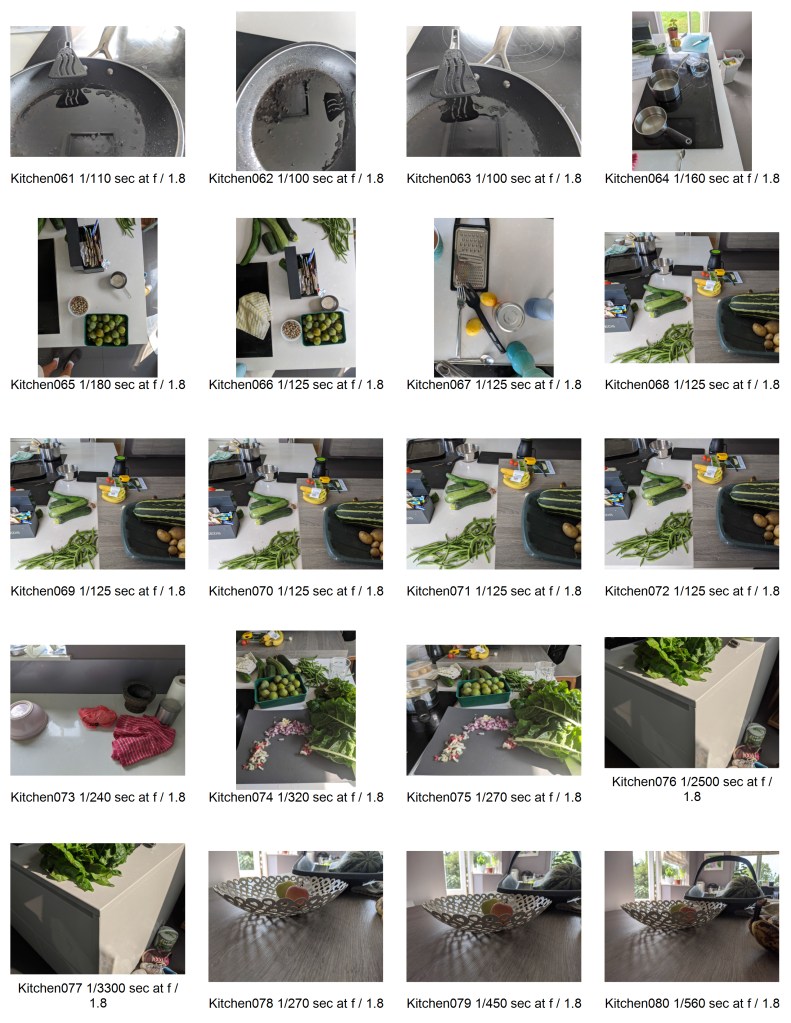
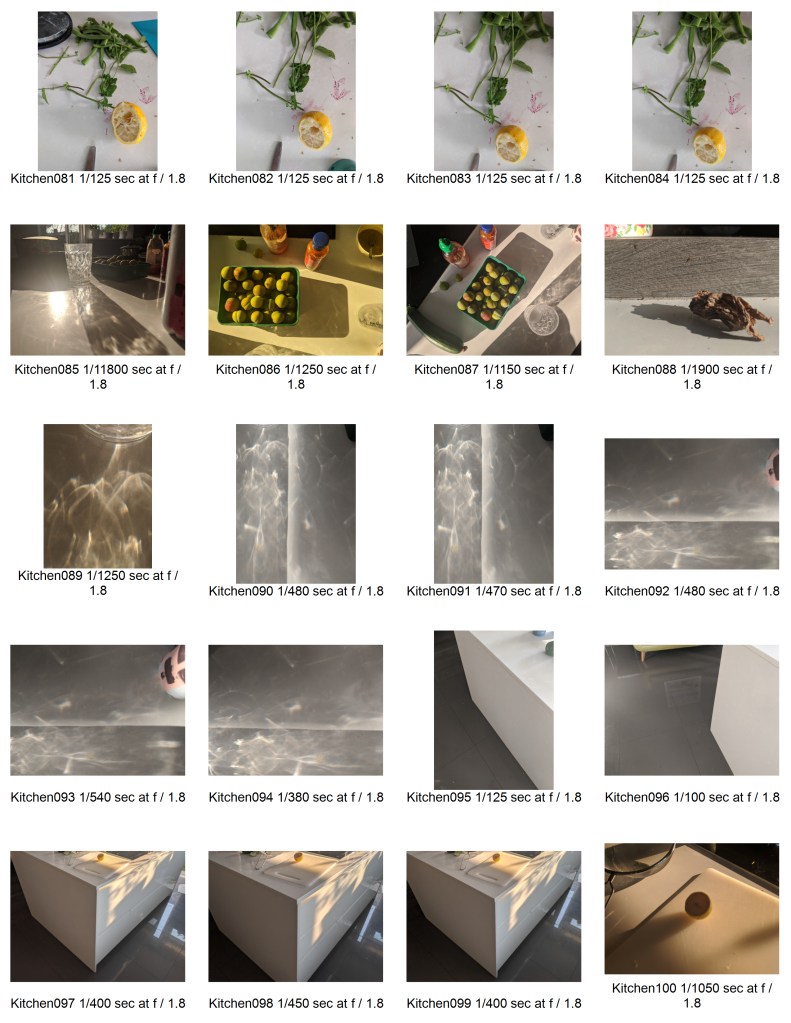
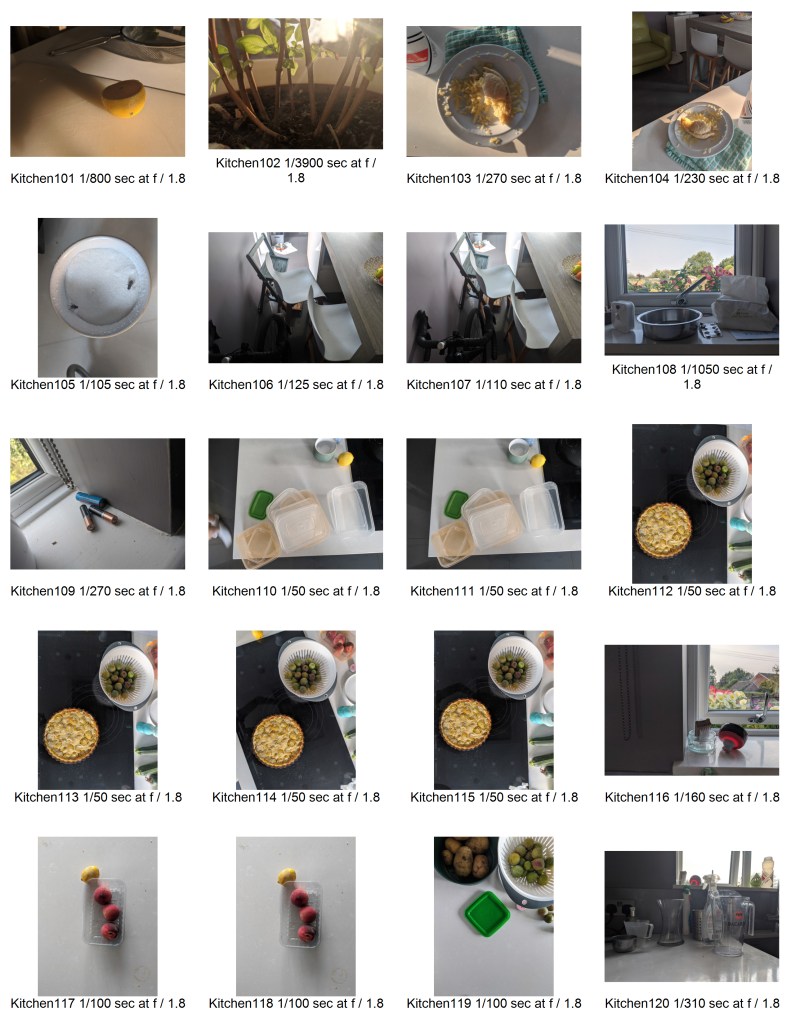
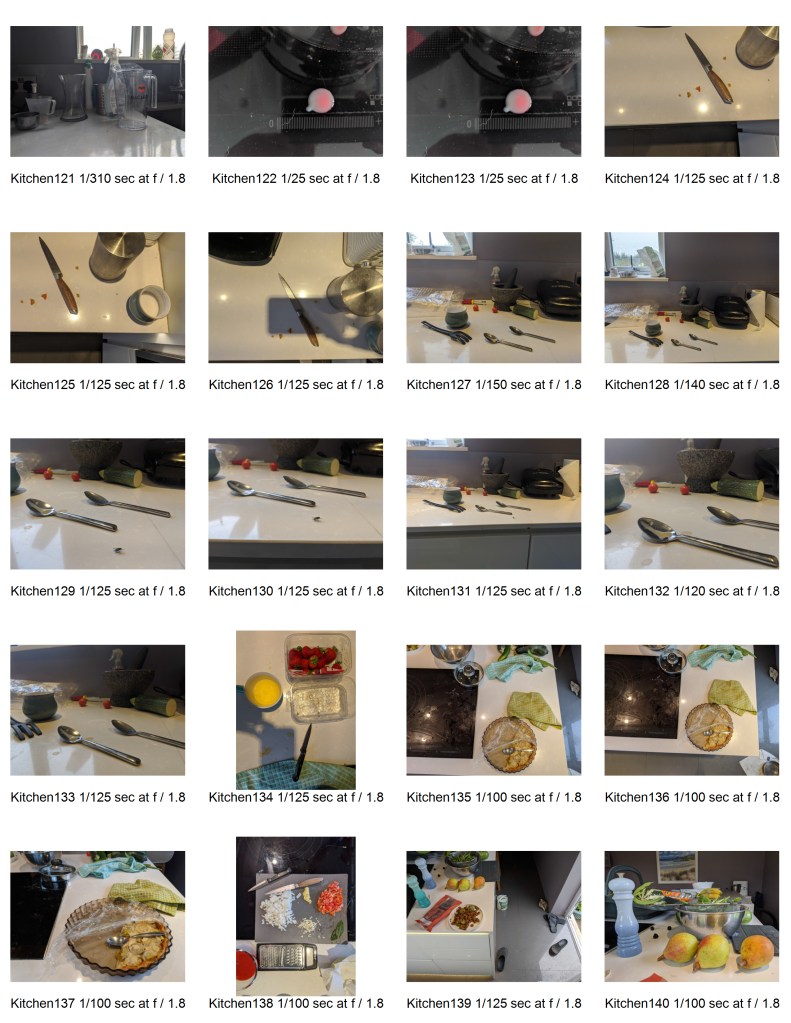
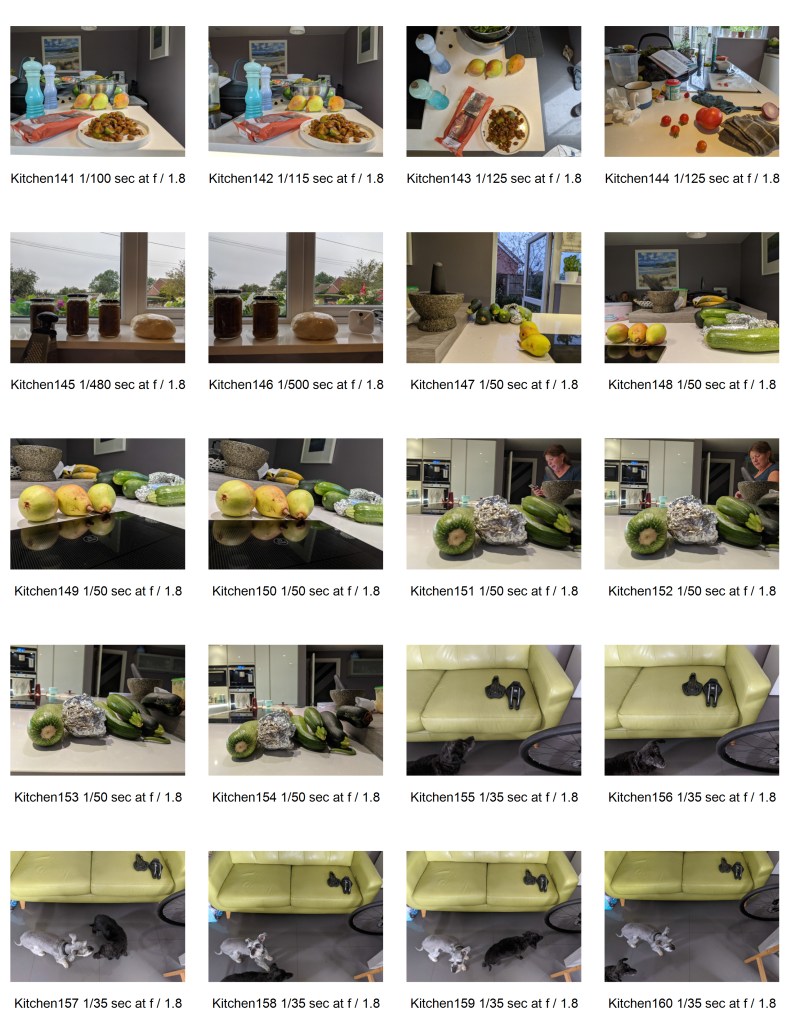
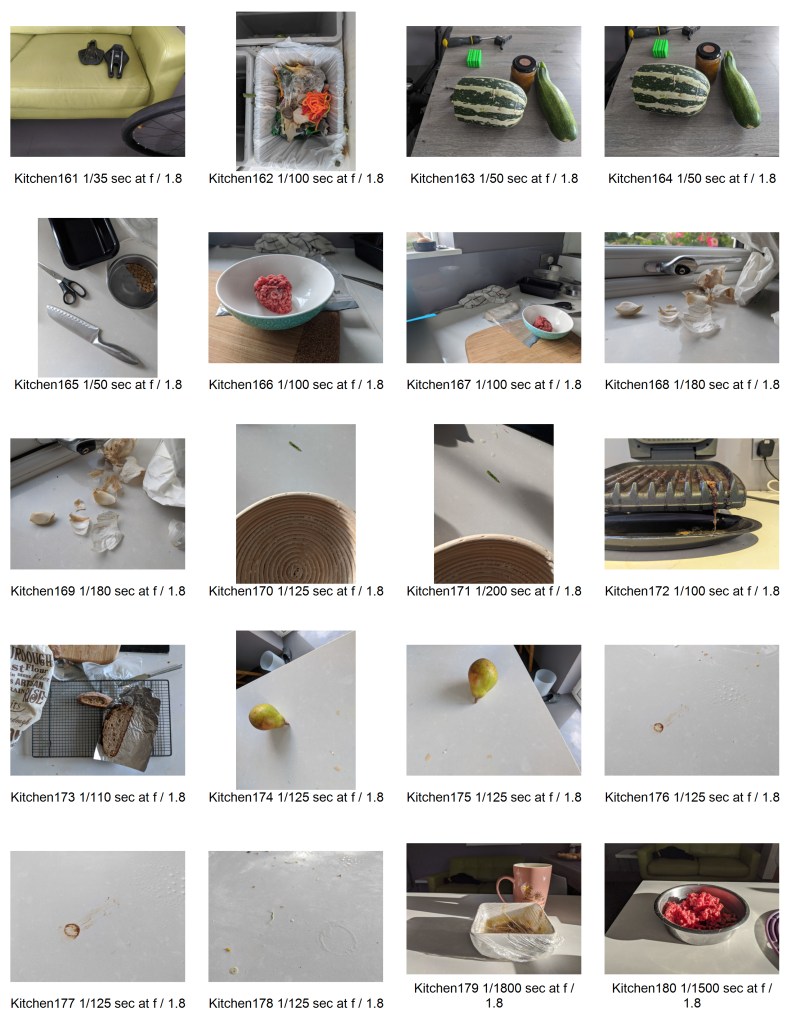
Anyway whilst still mulling things over I was preparing a meal in the kitchen and suddenly stopped what I was doing as I became visually aware and saw past the mundane task I was performing to the shapes in front of me. I grabbed my phone and took an image – hmmm. This might be something. Over the next few days at random times whilst working in the kitchen I would stop and look properly if something caught my eye or if a pattern emerged in front of me I’d repeat the process. Sometimes it would be nothing. Other times a composition might form and the result would be more pleasing. The more I did this the more I found myself seeing connections. Within a couple of weeks these compositions would jump out at me as soon as I walked into the kitchen – every time I did this I took a picture. It didn’t matter what the subject was, or even if it worked – I was seeing. It started to become an almost heightened sense or perhaps more likely a subconscious learning and recognition of patterns that would just jolt me into seeing beyond the task I was performing and look at what was in front of me. Sometimes I would take more than one image if the first didn’t do justice to what I thought I had seen, maybe changing the angle or looking for another way of seeing the subject – this rarely worked out well, the majority of the images selected for the assignment were one off shots. It was almost as if by chasing after it the image would disappear.
I knew at this point that the pictures would form assignment 3 but I was concerned about the process – I thought that perhaps I should have my slr handy in the kitchen to take the images rather than my phone. I decided against it because realistically it would have interrupted the immediacy of the moment, plus the camera would not have been to hand (or if it was left in the kitchen chances are it would end up damaged with liquids or being moved out of the way constantly). I thought too that choosing the same time each day might make for a better series – or perhaps at least alter the light between shots as in many of Nigel Shafran’s washing up images where you can see big differences between daylight and harsh fluorescent lighting in some shots. Neither of these ideas were implemented purely because I wanted to make it be about what triggered the response to shoot rather than arbitrary things like a set time.
It was also at this point that I started questioning the nature of these shots which I had initially assumed where indecisive moments. Were they though? The more I thought about it the more I realised that actually some of them were probably far closer to decisive moments – sure they didn’t contain people and there was no ‘luck’ in timing but I also knew that by putting the knife down and picking up my phone I was capturing a fleeting moment of transition that would be otherwise gone. Forgotten and unseen.
For most of the images I took it was almost always a top down view – this is because most of the time I was looking at what I was doing down in front of me – somehow these compositions were more pleasing. Only on a handful of occasions did it seem to work from other angles and I think that’s due to the way we interact in a kitchen. For the most part you don’t move through a kitchen, you move to a spot where you work from and then you tend to stay there, moving things around you.
Research Note:
I covered the required research in a previous post here but I want to mention other photographers that had a more direct influence or helped reaffirm my choice.
Nigel Shafran has already been covered in that post but I mention him again because I think he was perhaps most influential to me at the outset. I still don’t know if I actually like his ‘Washing Up’ series but that is probably besides the point. I’m glad Robert introduced us to him on a Meetup because it opened my eyes to other possibilities.
After I’d take a couple of dozen images I started to crave some kind of confirmation that what I was doing wasn’t a dumb idea. For some kind of piece of mind I began looking for other photographic work of everyday and banal. The most obvious was William Eggleston – the only image of his I was familiar with was this one.
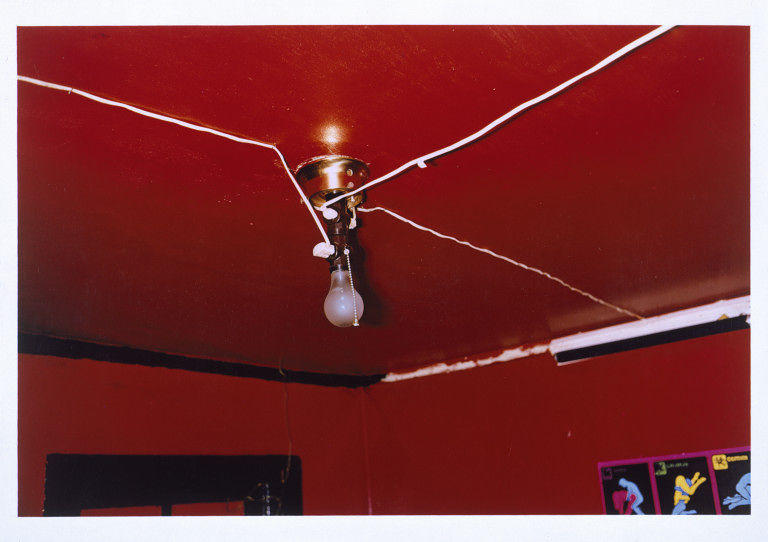
Having now looked further into his work I now have a much deeper appreciation not only for his pioneering use of colour but also his aesthetic of the everyday. As he has said himself, he photographs ‘life, today’. In an article in ArtReview in 2019 he says you need to ‘decipher’ his images ‘study each one intently’ because ‘to view them on the surface is like considering them snapshots, which they are not‘ (Eggleston, 2019)
Deciphering seems too bold a word but I can understand that by studying an image intently you will begin to see things about it, around it, in it. You can’t do that as part of your everyday life. Your brain isn’t wired to stop and consider everything as an image – it deals with a moving world and your brains first instinct is to work out how to maneuver in it whilst keeping you safe. In doing so it’s endlessly processing this temporary data just long enough to ensure that your next step is in the right place. In contrast, slowing down and looking at these everyday elements of life for a minute or two can be enlightening – you discover patterns, colour, geometry, beauty that are otherwise ignored – in that way perhaps it is a kind of deciphering after all – BUT only if you look for long enough.
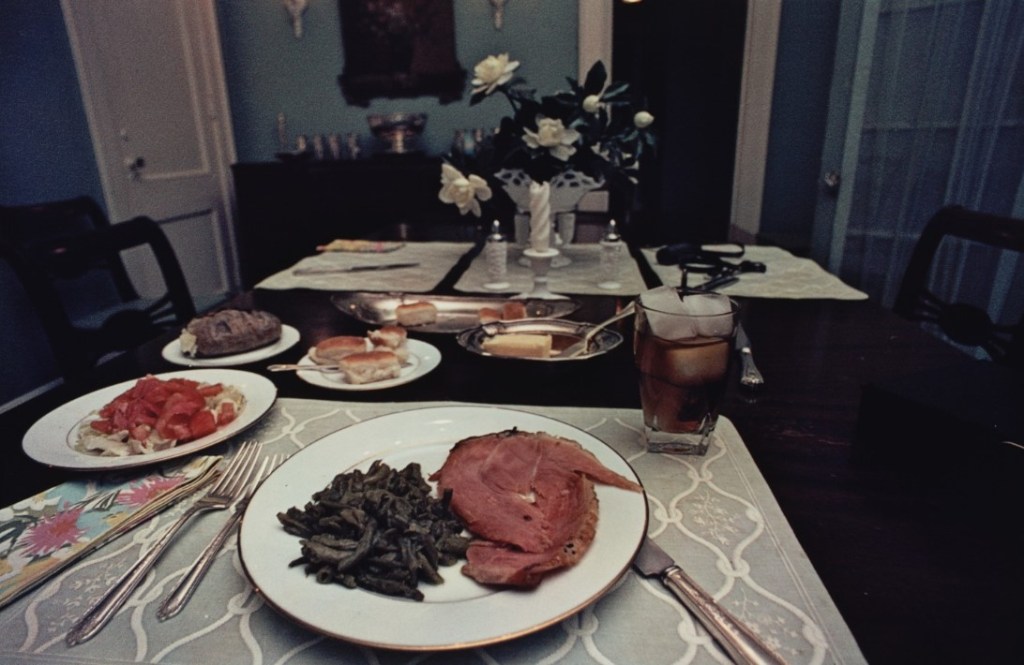
Martin Parr was another photographer that a year ago I would have shrugged my shoulders at. It’s another slice of the everyday but with an obvious british slant. I started this course mostly admiring ‘traditionally’ beautiful photography and so it has taken me awhile to come to enjoy and start to love other forms of photography and especially what I would consider the antithesis of that in Eggleston and Parr. There is a stronger connection to Parr for me because of the quintessential englishness of much of his work. Such as this example..
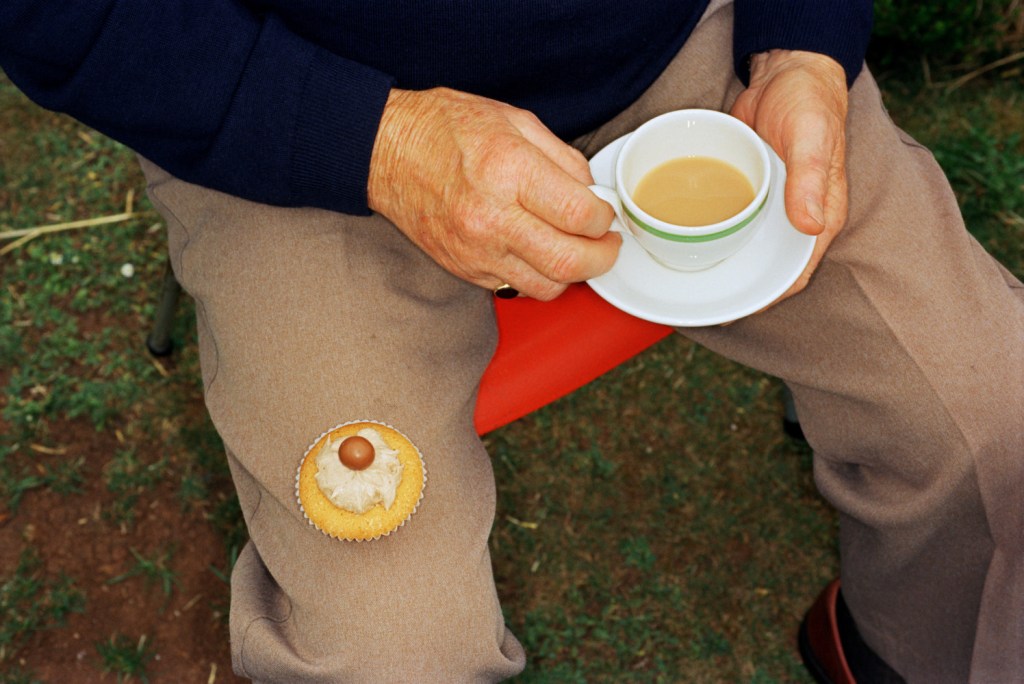
Completely ordinary BUT the way the cup and cake are framed, the bright red on the chair connecting them on a diagonal through the image into the corners. An older pair of hands. It conjures up the genuine warmth of an image of a village fete far more than an actual long shot of a fete would! It’s a lovely cliche the tea and cake. It’s who we are.
A younger photographer following on from the artists mentioned above (I should also add Stephen Shore and Lee Friedlander but I could probably reference them for everything) is Piero Percoco. He has been posting mainly on instagram for 8 years or so but I only saw his work for the first time whilst researching this Assignment. His use of colour is fantastic – there is a little bit of showiness about some of the more banal images but it works.
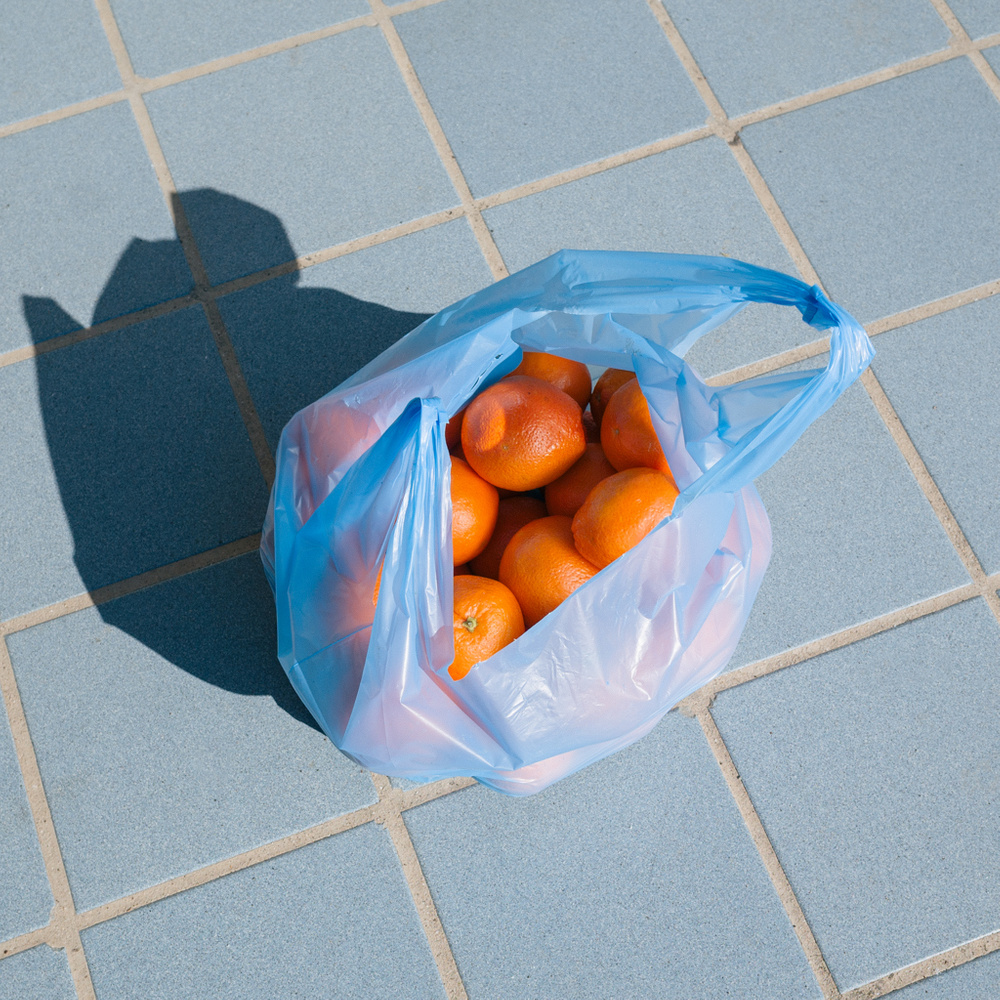
There is without a doubt beauty in this image. The colours, the textures; there is chaos and order with the plastic bag and the geometric lines and the shadow adds depth and gives a sense of place.
Selection Process
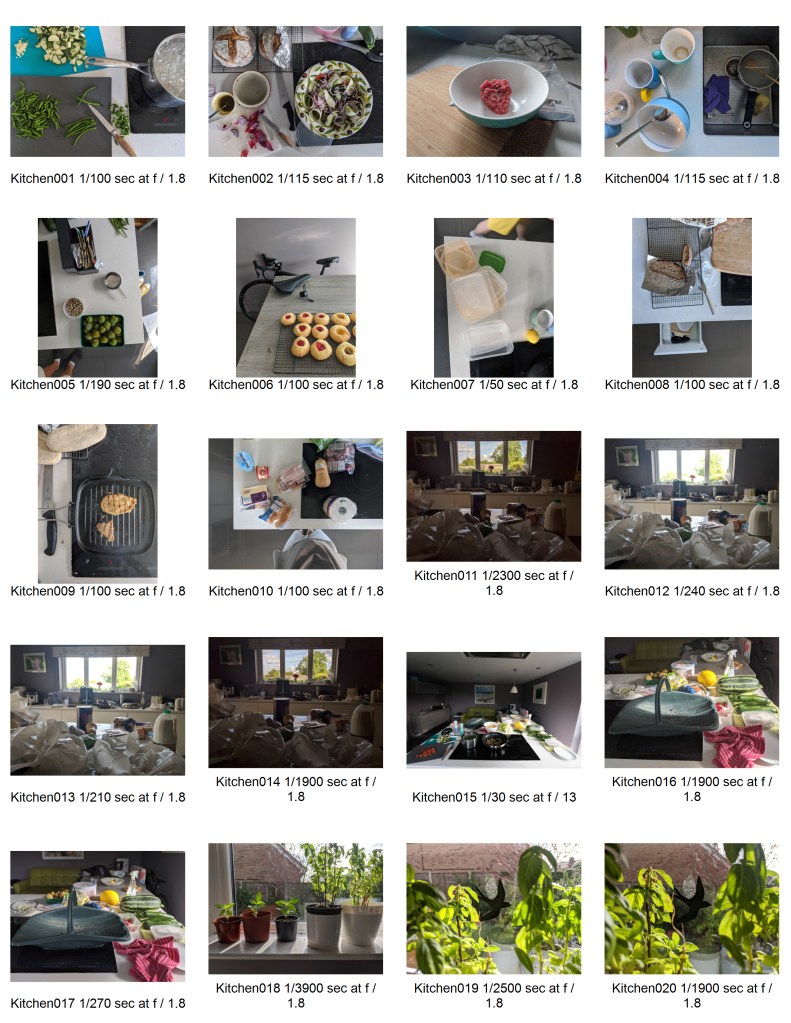
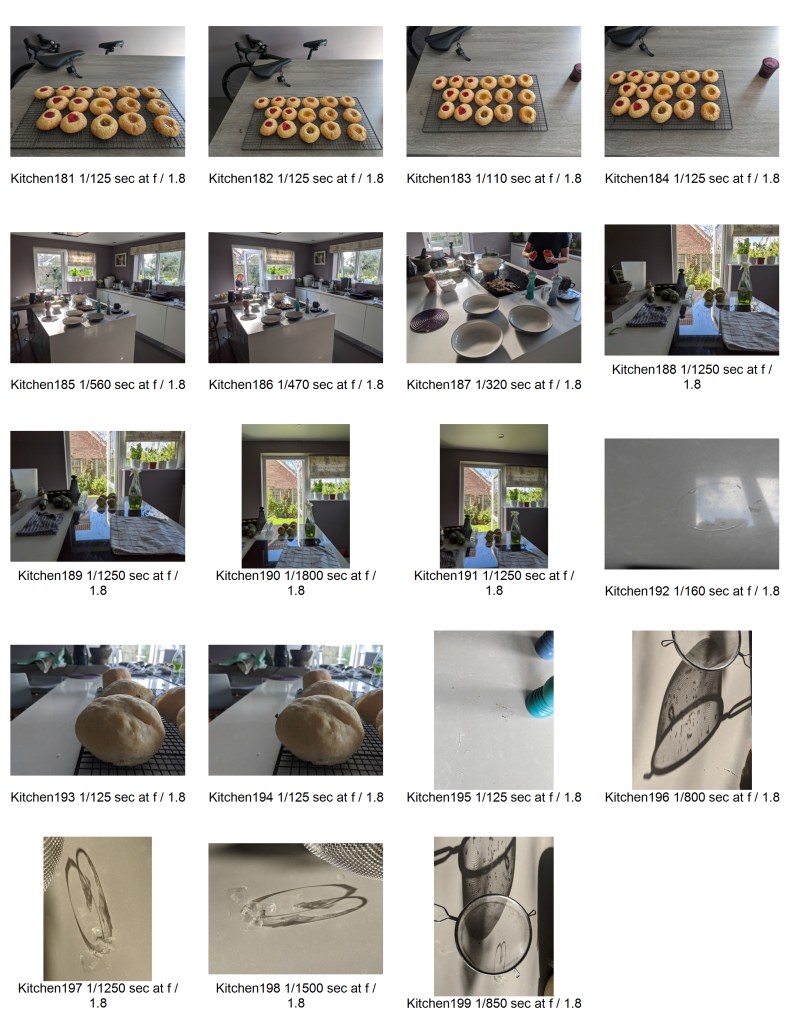
I took around 200 images for the assignment over a 4 week period. All images were uploaded to Lightroom as jpg’s.
I whittled the initial list down quite quickly to 50 that were all given 4 stars and then from there I selected an initial list of 10 5 star shots that I printed off and blu tacked to a wall to live with for a while. I also tried putting the images on my TV to see if that made a difference to how I felt about them.
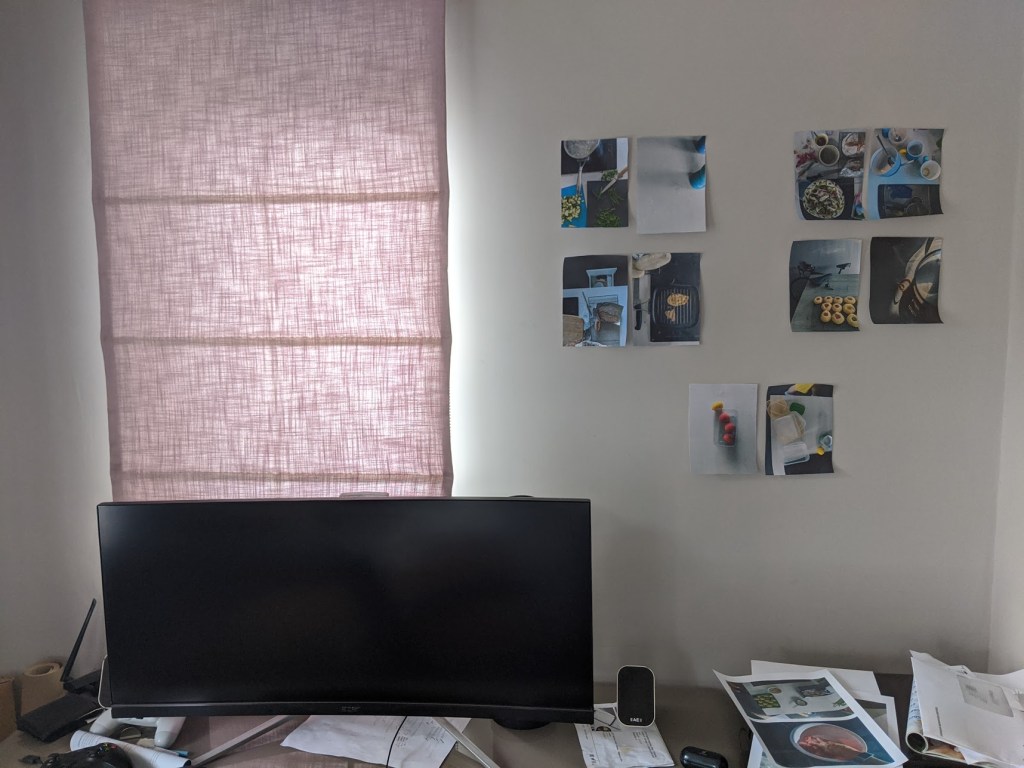
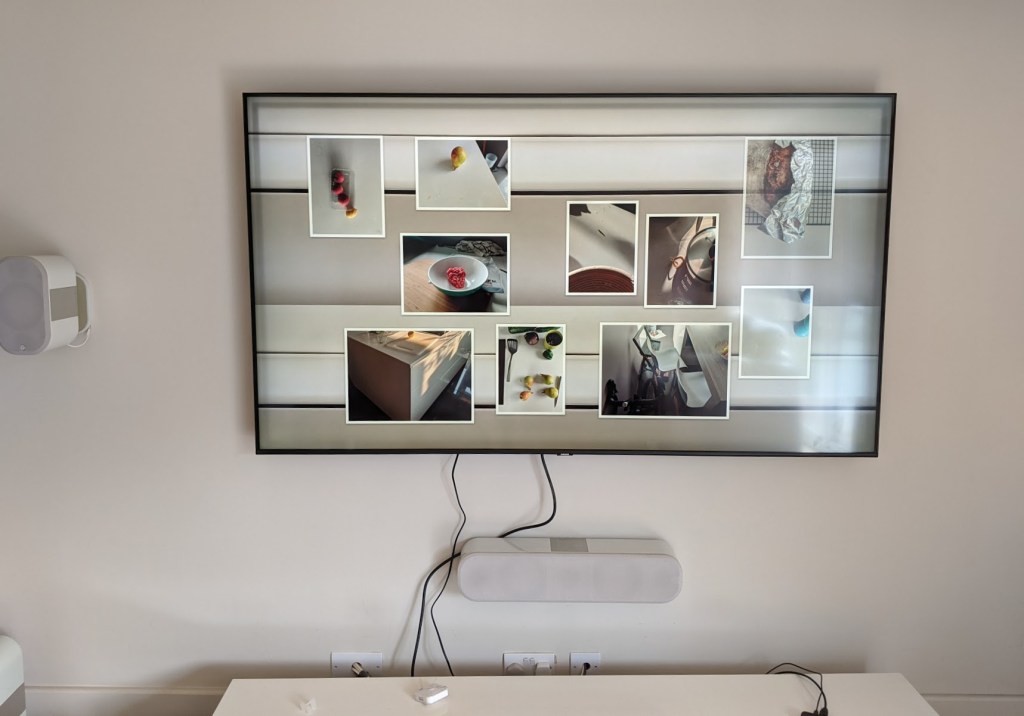
Maybe the quality of the prints was too poor as I rarely found myself studying them or maybe and perhaps more likely I should have placed them around the house so that I would look at them more often with a different frame of mind and different light. A good note for next time – or maybe I invest in a decent printer as well. The display on the TV was a bit too gimmicky but it did make some images pop more than others which was interesting if nothing else. Back to lightroom…
I reviewed my images again and this time got them down to around 14 which I found myself scrutinising more than the others. I began to look past the initial reasons for being selected which may have been the look alone and wanted more from each one to be considered a final pick. At was at this point that I jiggled images around the most – moving some between 4 and 5 stars multiple times. I also began to consider how I should present them – landscape / portrait or a mix? If I was constrained by one format then I would lose one or two images that had been in from the beginning and also I’d potentially have to ‘cheat’ by altering how they were shot. I began spinning the images within lightroom and although a couple of the images worked ok to fit in with landscape instead of portrait (or vice versa) I decided I should leave it as they were and pick accordingly to what I wanted to show and that best defined my interpretation of the brief. A mix of landscape and portrait was finalised.
Getting back to the final selection I ended up with 10 images I felt happy with. As with most editing though there are still a few I could change my mind about every time I look.
Editing Process
Normally I edit everything I like, without even thinking about it. If I like it and it looks better with edits I’ll do them. Most images do look better to be honest. With these I was actually torn as to what to do. My images are of everyday things – do I want to make them something other than they already are? Do I want to draw attention to what I want you to see? Should I leave them alone and make the viewer make their own mind up?
My submission is of the JPGs untouched and uncropped – it felt the right thing to do. I did do some brief experiments on a couple of images and although I really liked one of the edits I decided it should stand on its own. It’s my intention to spend some time editing the picks and show them side by side on a different blog post just for comparison.
I had wanted to create an online gallery for the images but during some small amount of research I decided against the idea as they are quite cumbersome and difficult to maneuver and I found it distracting.
During the process of uploading the images onto wordpress I began tinkering with the image size. I like to ensure that each photo can be looked at individually at full size by clicking on it – the images need to bear up to scrutiny so yes, you uploaded an image with 4k dimensions – but if you are displaying that image to fit neatly on the display amongst text or other images it will NOT be full resolution and therefore it’s critical for me that the image is ‘clickable’ to see the full image. It was at this stage of uploading and checking that I discovered that one of the images I had picked was actually too blurred in the background to use – this one….
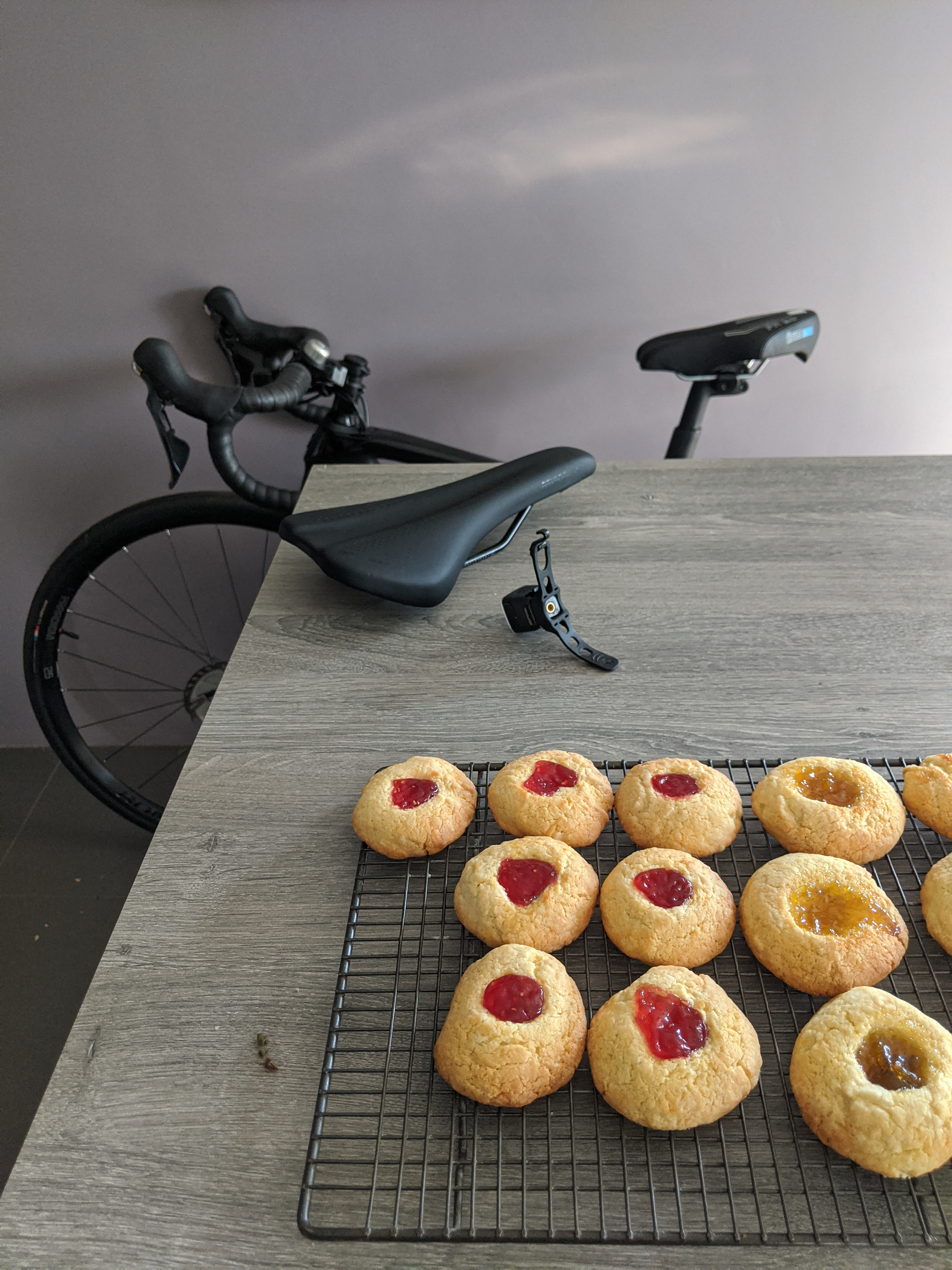
I won’t bore you with why I chose it and you may think when viewed like this it looks sharp or at least sharp enough. It’s not. Unfortunately the bike is blurred and viewing at a big size shows this and detracts from the image causing it to fall apart. Quality control is very important!!
Contact Sheets
References
All of the references for this assignment are listed below.
Editorial @ ASX (2009) Paul Graham – ‘Photography is Easy, Photography is Difficult’ (2009). At: https://americansuburbx.com/2009/07/theory-paul-graham-photography-is-easy.html (Accessed 18/07/2020).
Eggleston Art Foundation (s.d.) At: http://egglestonartfoundation.org/ (Accessed 05/08/2020).
Elliot Erwitt • Photographer Profile • Magnum Photos (s.d.) At: https://www.magnumphotos.com/photographer/elliott-erwitt/ (Accessed 14/08/2020).
a Handful of Dust – David Campany (2020) At: https://davidcampany.com/a-handful-of-dust/ (Accessed 14/08/2020).
a Handful of Dust (Second Edition) David Campany (s.d.) At: https://mackbooks.co.uk/products/a-handful-of-dust-second-edition-br-david-campany (Accessed 14/08/2020).
Imagine… The Colourful Mr Eggleston · BoB (s.d.) At: https://learningonscreen.ac.uk/ondemand/index.php/prog/01086106?bcast=32890003&sub=decisive (Accessed 05/08/2020).
Interview with Paul Elliman, Fig-1 : Nigel Shafran (s.d.) At: http://nigelshafran.com/interview-with-paul-elliman-fig-1/ (Accessed 14/08/2020).
Joel Meyerowitz (s.d.) At: https://www.joelmeyerowitz.com/ (Accessed 14/08/2020).
John Hillman (2020) The Indecisive Moment | lectures #01. At: https://www.youtube.com/watch?v=6zC1mxbYvO8 (Accessed 29/07/2020).
Julie Blackmon (s.d.) At: https://www.artsy.net/artwork/julie-blackmon-new-chair-2 (Accessed 10/09/2020).
Nigel Shafran (s.d.) At: http://nigelshafran.com/ (Accessed 14/08/2020).
Smyth, D. (2018) Everyday beauty with Nigel Shafran. At: https://www.bjp-online.com/2018/05/shafraninterview/ (Accessed 14/08/2020).
Stephen Shore. Gallatin County, Montana, August 2, 1983. 1983 | MoMA (s.d.) At: https://www.moma.org/audio/playlist/45/710 (Accessed 25/07/2020).
The (In)decisive Moment (s.d.) At: https://www.photopedagogy.com/the-indecisive-moment.html (Accessed 14/08/2020).
unobtainium photobooks (2020) Veramente by Guido Guidi. At: https://www.youtube.com/watch?v=8fimiDs_TdQ (Accessed 14/08/2020).
Warner, M. (2019) Q&A: Piero Percoco’s The Rainbow is Underestimated. At: https://www.bjp-online.com/2019/02/qa-piero-percoco-rainbow/ (Accessed 10/09/2020).
Cartier-Bresson, H. (1952) ‘The Decisive Moment’ At: https://static1.squarespace.com/static/54c6a9dde4b0908825a17018/t/5d6699c500e94f00014f3655/1567005194085/cartierbresson_the-decisive-moment.pdf
Cocker, J. (2020) The Colourful Mr Eggleston. At: https://vimeo.com/443211582 (Accessed 24/09/2020).
decisive moments (s.d.) At: http://zouhairghazzal.com/photos/aleppo/cartier-bresson.htm (Accessed 16/07/2020).
Exhibition unearths Nick Waplington’s long thought destroyed ‘Living Room’ prints (s.d.) At: https://www.juxtapoz.com/news/photography/exhibition-unearths-nick-waplington-s-long-thought-destroyed-living-room-prints/ (Accessed 18/09/2020).
Higgins, C. (2018) ‘Guido Guidi: ‘Many times I’m not looking when I press the shutter’’ In: The Guardian 05/11/2018 At: http://www.theguardian.com/artanddesign/2018/nov/05/guido-guidi-interview-photographs-suburban-italy (Accessed 18/09/2020).
Jörg Colberg (2012) Presenting The Present by Paul Graham. At: https://www.youtube.com/watch?v=_iw2zDsXQDc (Accessed 16/07/2020).
Jörg Colberg (2020) Rinko Kawauchi – Light and Shadow. At: https://www.youtube.com/watch?v=1yOs1Z3gDyc (Accessed 16/07/2020).
Julie Blackmon – 259 Artworks, Bio & Shows on Artsy (s.d.) At: https://www.artsy.net/artist/julie-blackmon (Accessed 18/09/2020).
Lee Friedlander (s.d.) At: https://fraenkelgallery.com/artists/lee-friedlander (Accessed 18/09/2020).
Les Rencontres de la photographie, Arles (2018) Interview Paul Graham. At: https://www.youtube.com/watch?v=IQTXoDHJAik (Accessed 16/07/2020).
Looking at Pictures with William Eggleston (s.d.) At: https://artreview.com/ar-may-2019-feature-william-eggleston/ (Accessed 24/09/2020).
Nick Waplington – Living Room, Aperture, 1991, New York – josef chladek (s.d.) At: https://josefchladek.com/book/nick_waplington_-_living_room (Accessed 18/09/2020).
O’Byrne, R. (2014) H. Cartier-Bresson: l’amour tout court. At: https://vimeo.com/106009378 (Accessed 15/07/2020).
Photo Tom (2020) Henri Cartier Bresson The decisive Moment. At: https://www.youtube.com/watch?v=GdgoFosUoYo (Accessed 16/07/2020).
photo-eye Book Reviews: The Present (s.d.) At: https://blog.photoeye.com/2012/05/photo-eye-book-reviews-present.html (Accessed 18/09/2020).
The Art of Photography (2012) The Decisive Moment – Part 1. At: https://www.youtube.com/watch?v=738yxmYqhxE (Accessed 16/07/2020).
Warner, M. (2020) Evidence of Work: An emotional journey into Piero Percoco’s imagination. At: https://www.bjp-online.com/2020/04/evidence-of-work-piero-percoco/ (Accessed 24/09/2020).
Man Ray: Rayographs & Solarizations (2014) At: https://www.inthein-between.com/man-ray-before-digital/ (Accessed 30/09/2020).
William Eggleston. Sumner, Mississippi. c. 1972 (s.d.) At: https://www.moma.org/collection/works/50158 (Accessed 18/01/2021).
Martin Parr’s Real Food • Magnum Photos (2016) At: https://www.magnumphotos.com/arts-culture/society-arts-culture/martin-parrs-real-food/ (Accessed 18/01/2021).
 Lee Abbey OCA Photography Degree
One thought on “Decision Time”