I have ended up with a far more intimate set of images than I expected. The look and feel of them came together in a morning after I had already spent a week trying to put together a completely different assignment.
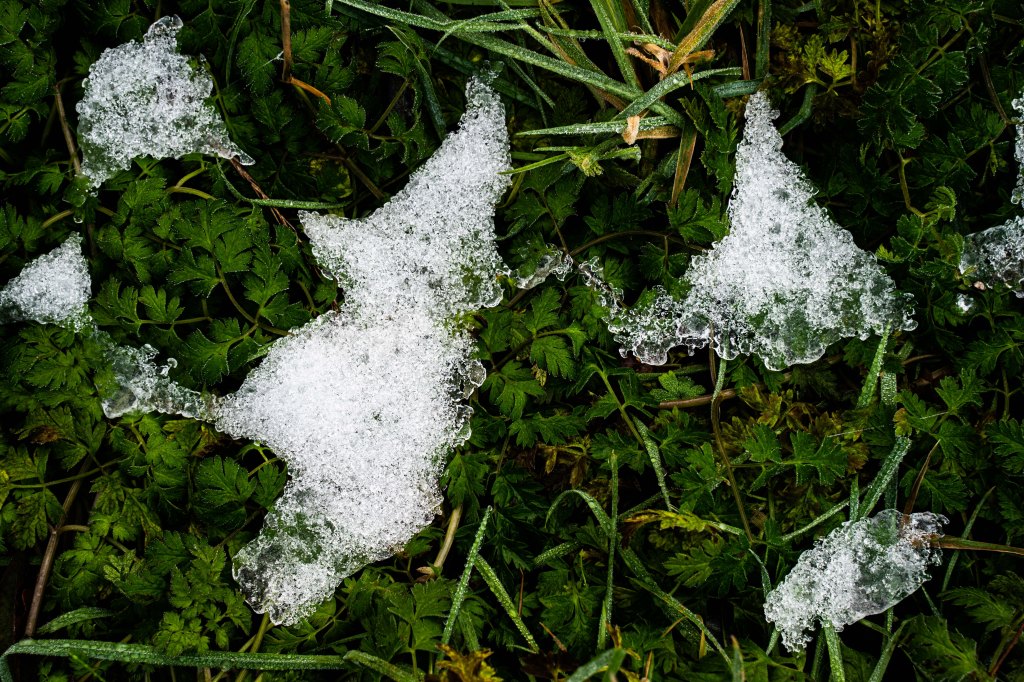
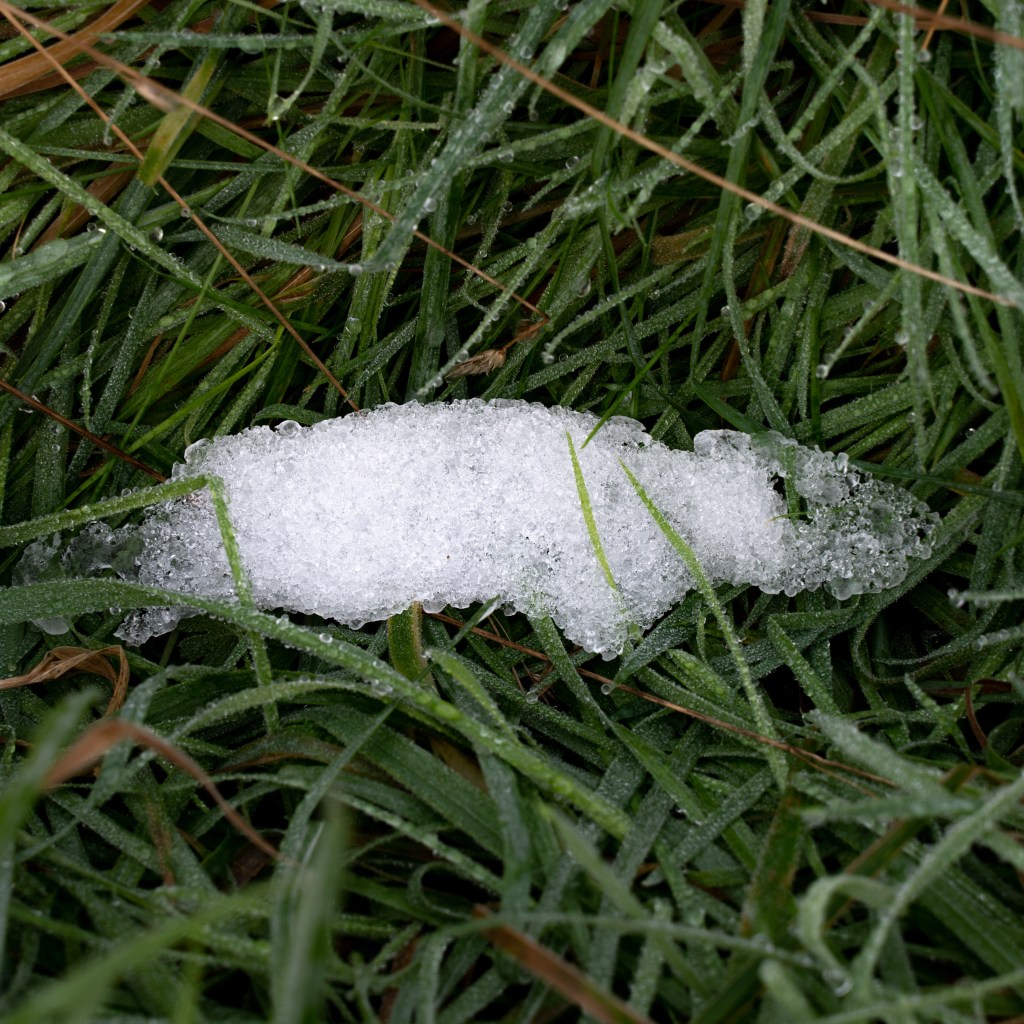
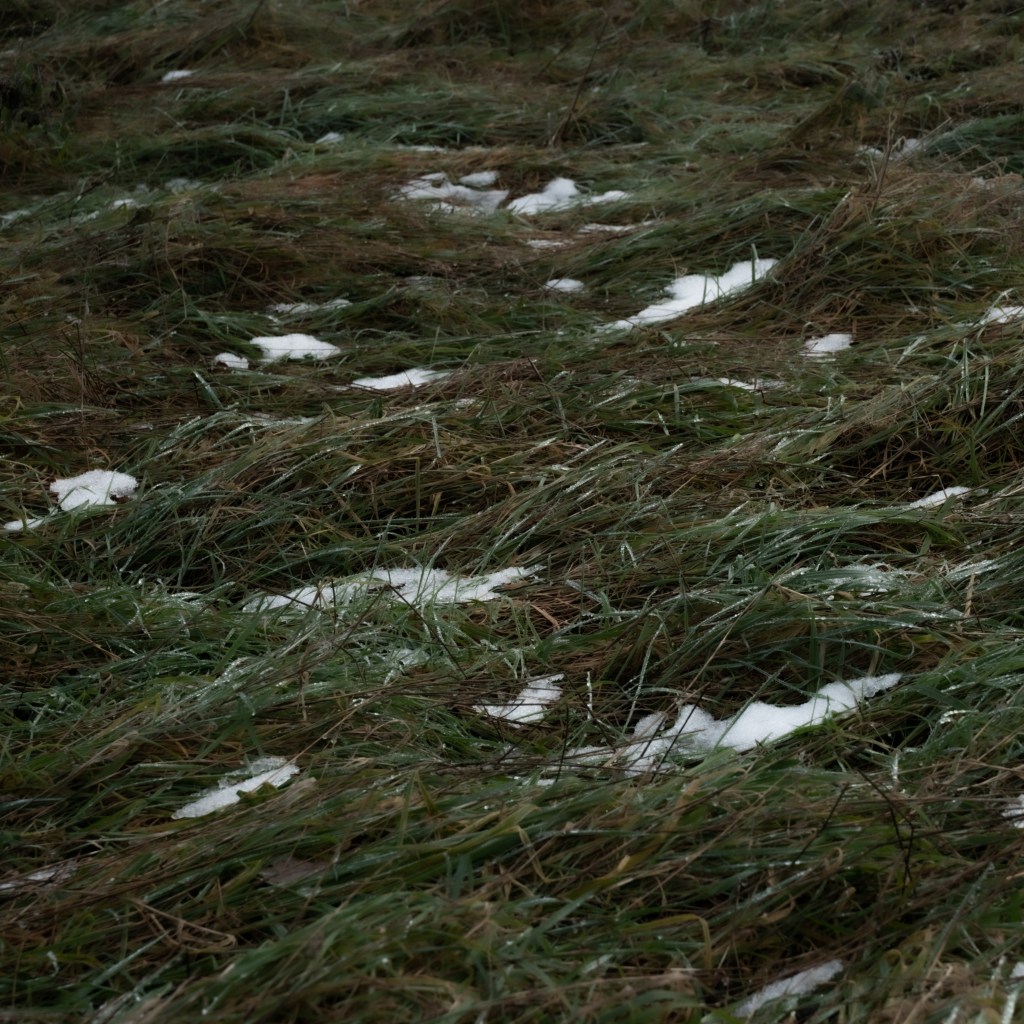
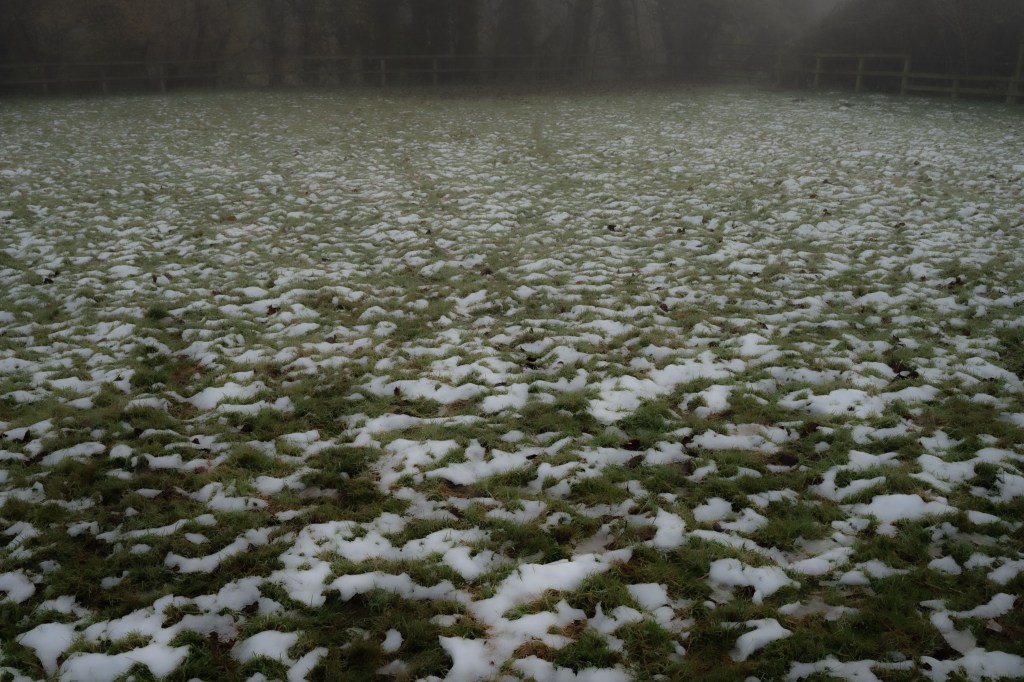
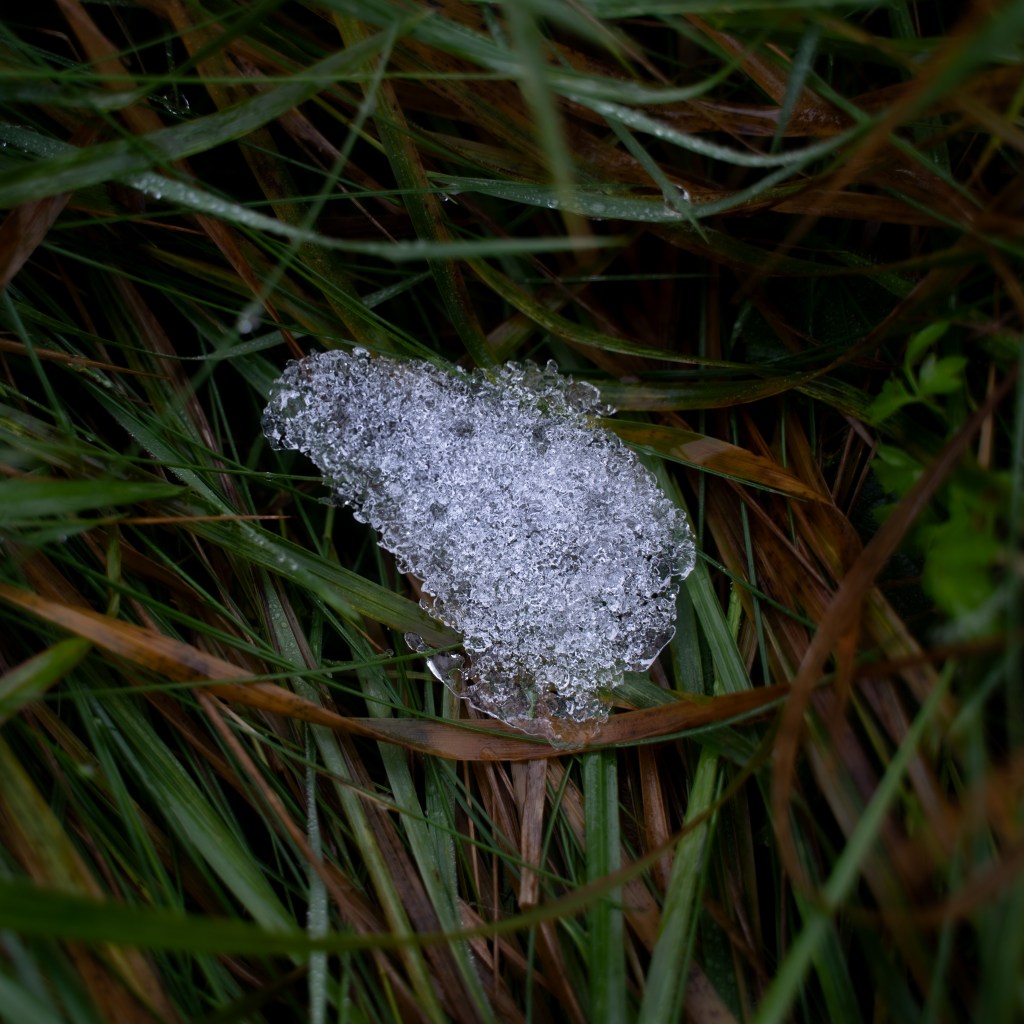
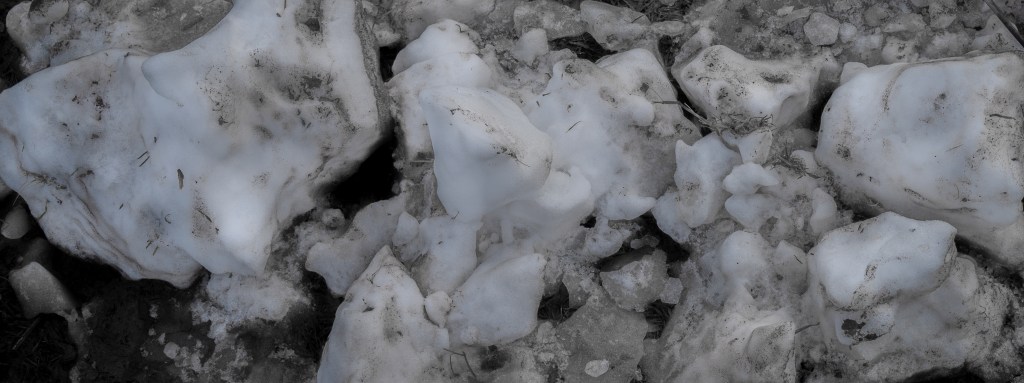
My first thought was inspired by a headline on the BBC about there being no more snow in the uk https://www.bbc.co.uk/news/uk-55179603 . I read this the day after we had had a surprise overnight snow fall. An idea popped in my head – what if this was the last snow I ever saw? How would I look at it, how would it make me feel and how would I document it? Unfortunately the idea really came a day too late and we never had anymore snow over the last couple of weeks and I’m also too far to travel anywhere that had BUT I still went out and took images of what was left and I made sure that I had my brain in gear as if this would be the last snow. It resulted in a different set of snowy images but ultimately there was not enough for me to consider it as a full assignment – it was one two hour shoot and I needed more. Here are a couple of those I was most happy with…they ended up a kind of lament for snow. I am planned to finish the series but I want to capture the entirety of snow falling to the last melt and incorporate the landscape more.
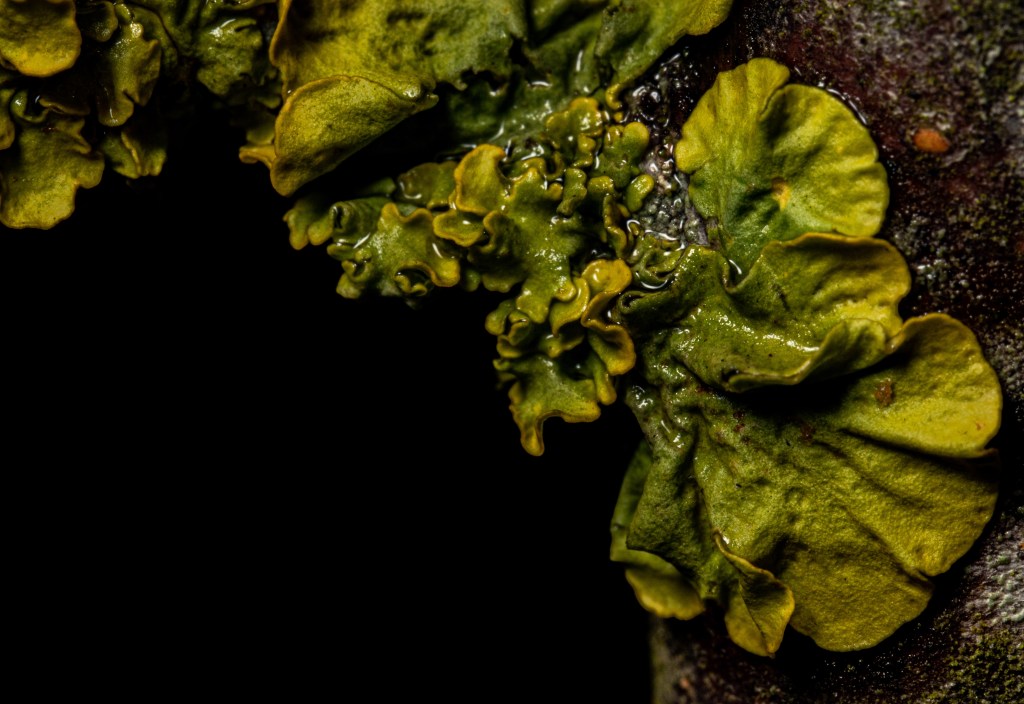
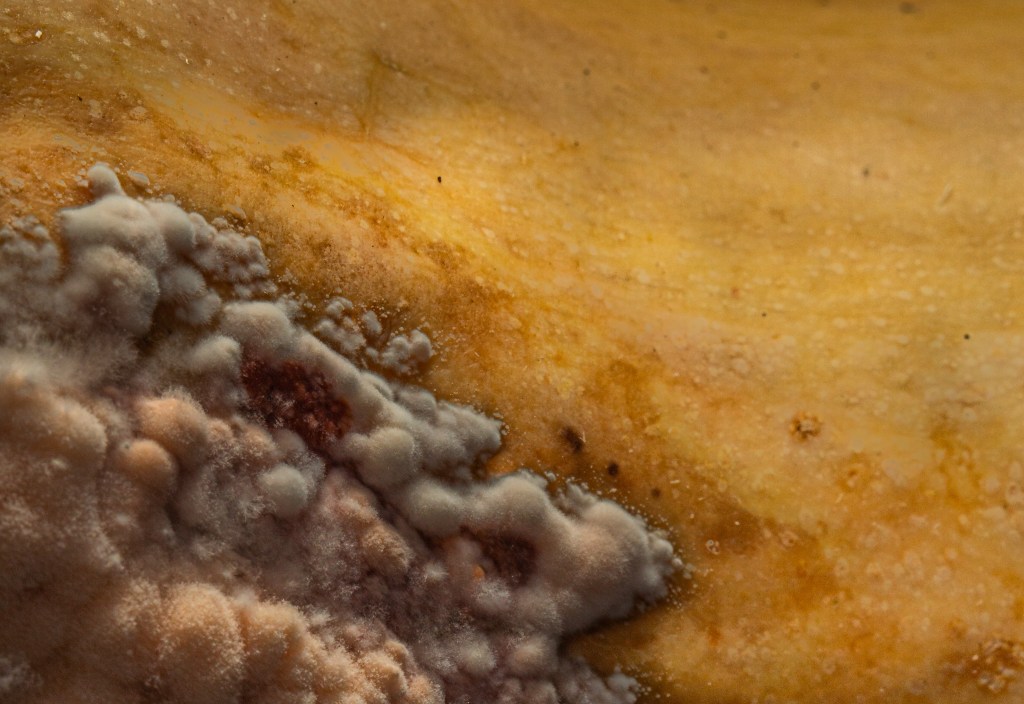
My other idea and the main one I thought would turn into this assignment was the idea of growth of small things. Things that happen all around us but are normally overlooked or are seen of a sign of decay or even transient. I thought I was almost there with this idea, I liked the colours of the images I had taken but I couldn’t get them to work as a whole with the elements i had photographed. E.G. I had included an image of thick frost on some berries as an example of transient growth but when you saw the subtlety in that image against the bright green of the moss on a tree or the blue mould against the orange it looked out of place. I could have used just the images I took of the fruit / veg but I felt it a little too much for ten images all with a macro lens – interesting and in many respects they did represent the idea of simple in terms of composition and form with huge swathes of colour. Maybe I just needed more to differentiate or more contrasting images to go with the macro shots – I need to think about that more and perhaps look at the colour wheel again when I go through the images to see how to make them more harmonious. Anyway here are some of my picks from these shoots, in the end I didn’t use any for the final assignment.
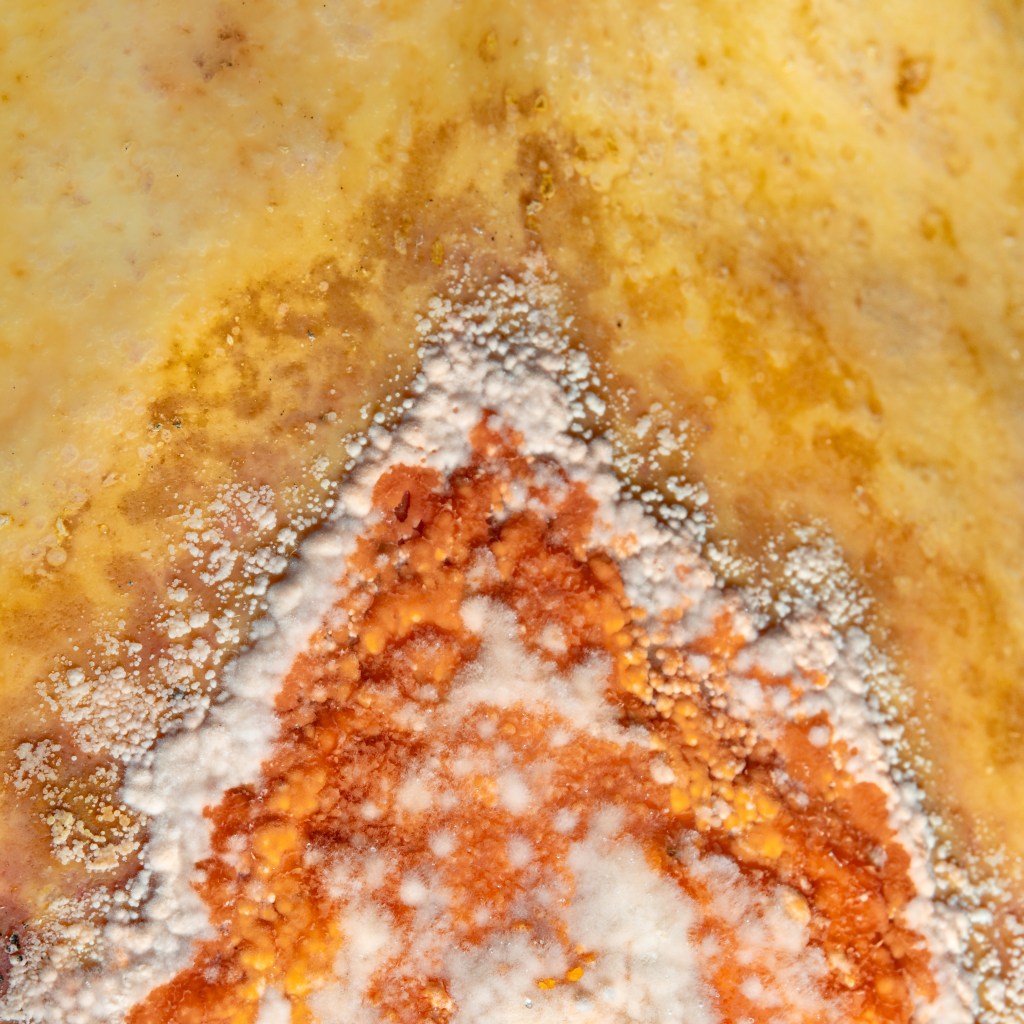
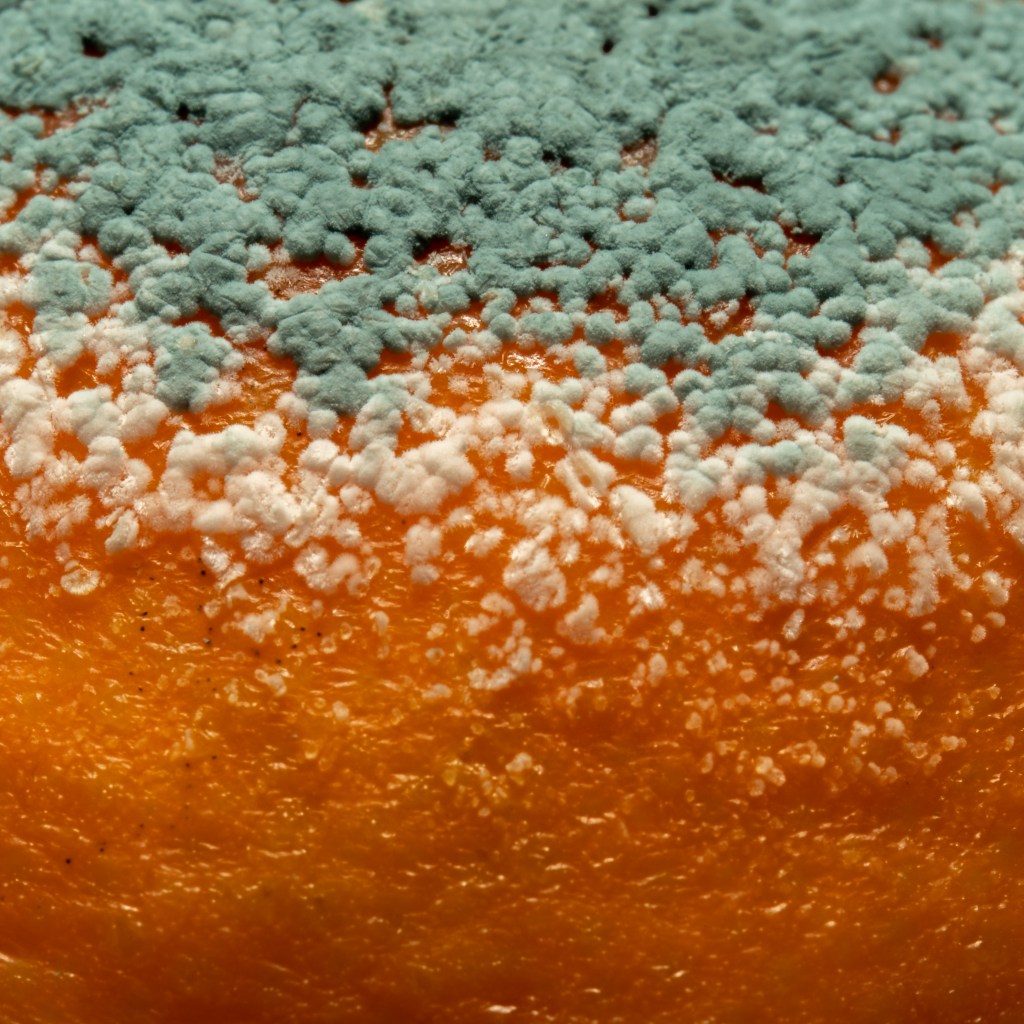
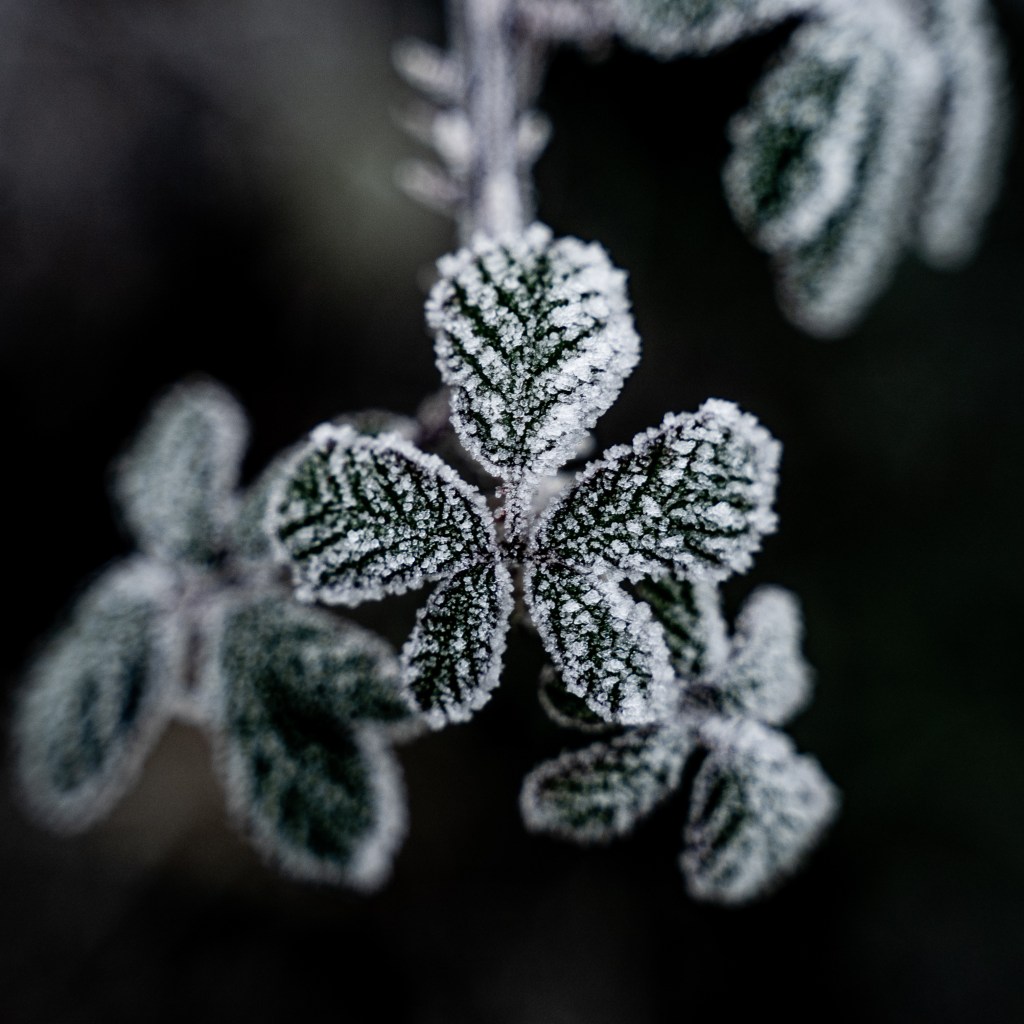
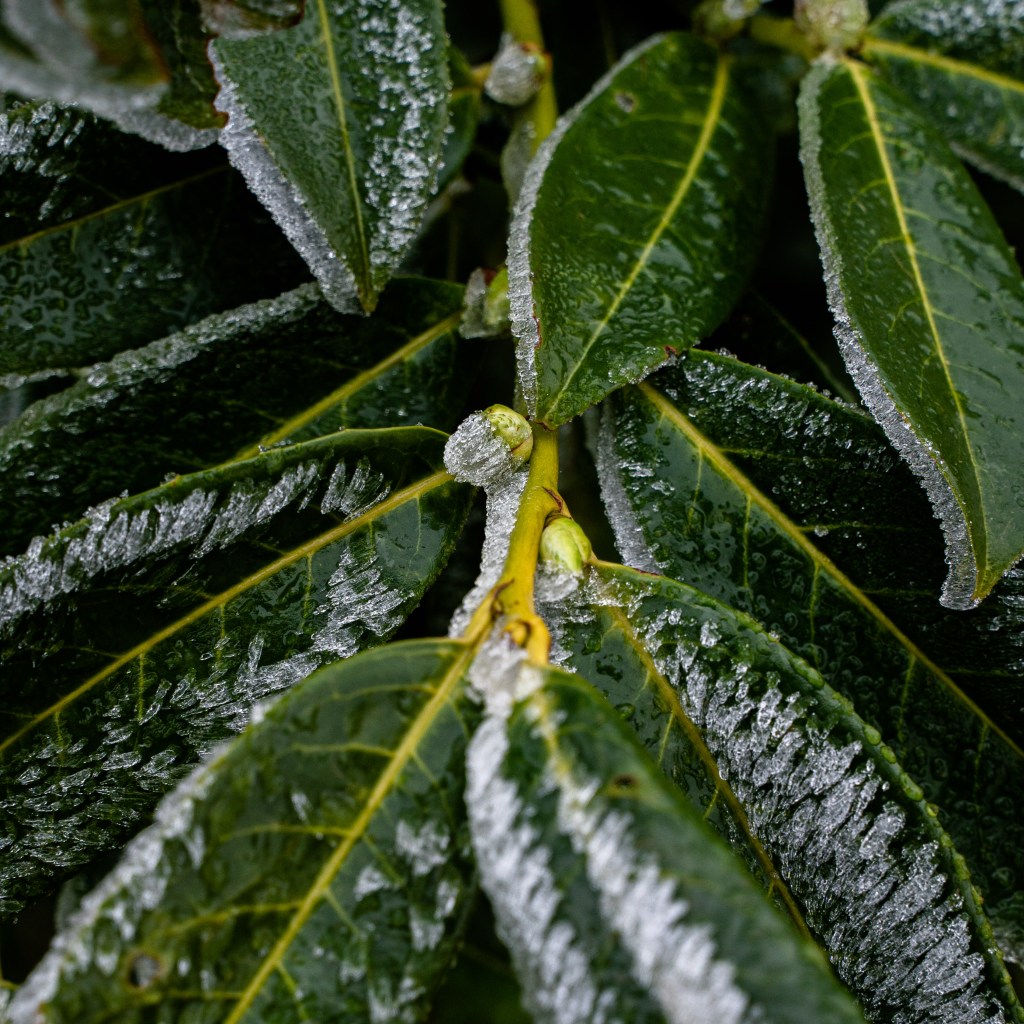
So after dismissing two potential assignments I found myself with 650 images taken over the course of about 5 or 6 shoots. All these shoots apart from some ‘studio’ macro shots were taken during fog, frost or a combination of both. I had thought these conditions would be ideal to show ‘simple’ with the fog playing a large element to help composition. Restrictions for covid and needing to avoid travel/socialising in the run up to xmas due to being part of a support bubble for an aging relative meant I needed to stay local but I hadn’t realised until editing that what I had actually done is revisit the square mile. Having signed up to walk 1000 miles in 2020 (which I just scraped home on in mid december!) I have regularly stomped the same few routes around my local village usually armed with binoculars, camera or if back allowed, both, and so the routes are part of my daily routine and because of this can be taken for granted.
So as I said, it was only on narrowing down my images to a final set that I began to realised that this was a revisit of the square mile. Is this the right thing to produce? A lot has changed since I started this last January. I opened the course with a set of images that were just snap shots taken during a walk – thought about perhaps but when I look back they are still pretty much just snaps taken to fulfill the opening brief without much consideration to why but they held together as a story. The images I had for Assignment 5 were better but when I was editing them I couldn’t quite find the still moments I was looking for. I tried various looks and crops expecting to use square as it’s generally my favourite. It still didn’t seem to have or convey what I wanted. I looked back at the work of Miho Kajioka in her book ‘as it is’ and above all else the one thing that stood out was the narrow cropping of the images. It made every image like a small secret. It was something I knew I had been looking for, the more I researched the more I realised that it wasn’t just the cropping I was connecting with it was actually something the japanese call ‘wabi-sabi’ – often referred to as an appreciation of imperfection, impermanence and incompleteness. The usual example given is the beautiful rustic pottery made for tea ceremonies – often these are slightly misshapen, or irregular in colouring with uneven edges but they are still beautiful objects – perfectly imperfect.
“Wabi-sabi nurtures all that is authentic by acknowledging three simple realities: nothing lasts, nothing is finished, and nothing is perfect.” Richard Powell
But as well as an aesthetic application to an object it can also equally apply to a roughly defined feeling or sense of the moment.
In Zen philosophy, there are seven aesthetic principles in achieving wabi-sabi:
- Kanso — simplicity
- Fukinsei — asymmetry or irregularity
- Shibumi — beauty in the understated
- Shizen — naturalness without pretense
- Yugen — subtle grace
- Datsuzoku — freeness
- Seijaku — tranquility
An example for me would be photographing the frozen rose bush. This was a most unassuming, even ugly shrub. It was 0 degrees and foggy but the sun was just trying to break through when I saw it growing by a tree at the farthest end of my walk. I was totally alone and cold and about to speed up to get home but luckily I was still being observant. As soon as I saw the bush and the ice formation I began examining the plant from different angles. The cold fell away, I became engaged in the moment staring at the detail, all other thoughts empty. As I looked the sun did break through and as I began to compose the image drops of water began to form from the ice melt. I was to be the only person alive to see these magnificent temporary structures. After I had taken the images I wanted I began walking again and realised just how cold my hand were. My perception of the world had changed for a few minutes. It’s not a definition – it’s a feeling. As a temple monk described it ‘If it could be defined, it wouldn’t be wabi sabi’ In Search of Wabi Sabi BBC4.
That’s why the crops and effect applied to the images are so relevant to me in this set, it just felt right, it helped me to relive what I was feeling in the moment I took the images. Feels a bit weird to be honest but it’s not altogether dissimilar from the feelings I had when I applied my thoughts to the mundane images in Assignment 3. When I reviewed my selected images in colour with a square crop I didn’t get the same reaction – I liked them but the feeling described above is missing. More importantly when I laid them out together in lightroom it just resonated to me completely – the whole set feels like a miniature replication of not only the feelings but the actual walk – even though its composed of several shoots it doesn’t matter – it’s a bit like a fragmented memory of a walk – it doesn’t have to be exact – it’s how I remember it and it’s my solitary connection to the moment.
See below an example image by Miho Kajioka – it is so simple in execution but the treatment of the images together takes me back to multiple summer days listening to them scream as they fly overhead – birds that spend nearly there entire life on the wing – come late in spring and leave a few weeks later. A transient presence that many people barely acknowledge but enriches so many others.
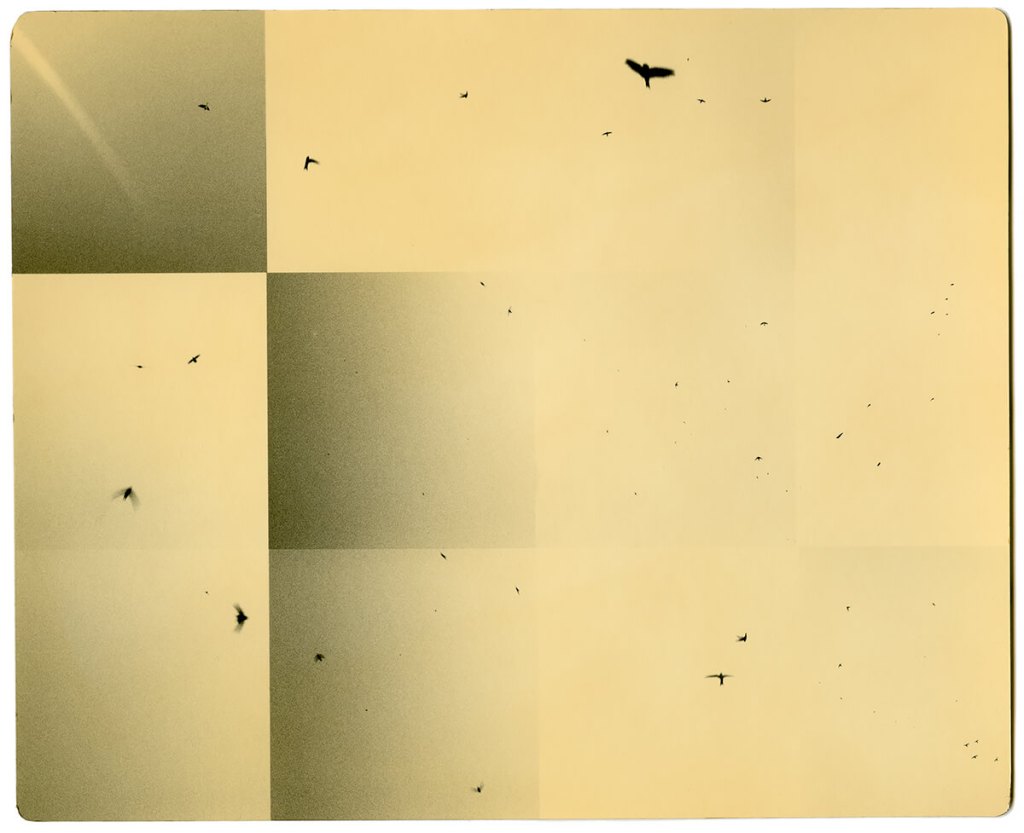
I took a few images of swifts this summer but my obsession was to try to catch them with a high enough shutter speed to freeze their flight – I accomplished it barely but what a waste of time. There is no emotional connection to the images and it sums up 0% of how this bird connects with me – they are always flying they aren’t meant to be seen still, this does not create a memory or an experience – I’d turned one of the most beautifully ‘designed’ birds into an inanimate object.
Further Research
The work of Masao Yamamoto and in particular his early work entitled ‘A Box of Ku’ also resonated. I’ve read that Ku means emptiness in japanese but I’m not sure that is accurate (maybe its slang). It does however refer to emptiness in the zen meaning of the word which is a whole different piece of research but DOES NOT have the same negative connotations that word has if translated directly into english.
He displays his photographs almost randomly, unframed, left for the viewer to discover them in a completely different way. These photographs were taken without any formal education of zen but he learnt it retrospectively giving him many ‘aha!’ moments (Public Lecture 2018) which is the same expression I have made researching wabi-sabi. It somehow seems to fit and I know I am barely scratching the surface but it’s a fascinating path to follow. In the display below he realised that this looks like a rock on water with migrating birds flying.
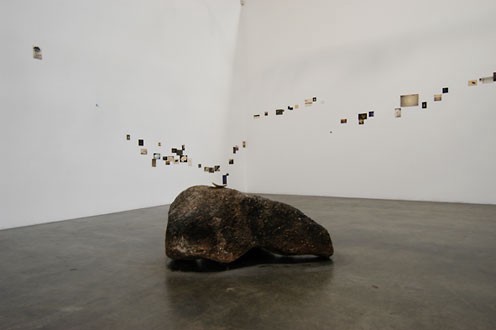
Yamamoto prints very small images from the size of stamps upwards and often uses things like tea to stain them, often carrying them around in his pockets to give them a patina that you’d associate with a very old image. Turning something that could be very new and fresh into a dim distant memory. I love the way both artists photography lends itself to this technique – complicated images would struggle to work in the same way. As your memory fades so do the component parts of the memory, sometimes you are left with just and impression and these images (like the swifts) have the power to evoke that effect.
As I have used words alongside two of my assignments I did find myself looking at doing the same for this final assignment. As I have used japan extensively for research I continued this in Haiku – tiny poems which used to form the start of longer works but became highly regarded in their own right. Each Haiku follows a 5-7-5 syllable format but in modern english interpretations would be perceived as any short three line poem. A Haiku is meant to comment on the season or surroundings, there is also supposed to be a word called a ‘kireji’ often called a cutting word which acts as a punctuation – in my poorly written example that would be the ‘shatter!’ of the frost falling from the trees
Example…
winter walking
glistening frost covers trees
shatter! joyful birds
I don’t think I’ll use it with the images. It won’t work in the same way as it did for assignment 4 where the words follow alongside the images. Maybe it could be shown underneath the images? No. More importantly the images don’t need words to tell the story this time.
Technical
I have used manual for everything including focus. When focussing on small objects with busy backgrounds autofocus is often a hindrance (and I have to use it with my macro lens anyway) and it is becoming easier for me to compose images that I can take my time with using manual exposure and even manual ISO settings (though the later can bite you on the arse if you’ve been using a high number and forget to change it back). Taking this extra time allows me to see in the viewfinder the effect of altering exposure and decide on how it looks in the field rather than shooting dozens and editing them in lightroom – don’t get me wrong though I still tinker a lot with lightroom, for me it’s an integral part of the process and helps me to get across my vision and feelings BUT by shooting manual I’m more connected to the image I’ve taken.
I have edited them with the same look and feel and have deliberately chosen a set order for display alternating dark and light with other subtler connections between the series.
Printing
I have purchased some Hahnemuhle Matt Fine Art Baryta paper to print the images. I want them to be printed small with roughened edges and to be then glued to a bigger piece of card – they will be small but I want them to be displayed in this way so you have to look at them as a whole to see the journey and then have to look closely to see the individual slithers of time like small fragmented memories.
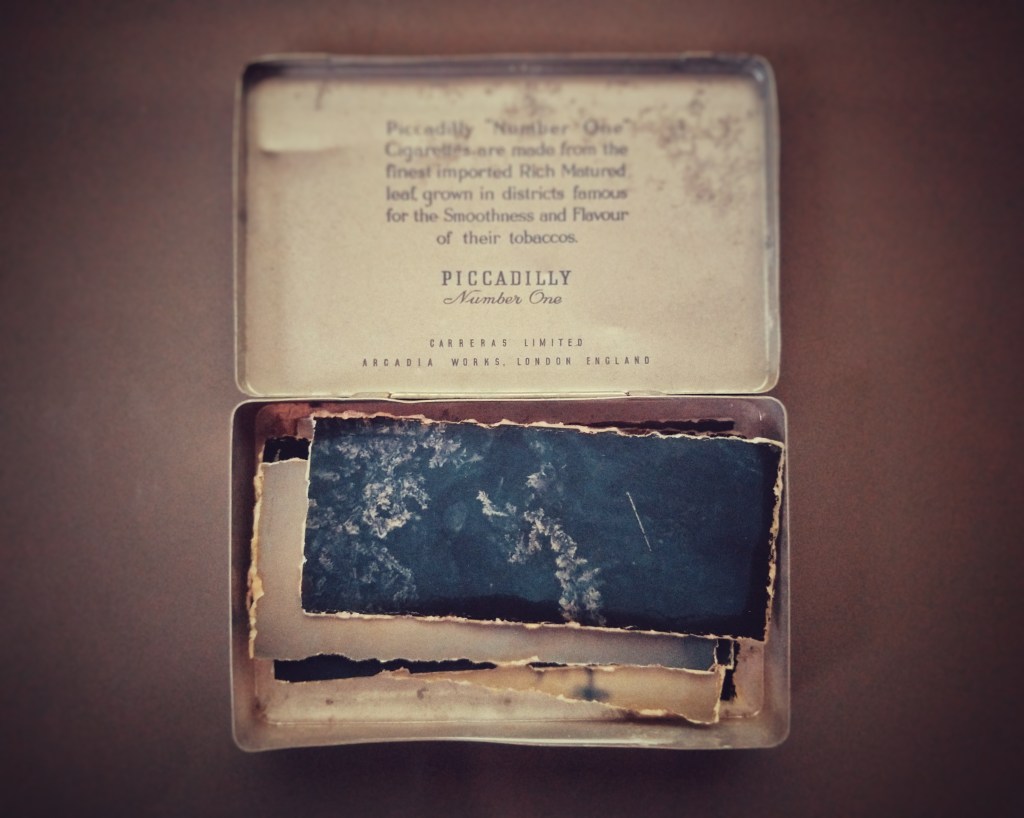
Update: After further researching the artist Masao Yamamoto I loved his technique to a) age the photos so as to make them individually timeless using tea and by keeping them about his person and regularly touching them to age them and b) his technique of displaying them unframed. When I printed my images I painted them with several layers of tea and when I then cut them out using a ruler/fold and then wet the edge of the crease before tearing to give a feathered uneven edge. In doing this I occasionally and accidentally scratched a couple of the images with a nail – it looked great, more worn already, more personal to me. I laid them out on some card but it didn’t look as I imagined what looked good in lightroom was no longer effective. I tried several layouts and thought I needed perhaps something bigger? or maybe smaller?? I suddenly said to my wife – do we have an old tobacco tin anywhere? Yes! she said. It was actually a decades old cigarette tin full of buttons – It looked great. I emptied the buttons and put the images in order in my hands and placed them in the tin. They were home. Just opening the lid makes me smile. The act of creating the images on paper was very tactile because of the printing, the painting and the tearing; and now to actually look at them was just as tactile for the viewer and adds history to the images with each viewing. Just as much as opening the lid makes me smile, closing the lid will remind me of completing the first year of the course.
Feedback and Reflection
My feedback session with my tutor was a great session where we reflected on finishing the course, the look and feel of the assignment and how I have changed over the year. I was given a couple of useful pointers for research – especially Kurt Tong whose presentation is inspirational. Since we had the session I have updated the assignment to include a video presentation of the finished printed work.
As for my own reflection, I feel that it is my most complete assignment to date. I didn’t dwell on the restrictions, I worked through them and produced a physical series of work that truly represented my intentions. I’m sure I would have chosen different images on another day but my thought process would also have been different so I will not beat myself up about that. On the whole I feel proud of it and that’s all I can ask of myself for the final submission.
Bibliography
A box of ku (2007) At: https://silverpoetics.wordpress.com/2007/02/06/a-box-of-ku/ (Accessed 27/12/2020).
as it is (2017) At: https://www.youtube.com/watch?v=Y_dktASevSU (Accessed 24/12/2020).
Crowe, S. (2019) The Spiritual Photography of Masao Yamamoto. At: https://medium.com/photocurious/the-spiritual-photography-of-masao-yamamoto-48215154cd54 (Accessed 21/12/2020).
In Search of Wabi Sabi with Marcel Theroux (2014) At: https://www.youtube.com/watch?v=Z2P8z7kYJW0 (Accessed 05/01/2021).
Kajioka, M. and LensCulture (s.d.) as it is – Photographs and text by Miho Kajioka. At: https://www.lensculture.com/articles/miho-kajioka-as-it-is (Accessed 31/12/2020).
Klant, C. and LensCulture (s.d.) Christian Klant. At: https://www.lensculture.com/christian-klant (Accessed 06/01/2021).
Miho Kajioka (s.d.) At: https://ibashogallery.com/artists/29-miho-kajioka/overview/ (Accessed 21/12/2020a).
Miho Kajioka (s.d.) At: https://printsales.thephotographersgallery.org.uk/artists/40-miho-kajioka/overview/ (Accessed 21/12/2020b).
Mixcloud (s.d.) At: https://www.mixcloud.com/Resonance/studio-visit-12jun2016-ane-hjort-guttu_studio-visit/ (Accessed 19/12/2020).
Oppong, T. (2018) Wabi-Sabi: The Japanese Philosophy For a Perfectly Imperfect Life. At: https://medium.com/personal-growth/wabi-sabi-the-japanese-philosophy-for-a-perfectly-imperfect-life-11563e833dc0 (Accessed 07/01/2021).
Public Lecture with Masao Yamamoto (2018) At: https://www.youtube.com/watch?v=Q7hMHAW-YQ8 (Accessed 11/01/2021).
Sitar, M. (2013) Yamamoto Masao – A box of Ku/Nakazora/KAWA. At: https://vimeo.com/65961081 (Accessed 04/01/2021).
The Getty Museum (s.d.) At: https://www.getty.edu/art/exhibitions/sally_mann/inner.html (Accessed 06/01/2021).
Tyler Shields Interview // Intentionality with Photography (2020) At: https://www.youtube.com/watch?v=Uizuh5S3bVE (Accessed 08/01/2021).
Voutiritsas, T. (2019) 10 Vivid Haikus to Leave you Breathless. At: https://www.readpoetry.com/10-vivid-haikus-to-leave-you-breathless/ (Accessed 11/01/2021).
Wikipedia contributors (2020a) Haiku. At: https://en.wikipedia.org/w/index.php?title=Haiku&oldid=994788825 (Accessed 08/01/2021).
Wikipedia contributors (2020b) Masao Yamamoto. At: https://en.wikipedia.org/w/index.php?title=Masao_Yamamoto&oldid=937215820 (Accessed 20/12/2020).
Wikipedia contributors (2020c) Wabi-sabi. At: https://en.wikipedia.org/w/index.php?title=Wabi-sabi&oldid=996343783 (Accessed 08/01/2021).
Yamamoto Masao (2018) At: https://www.youtube.com/watch?v=B6lmXziTSfU (Accessed 11/01/2021).
Yamamoto Masao (s.d.) At: https://www.jacksonfineart.com/artists/yamamoto-masao/ (Accessed 07/01/2021).
Yamamoto Masao at Craig Krull Gallery (s.d.) At: https://www.craigkrullgallery.com/yamamoto/index9.html (Accessed 21/12/2020).
An Introduction to Haiku – Form & Structure: kireji & kigo (2013) At: https://ashleycapes.wordpress.com/2013/08/26/an-introduction-to-haiku-form-structure-kireji-kigo/ (Accessed 12/01/2021).
Kurt Tong (s.d.) At: https://kurttong.co.uk/ (Accessed 15/01/2021).
Memories, Dreams; Interrupted (2009-2010) (s.d.) At: https://kurttong.co.uk/Family-Tetralogy-(2007-2013)/Memories,-Dreams;-Interrupted-(2009-2010)/3 (Accessed 15/01/2021).
 Lee Abbey OCA Photography Degree
One thought on “Assignment 5 – Ideas & Research”