I found this a great way to get into the right mindset for the rest of the course. I haven’t done any structured learning for over 30 years and was a little concerned about dusting off the brain cells for a degree.
Research
It was interesting reading/watching/looking/seeing. Some of the images and the concepts made ‘sense’ on their own but others needed explanation and I found that without the context many offered nothing to me other than being technically good – Tina Barley’s ‘Sunday New York Times’ for example came to life when I listened to her explanation of the image which then reminded me of Renoir’s ‘Luncheon of the Boating Party’ and then onto the conversations between Amelie and Dufayel (Amelie 2001 – watch it you haven’t!). Most of her other images without the context offered me nothing I’m afraid. I also found myself really disliking the initial Belgravia images of Karen Knorr until I started reading the text with them and the further on I read the more I liked them. Being quick to judge is a bad habit of mine and I think it sometimes hinders how my ability to see images properly with context. I.E. being quick to judge and even dismiss an image without actually seeing it or understanding it.
I loved the almost ethereal look of the soft underexposed / uncontrasty 6am shots by Gawain Barnard – looking at them felt like early morning and I think I will come back to that. Similarly the use of juxtaposed images of seemingly unrelated subjects I found interesting but didn’t always get the context but will log it for future use.
Keith Arnatt’s ideas were the most accessible to me. A story easily identifiable and interesting – AONB was a set of images I enjoyed showing the other side of natural beauty. The river images of Roni Horn resonated and I’ll definitely be stealing the idea of multiple images of a same subject with different looks. The use of text with or even on the image was also prevalent and again has been noted to use later in the course.
My Theme
Having researched I still didn’t have a complete idea of what my Square Mile would be other than it being based on a single walk around the Village I have lived in for the last ten years. I have recently changed camera systems resulting in only having two lenses when I shot the images (more money to be spent!) – one a big telephoto and the other a super wide angle. I thought I would contrast the two but still didn’t see a cohesive set coming from that other than the obvious perspective difference.
I live in a small village surrounded by flatish farmland in Suffolk. In the spring and summer it is colourful and alive and there is enough woodland to make autumn just as easy on the eye. Winter however is bleak – not perhaps Yorkshire moors bleak but bleak enough that on the right (or wrong) day it can feel cold and despairing and almost monochrome. It was then that I realised that black and white should work well for my images and hopefully convey a sense of edginess and despair. I deliberately avoided houses and people to amplify the emptiness and unease you might get if you were walking here on your own. Bare winter trees and grey skies add to the feeling of unease and on my walk the only other constant was the noise and sight of the crow – highly intelligent fantastic animals but another way to unnerve a lone walker. It was interesting to me that walking cleared my head and let the surroundings, nature and weather dictate how I felt. I wonder how different the images would have been had I started this project in another season. Perhaps this is something to return to three more times.
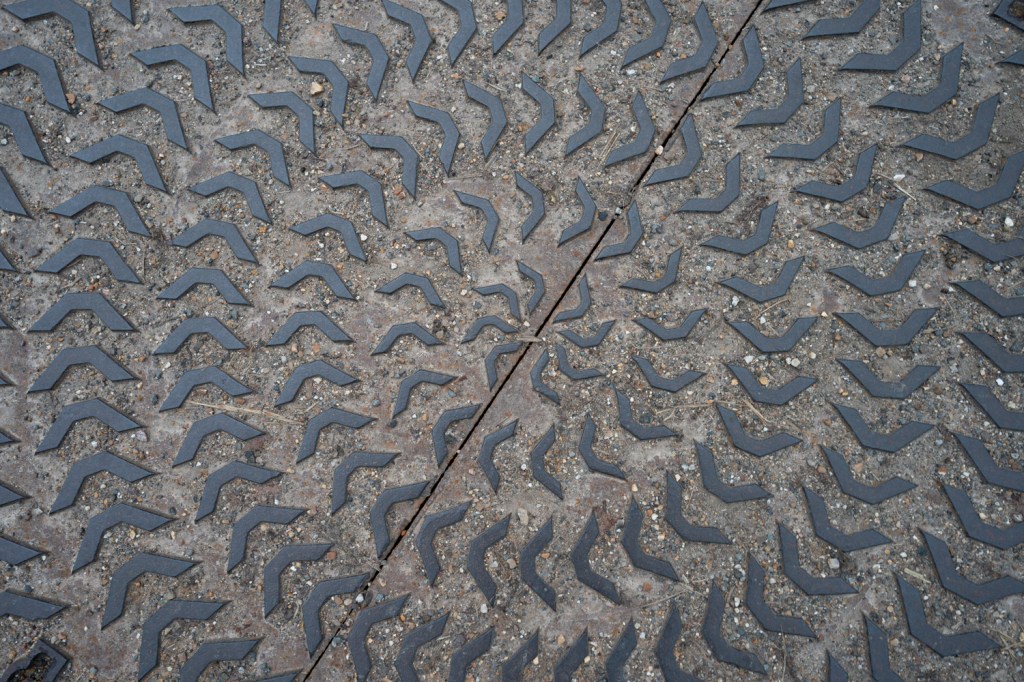
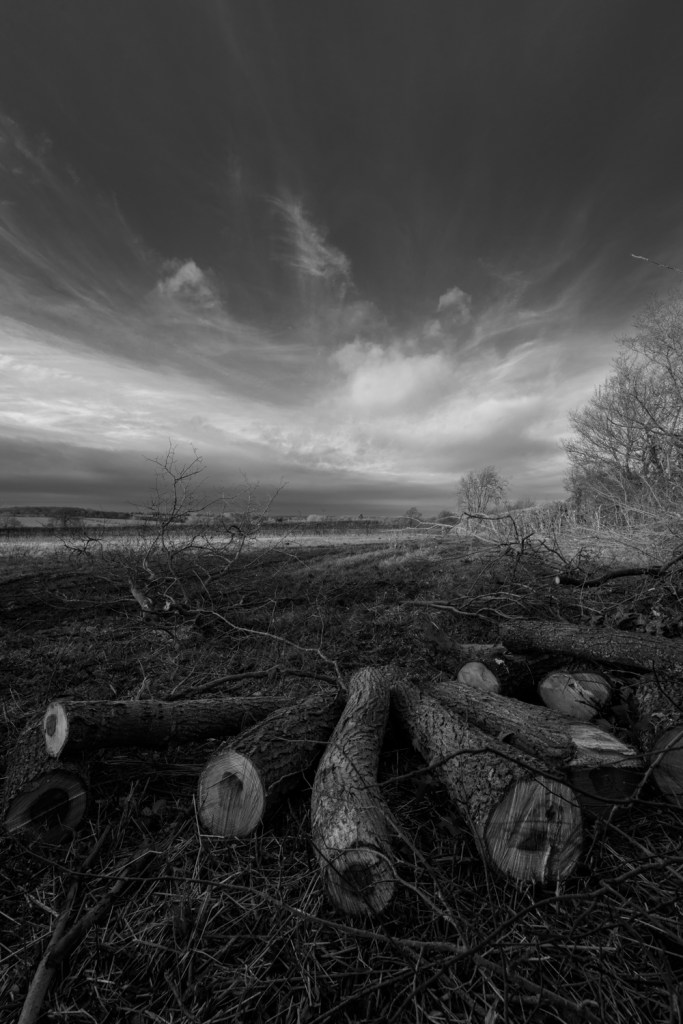
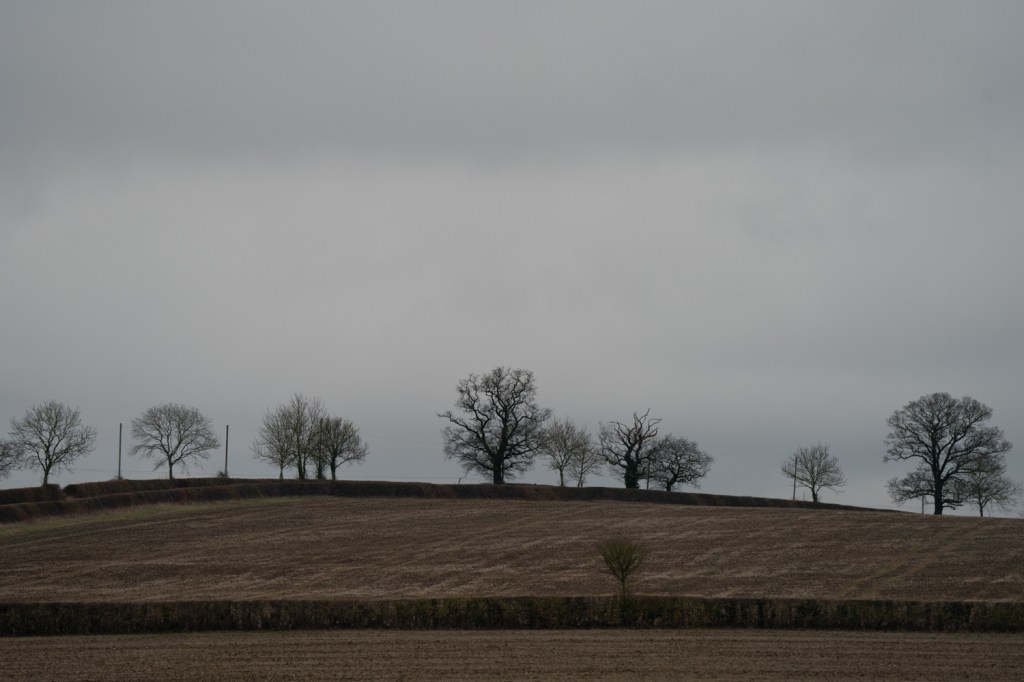
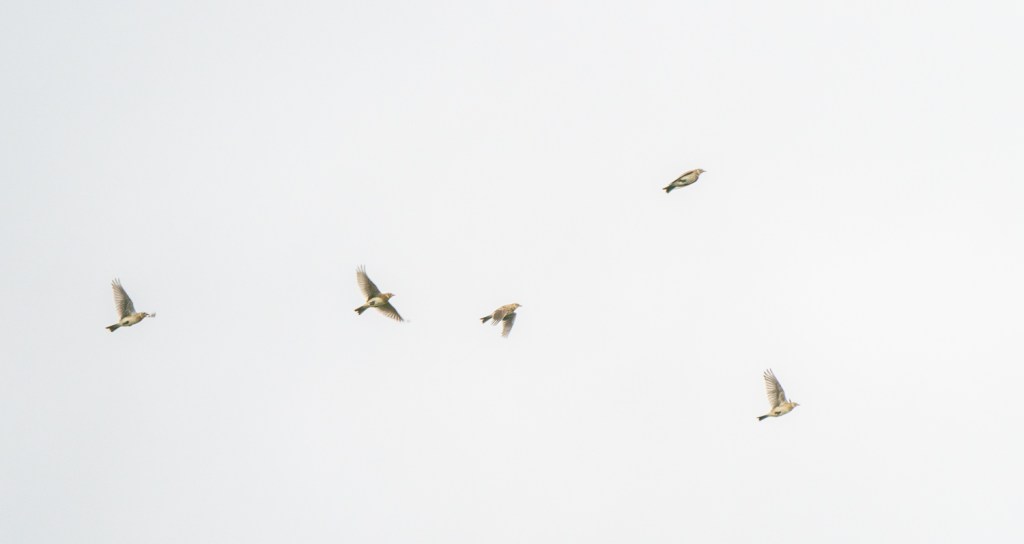
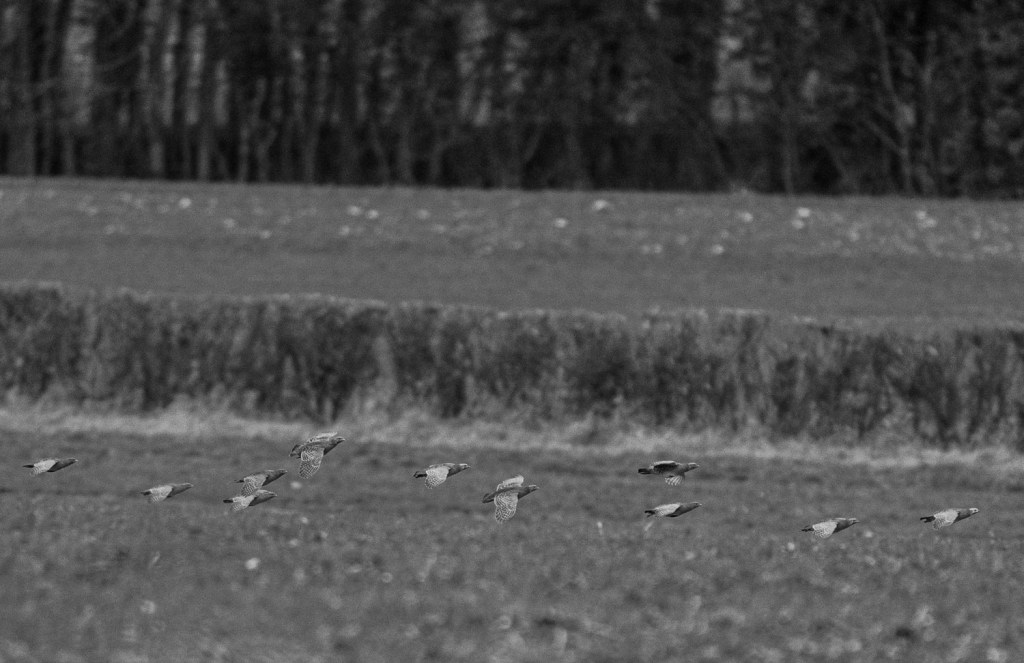
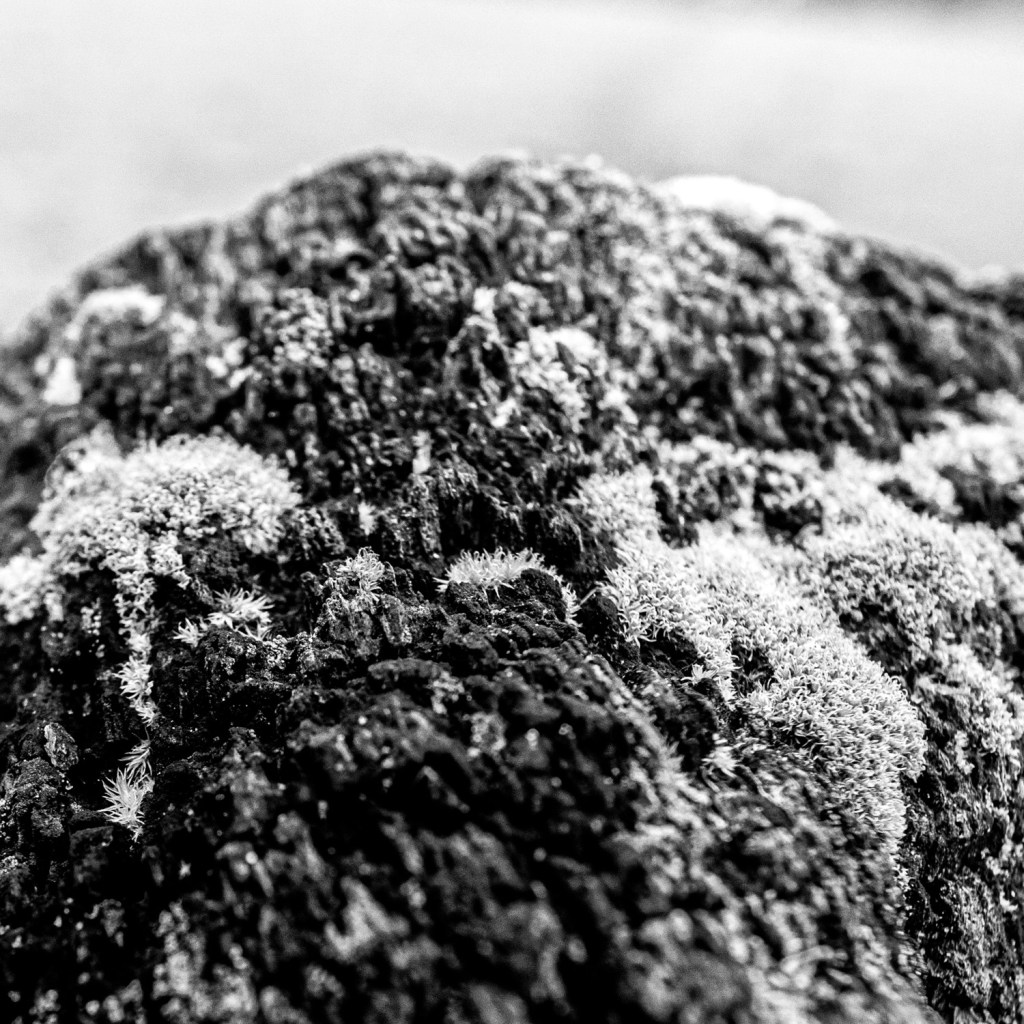
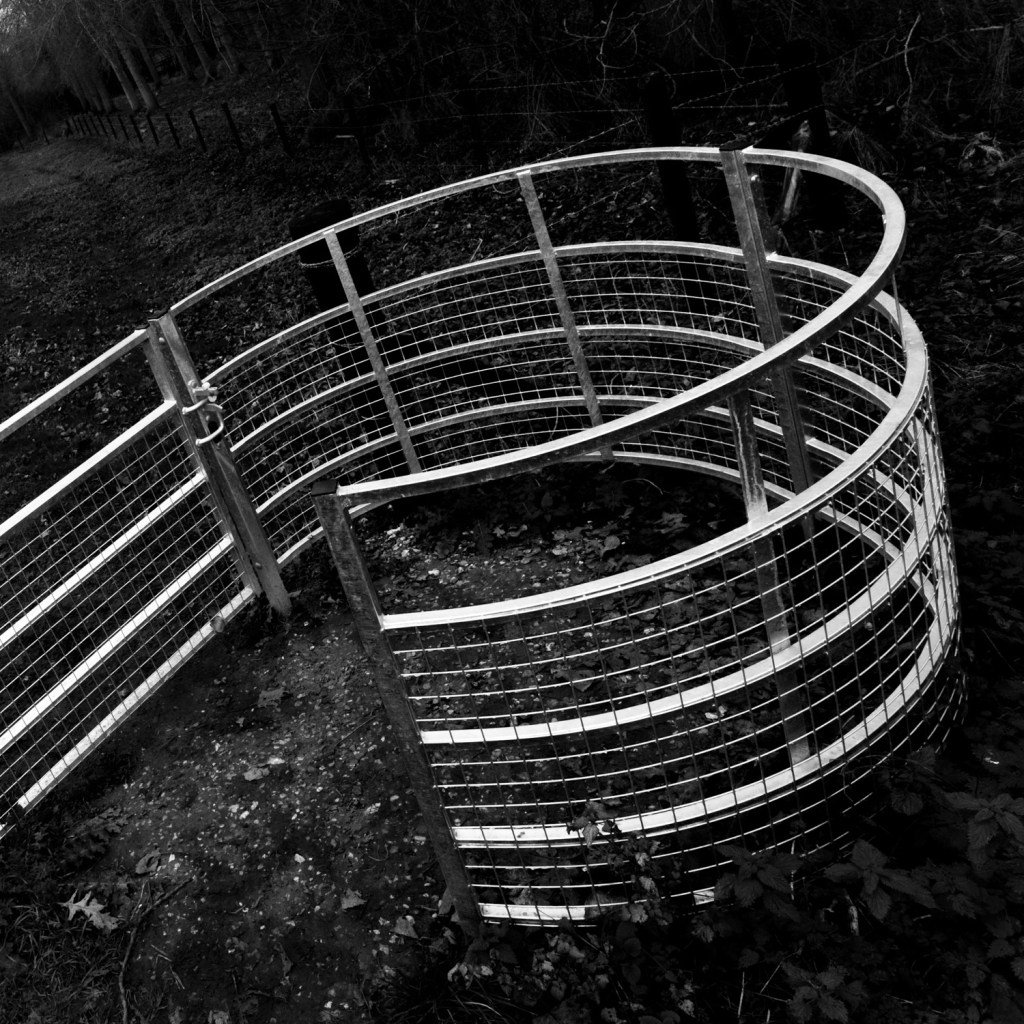
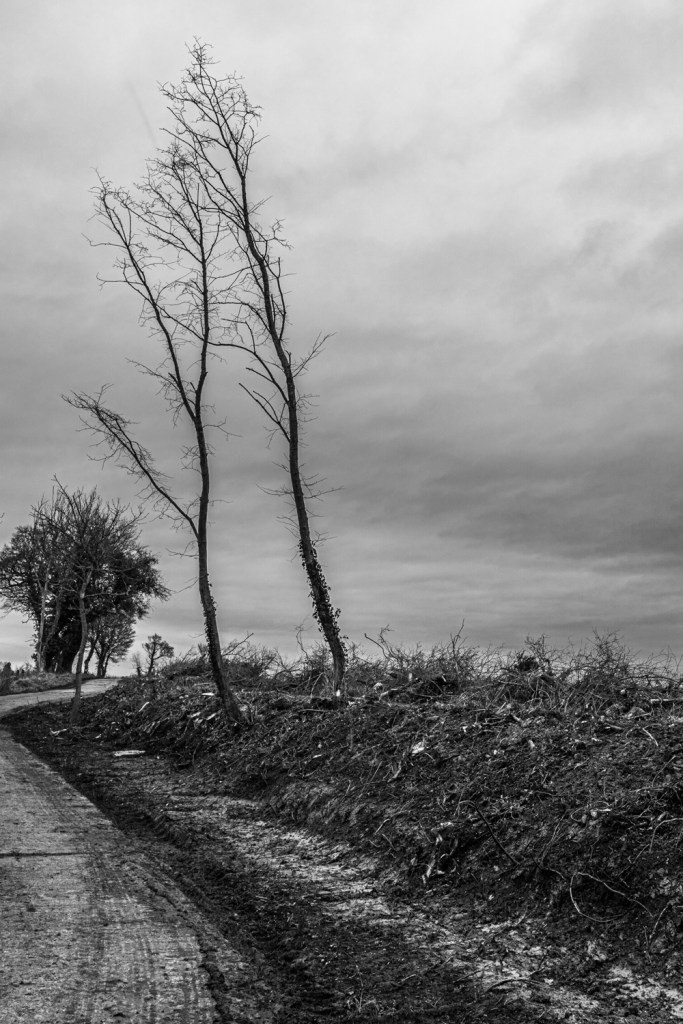
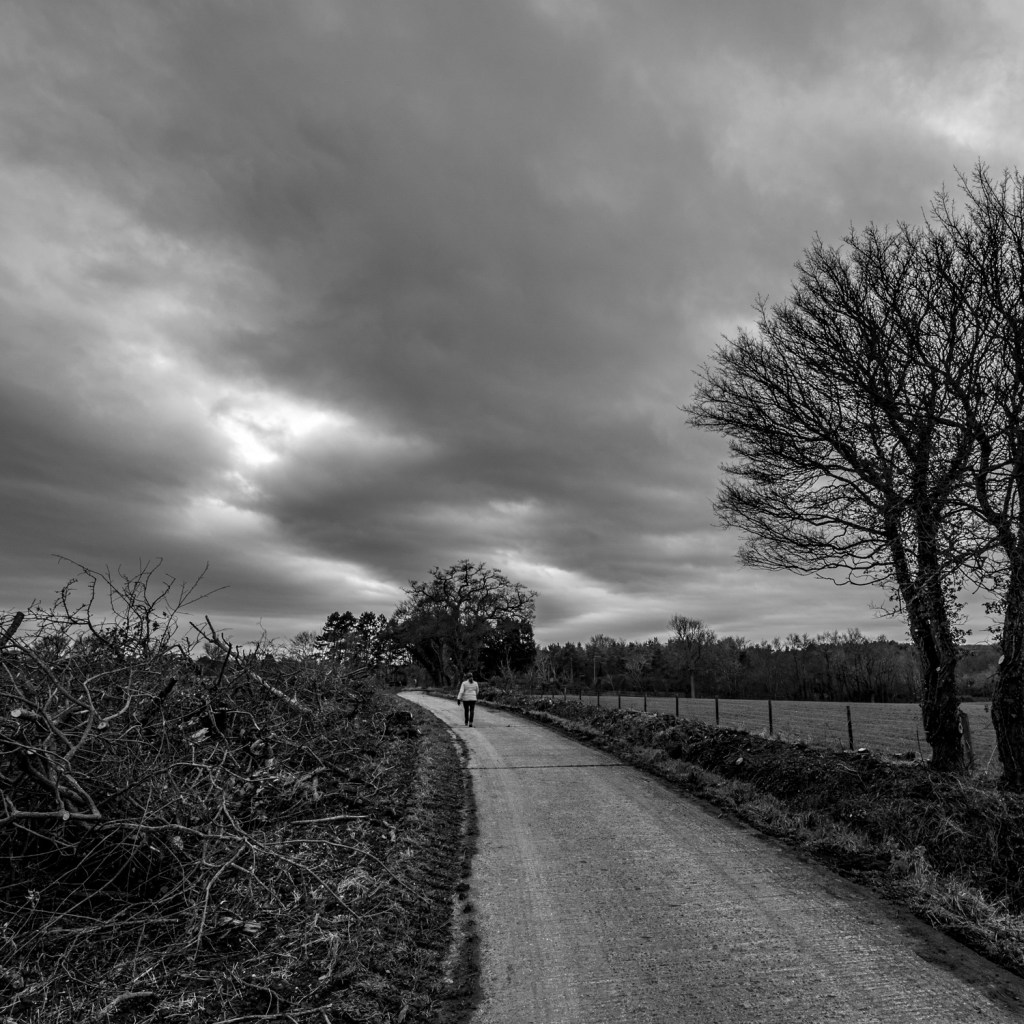
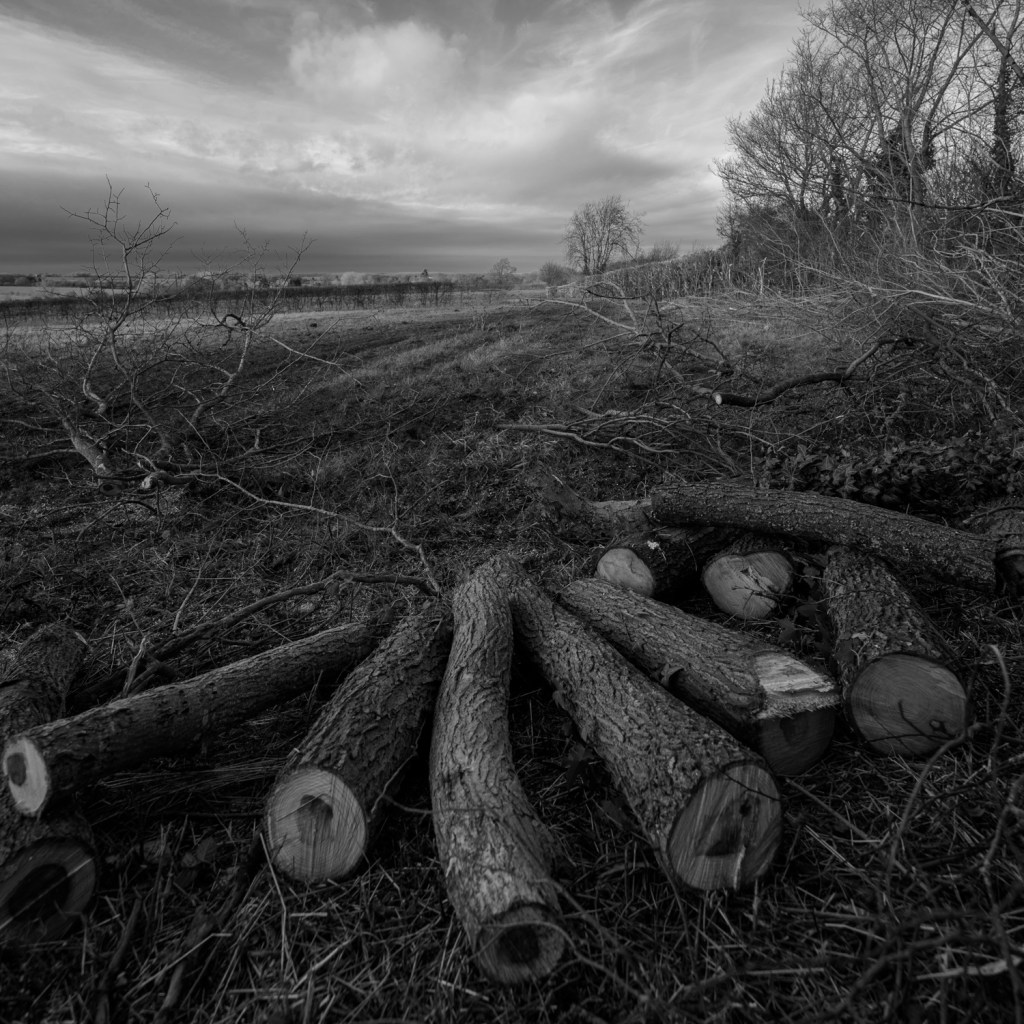
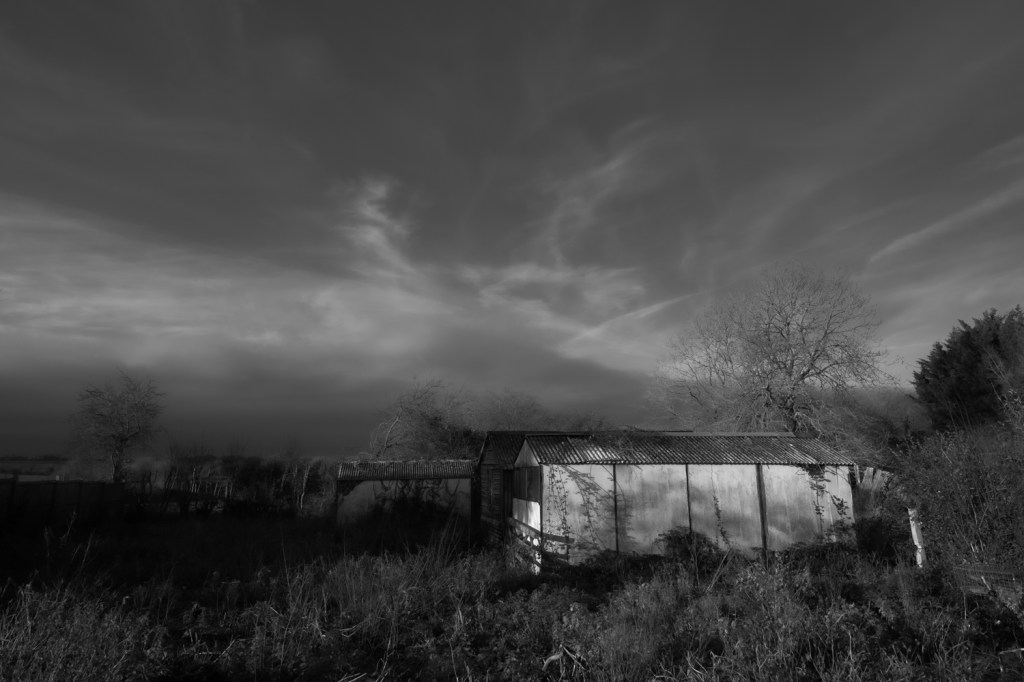
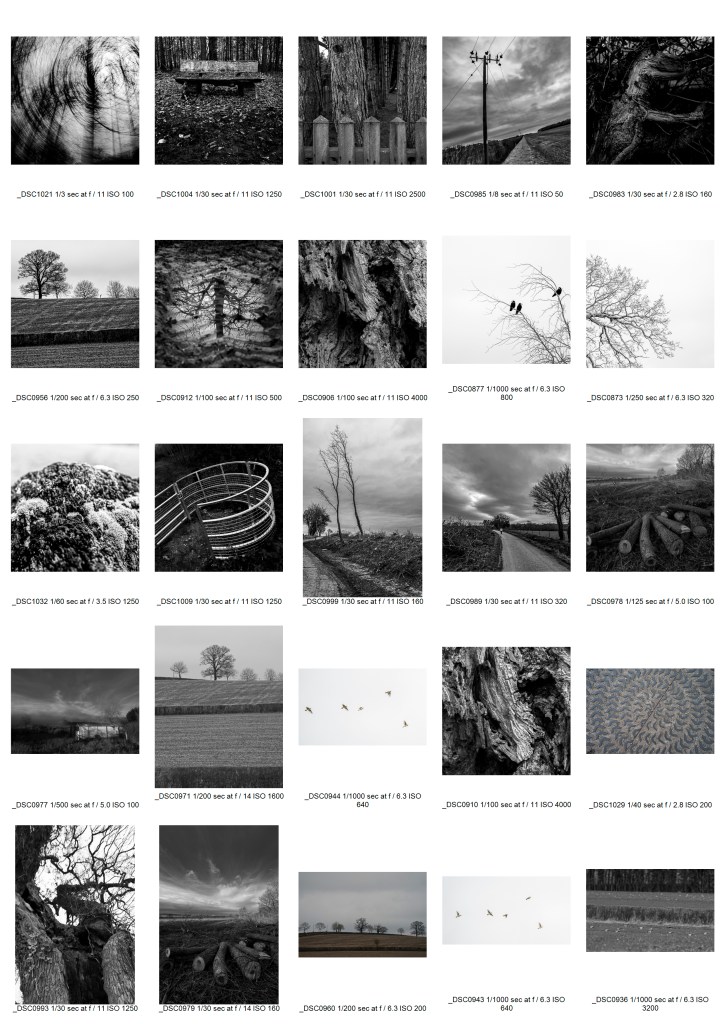
In the end I took around 125 images for the project. Some were just random shots I took because I saw a bird (tree creeper or a small flock of partridges) and thought they might fit in later though truthfully it was more because I am a bit of a birder. Others I took of objects I’d normally ignore striving to find something ‘different’ to photograph but quickly discarding them. In the end the candidate photos that were discarded were left out either because they didn’t follow the darker theme enough or because the focal point of the image was of a man made object. I also deliberately left out a few landscape images because to take a dozen or so of those would have been too easy.
One final thought – when editing I think the word ‘Square’ must have been ingrained in my head because I quickly found myself going for a square crop. I’d love to say this was planned from the start but wasn’t.
I have used Lightroom for all editing /cropping /converting. I have not removed, added or ‘photoshopped’ any element of the image.
Anyway, the images….
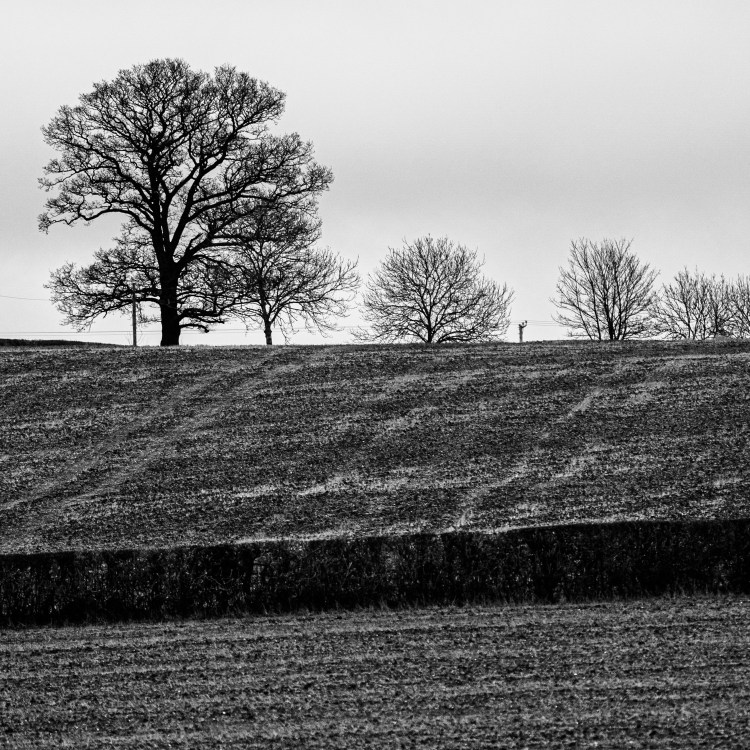
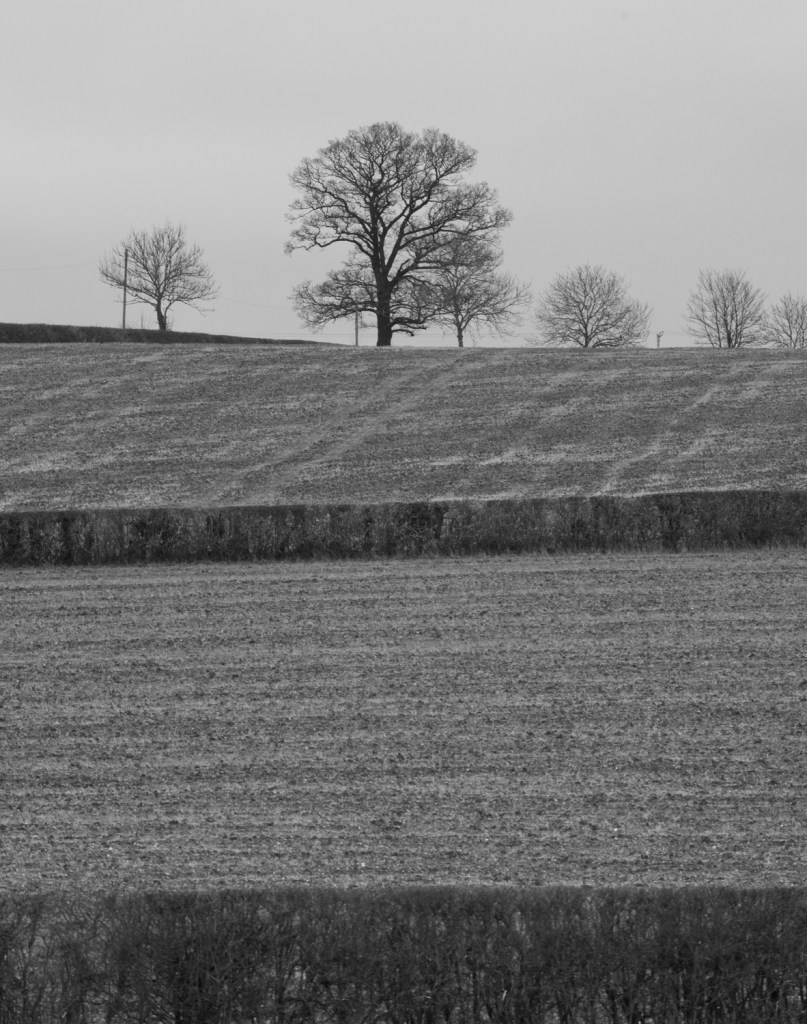
I liked the two obvious horizontal lines roughly following thirds and emphasised the smaller furrows in the soil in post processing. Ideally the larger tree would be on it’s own. I chose it as the first image as it’s the only proper ‘landscape’ and starts the ‘walk’ with something familiar. This was taken with a zoom lens to give the desired compression of the image.
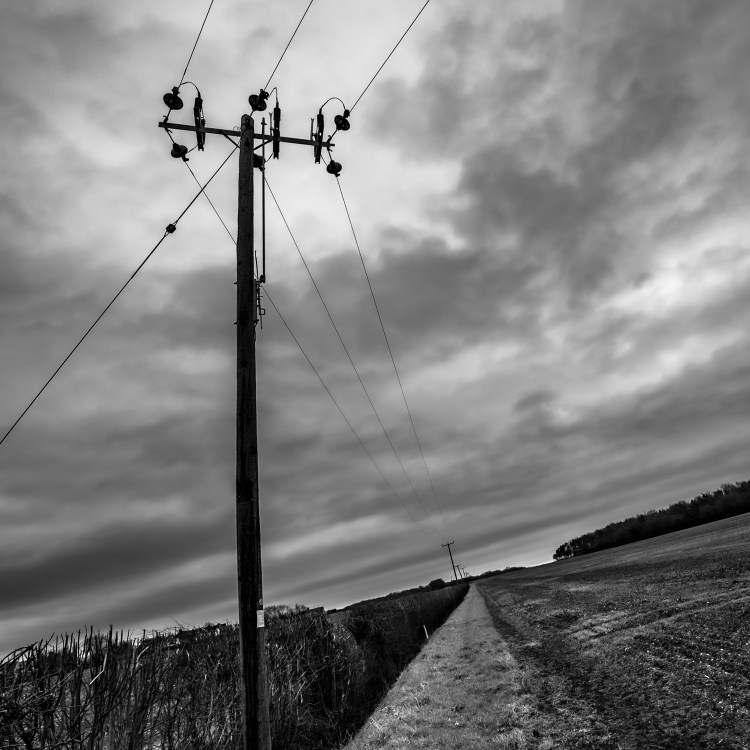
This telegraph pole is bent over at an angle that on it’s own merits very little interest. When I decided to try and make the images have an unsettling look I quickly realised that by straightening the pole the horizon will slant which together with the lines radiating off at all angles from the field and pole give the effect I wanted.
On this image I accidentally nudged the ISO to 50 but didn’t notice the shutter speed change accordingly to 1/8th or notice the tell tale delay when I took it. Image Stabilisation is a wonderful thing!
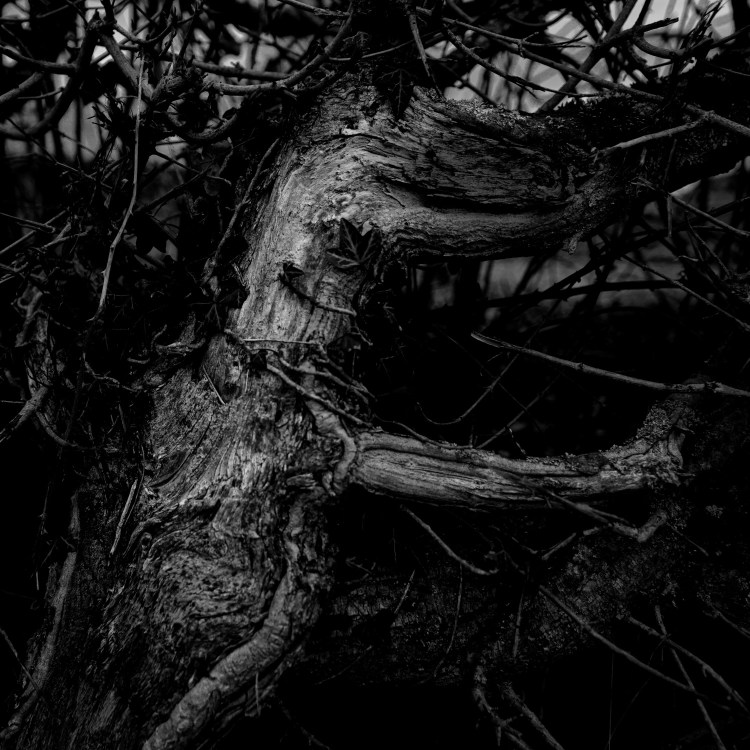
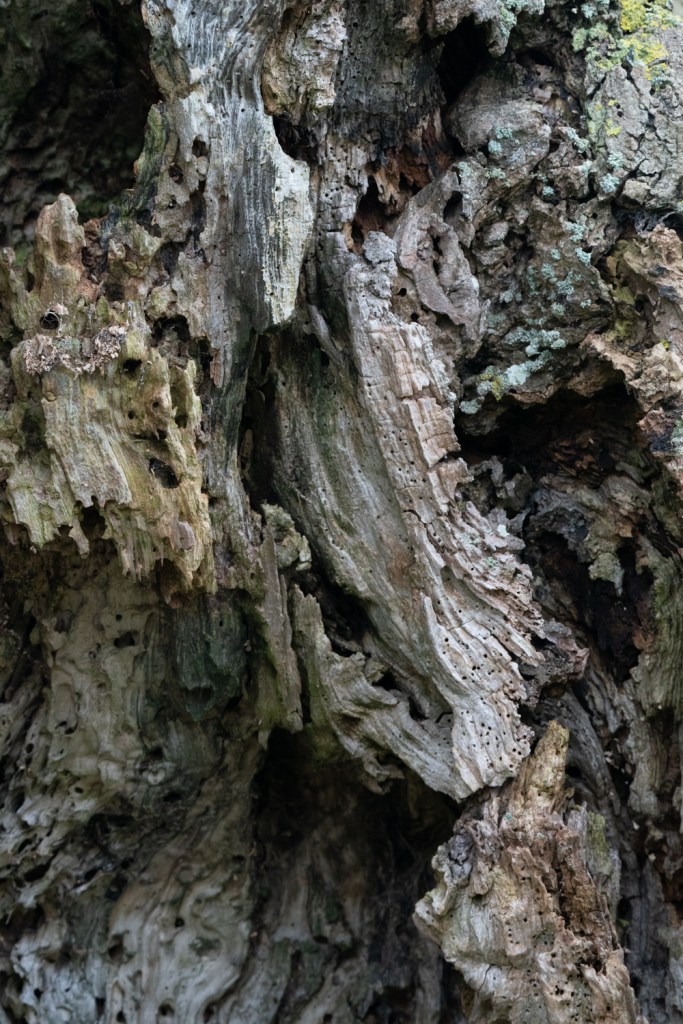
At this time of year the local estate cut back the hedgerow. This year they seem to have been particularly brutal. This image reveals the main trunk of an old part of one hedge. It looks to me like a naked figure part animal and part plant that’s been taken from the darkness and exposed to the light making it and us uncomfortable.
I had seen the sinister shape in this image when I took it but it needed some extra work darkening the shadows and bringing out the detail on the exposed trunk.
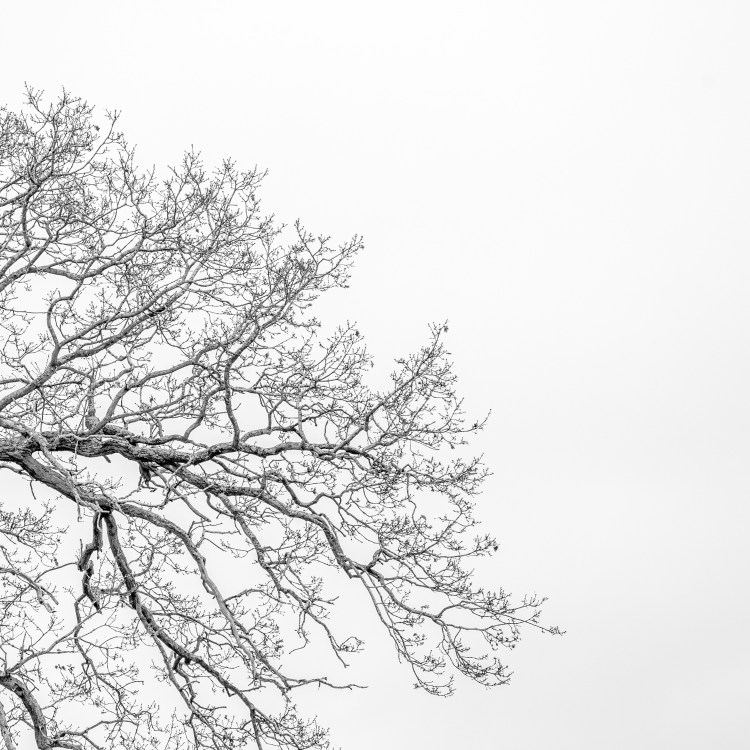
Dormant branches hang against a grey sky. A giant respiratory system waiting to breath again. I wanted a lighter image to follow the previous one. My 14 yr old daughter has been studying negative space in art lessons. This image was inspired by that. I opened up the shadows on the branches to see as much detail as possible. I’m not convinced it works as well as the others in following my vision but it’s a shot I don’t normally go for and the resemblance to the respiratory system also adds an anatomical diagram look. I tried rotating this 90, 180 and 270 degrees to see if it looked better – I stayed with the original. I think this image offers some reprieve from the darker images in the set though I wouldn’t consider it welcoming perhaps it’s even clinical.
I need to explore negative space more and will come back to this again.
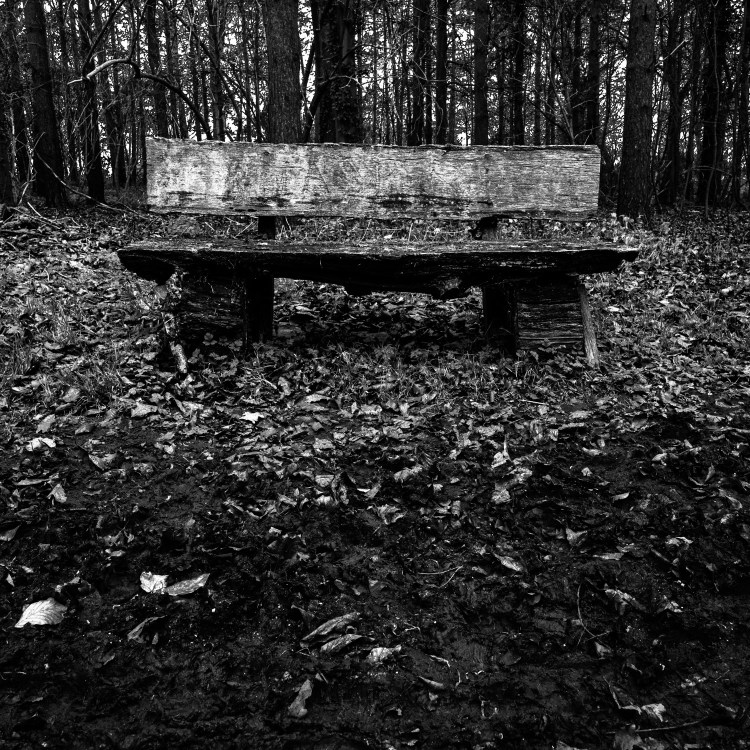
No-one sits here. I’ve walked past it over a 100 times and it just gradually rots. It’s like a warning to the trees behind. Misbehave and this is what they will do to you.
Its a straight forward image but I liked the way its divided into thirds with the soil, leaves then the trees. I darkened the foreground to give a slight graduation to match the graduation in the bench itself.
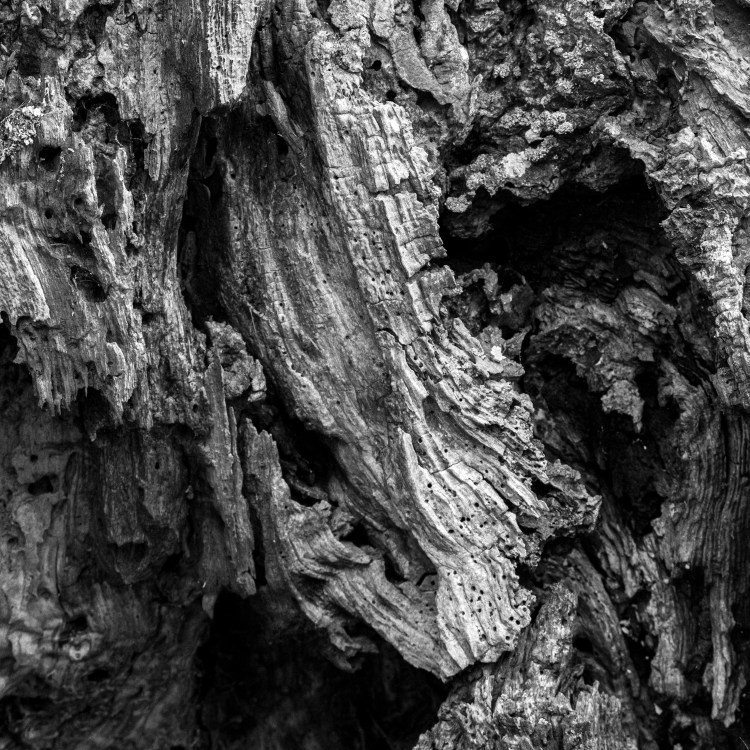
A bit of a Rorschach test depending on what you focus on. I like the strong contrasts and it follows the decaying theme from the last image. This was the only photo that I thought worked better in colour but left it as black and white to follow the theme.
With hindsight I think I would either replace this image with one of the candidates or leave it out altogether. I prefer the candidate image of the kissing gate if I’m honest but didn’t think it suited the tone of the other images.
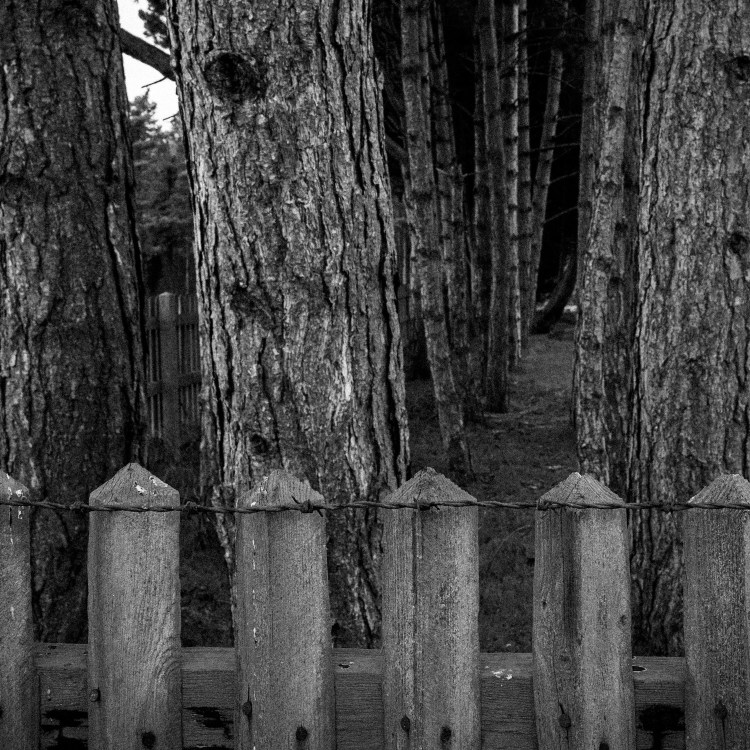
Are you trying to get in or get out? I liked the idea of the trees guarded by wooden posts. If I wanted to spend more time editing I would probably darken the trees more and lighten the lightest thin one much more but was conscious about anything other than simple edits at this stage of the course. In reality this fence surrounds a small sewage treatment plant.
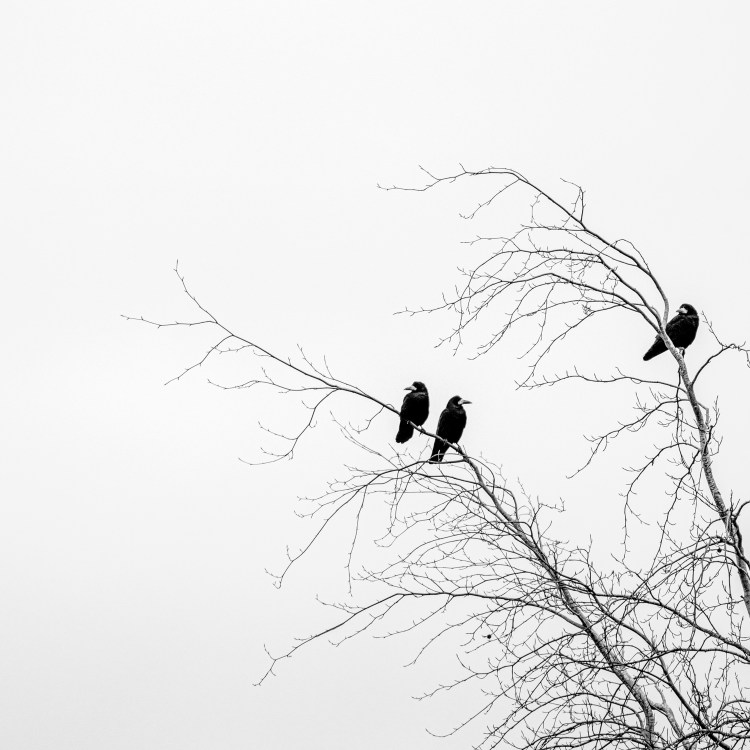
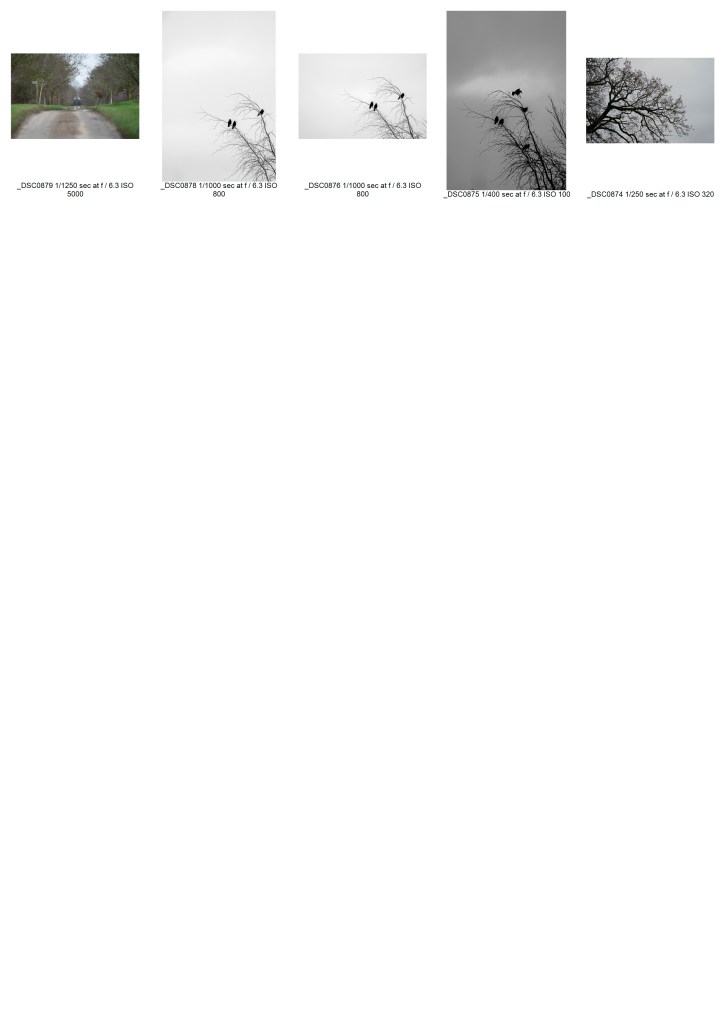
Not quite a murder. Crows were everywhere on this part of the walk. All three survey their own individual patch and add an air of menace to the image. Another use of negative space though I have kept the sky grey rather than white. I would have preferred the crows to be more compliant with the rule of thirds but this would have introduced a mess of branches that I didn’t want.
As beautiful as trees are they take on menacing shapes in the winter; groaning and thrashing with the wind and letting me know they are here with me.
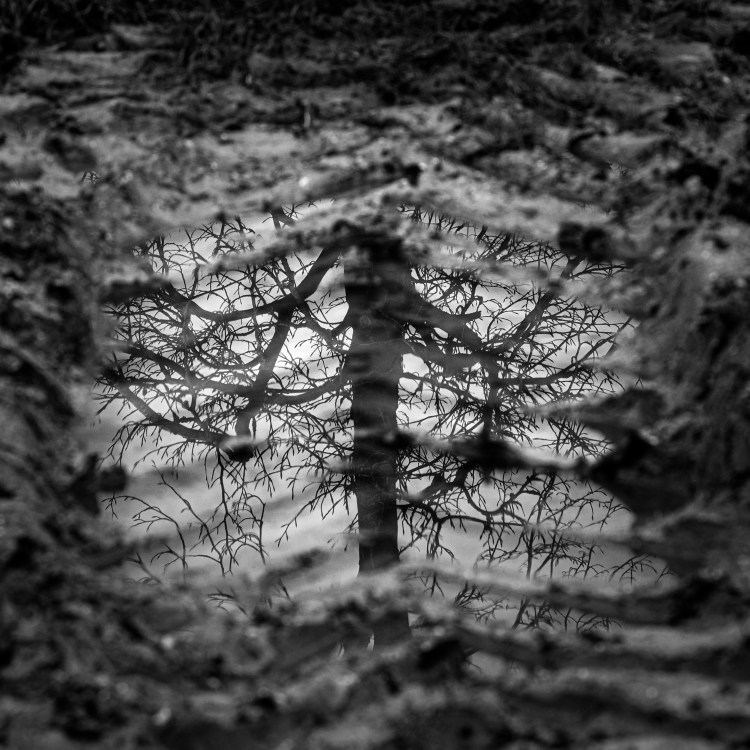
I originally liked the pattern of the tyre tracks in the mud but this didn’t fit with the theme. After looking from different angles I saw the reflection of the tree and manually focused on it. I like the natural vignette provided by the mud. I think maybe a slightly tighter crop and some ‘burning’ of the tree itself may have produced a better image.
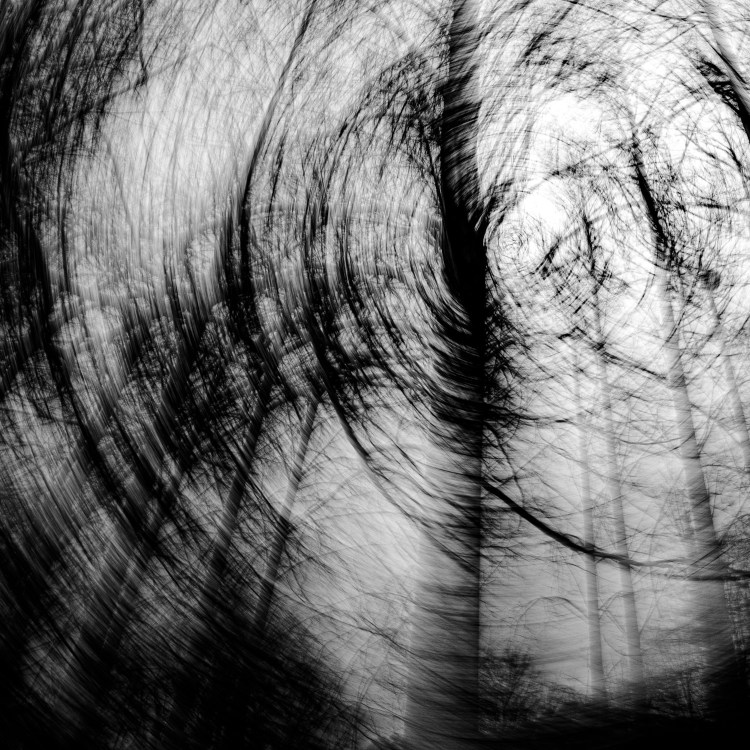
I wanted to finish on this image. I wanted the viewer to feel dizzy and unsure after viewing the previous nine as if the walk builds to a crescendo here.
The tallest trees on my walk in a small plantation – poplars I think. I invariably find myself standing by them looking up for tree creepers or nuthatches. I wanted to recreate the sometimes dizzying effect they can have so tried to create some motion blur to recreate that feeling. Of the dozen or so images I took this was the best – twisting the camera has created some nice circular blur but left the trees identifiable and I think is reminiscent of vertigo. It was good to try the technique. I would have liked to have stood directly under them for an even more dizzying effect but they are fenced off.
Reflection
On the whole I am quite pleased with the way the assignment came out. All the images were cropped and converted in post and I think with hindsight I should have changed the camera settings to shoot in B&W and square from the start to both help and challenge me at the time of taking the image rather than having the luxury of software to play around. I am however a big proponent of using a digital darkroom, I think it enables us to deliver the image we envisaged – something I learned from reading about Ansel Adams and marvelling at just how flat and uninteresting his images could look before being edited (and his Zone system of course).
As I mention in my notes above I think I will return to the same locations and shoot the same images for each season this year to see how different they can look and feel.
Candidate Images
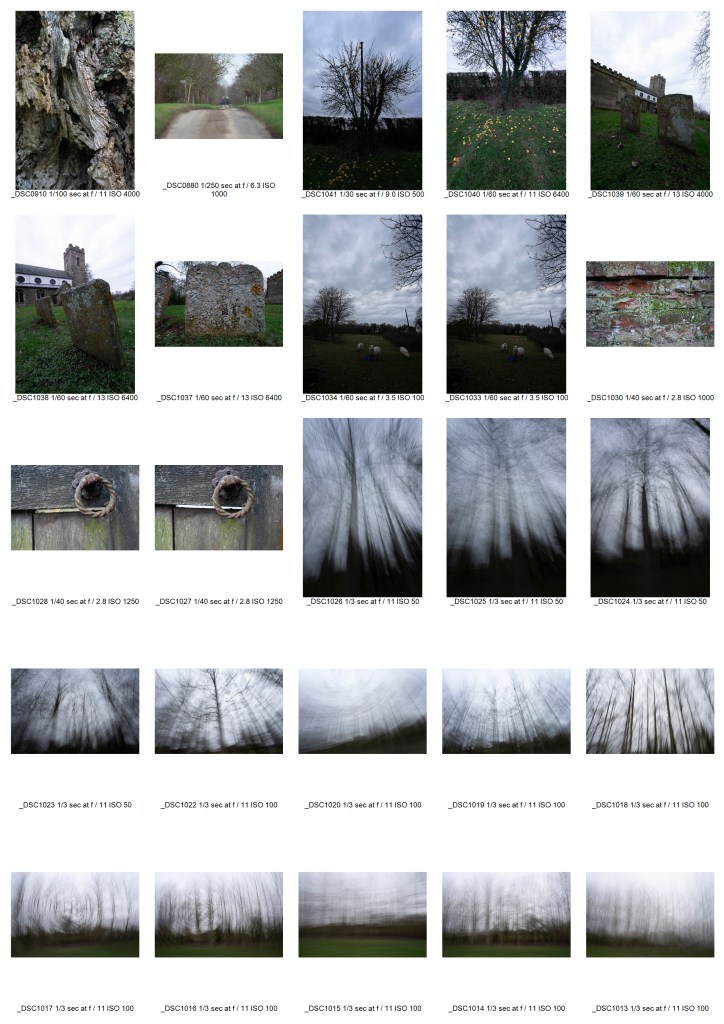
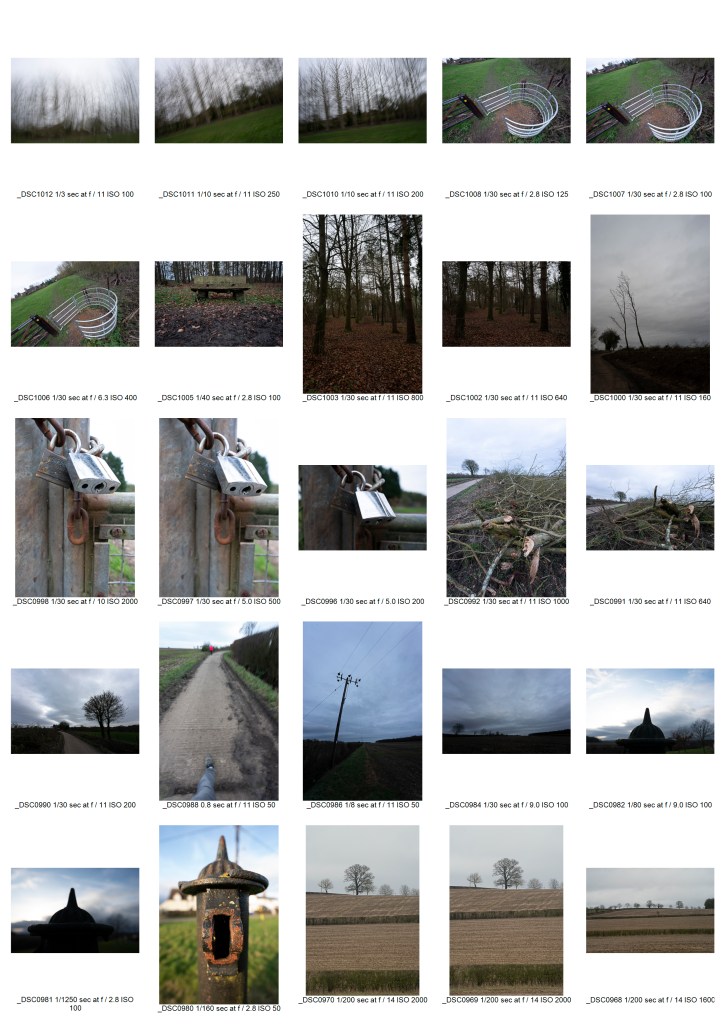
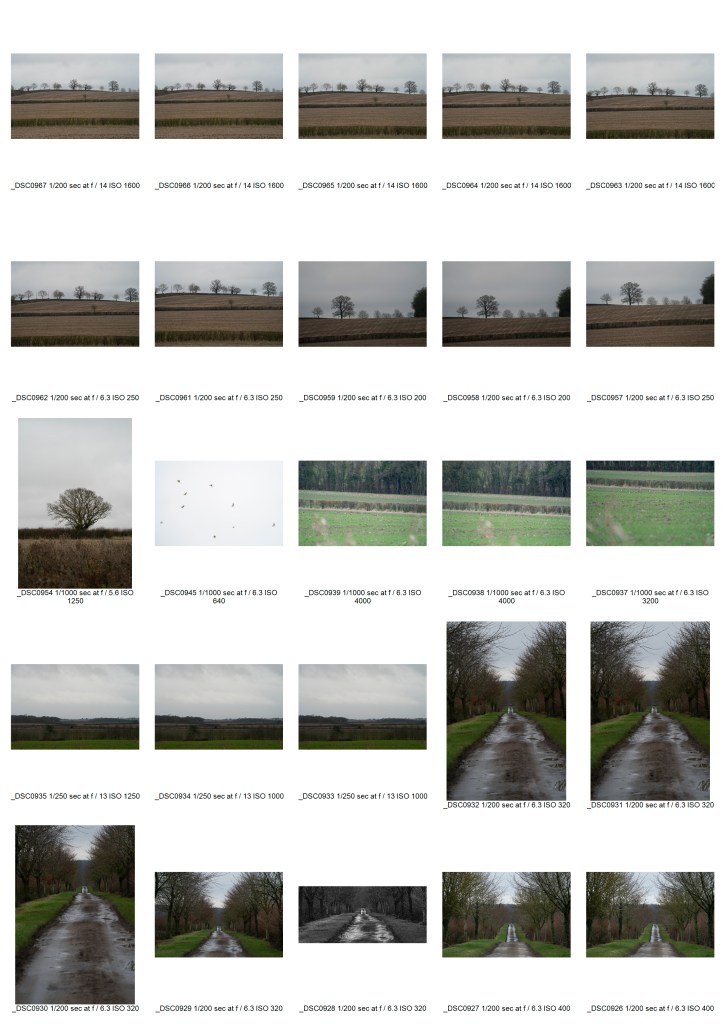
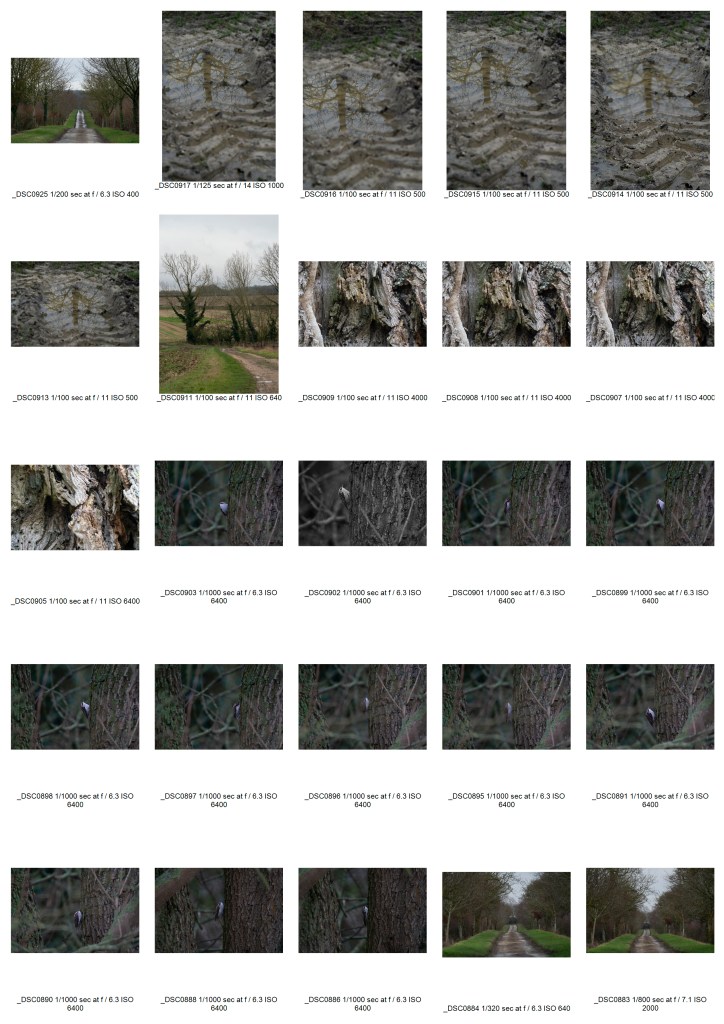
Contact Sheets
 Lee Abbey OCA Photography Degree