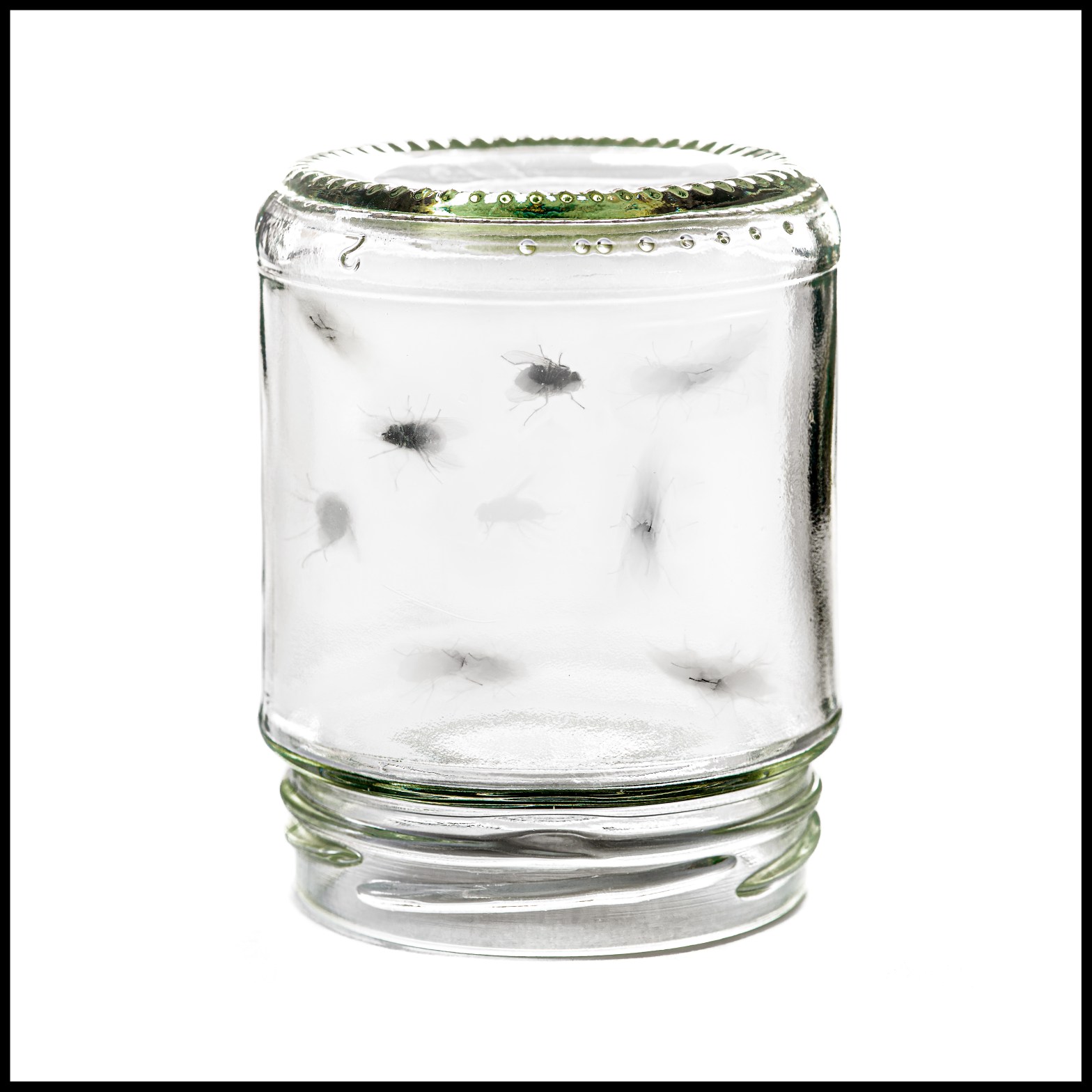
Using slow shutter speeds, multiple exposures or another technique inspired by the examples try to record the trace of movement within the frame. Be as experimental as you like.
For my research on this exercise see this blog post on my learning log which also contains all bibliography information.
Overview
I loved experimenting for this exercise – I have produced many different images and employed different techniques. Some planned images worked out well, some unplanned or spontaneous worked out better and some others were; well, lets just call them ‘different’.
I have used a scanner, shutter speeds ranging from 1/5 of a second to 4 hours (no good though – too much noise) and used hand motion to record blur.
I’ll go through each shoot individually and talk about my aim, process and technique and what I think of the results. Apologies in advance as there are quite a lot!
Shoot One
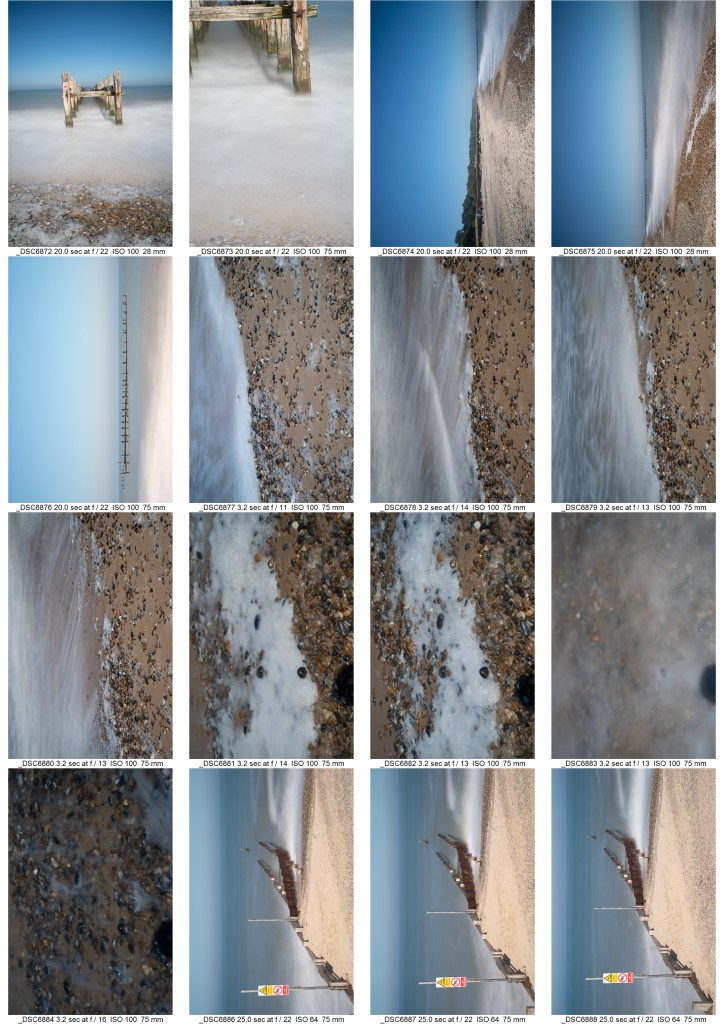
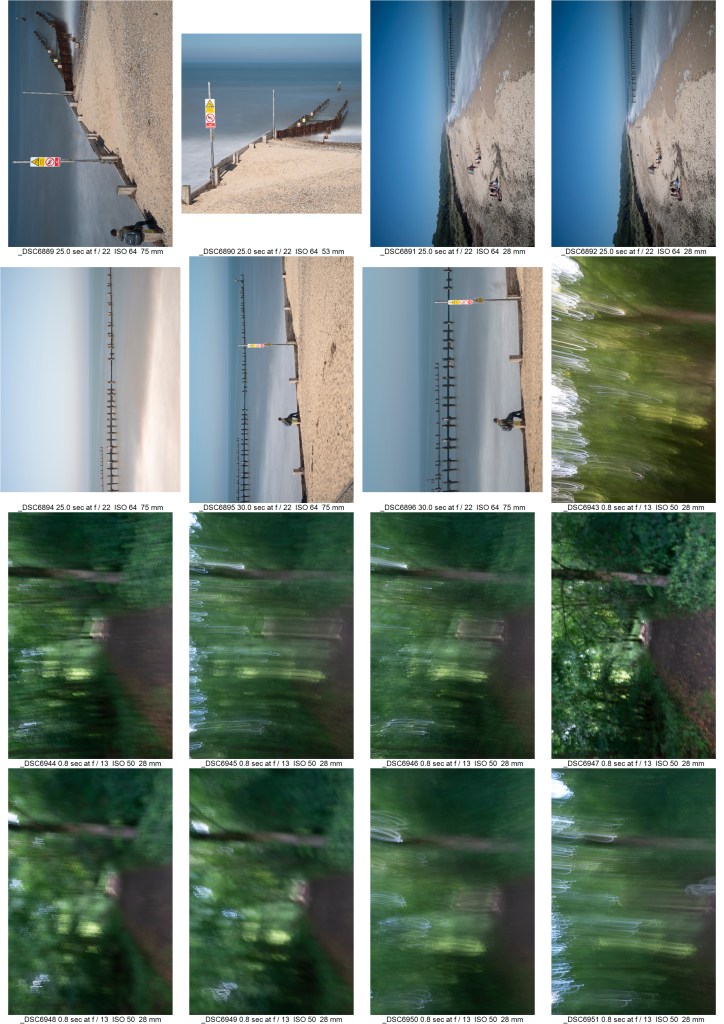
Location: A Beach, Suffolk
Equipment: Camera / Tripod / 28-75mm lens / 10 stop ND filter
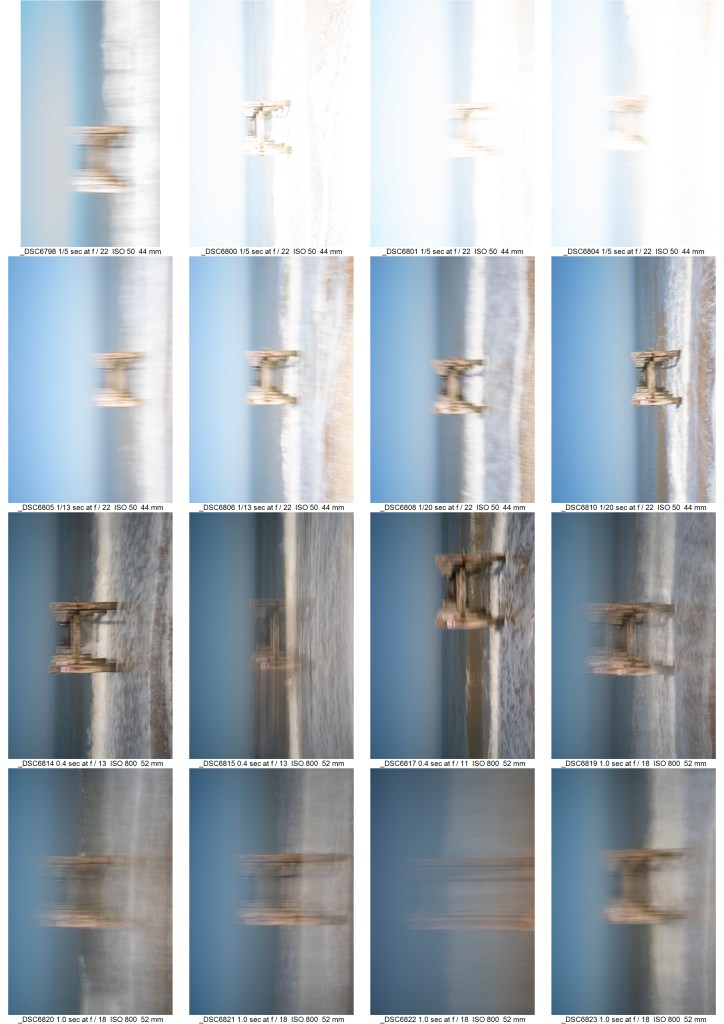
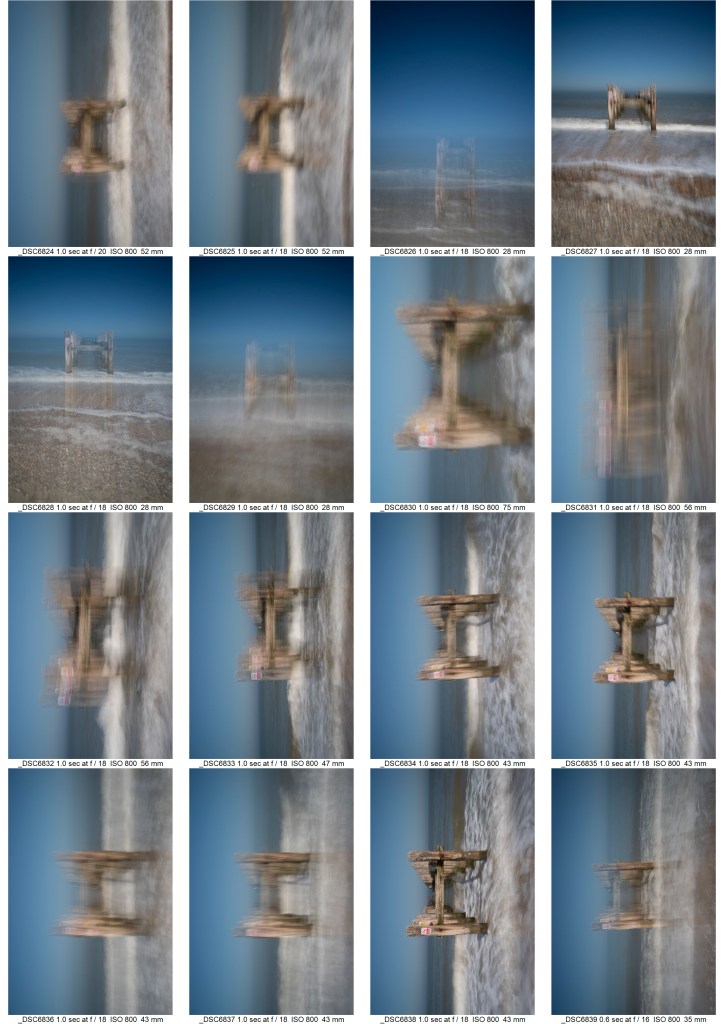
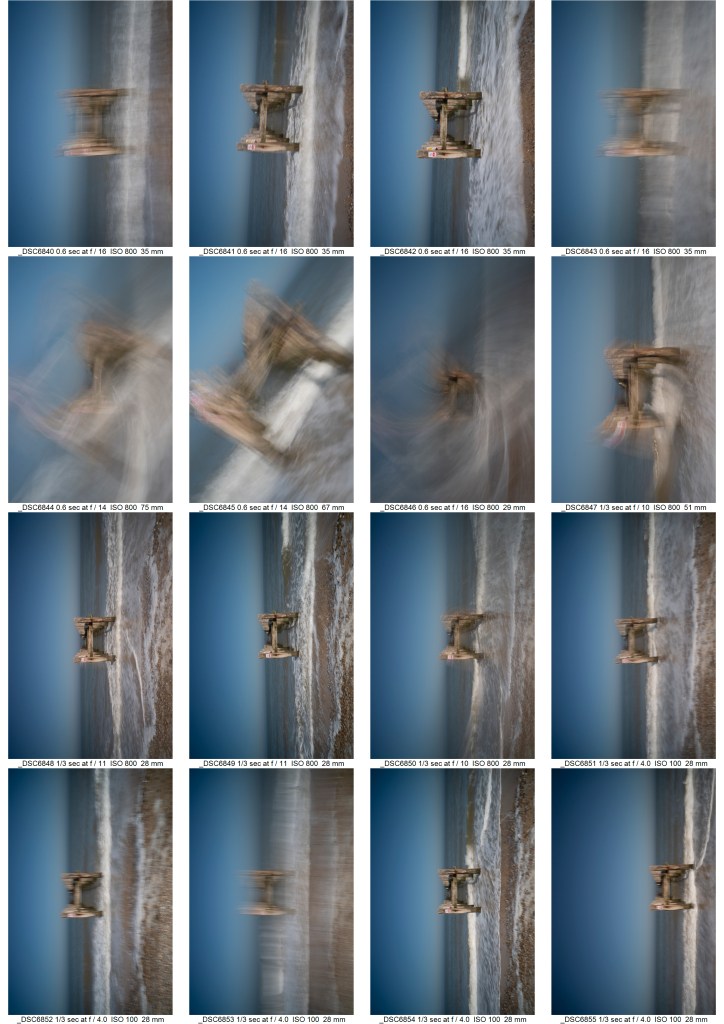
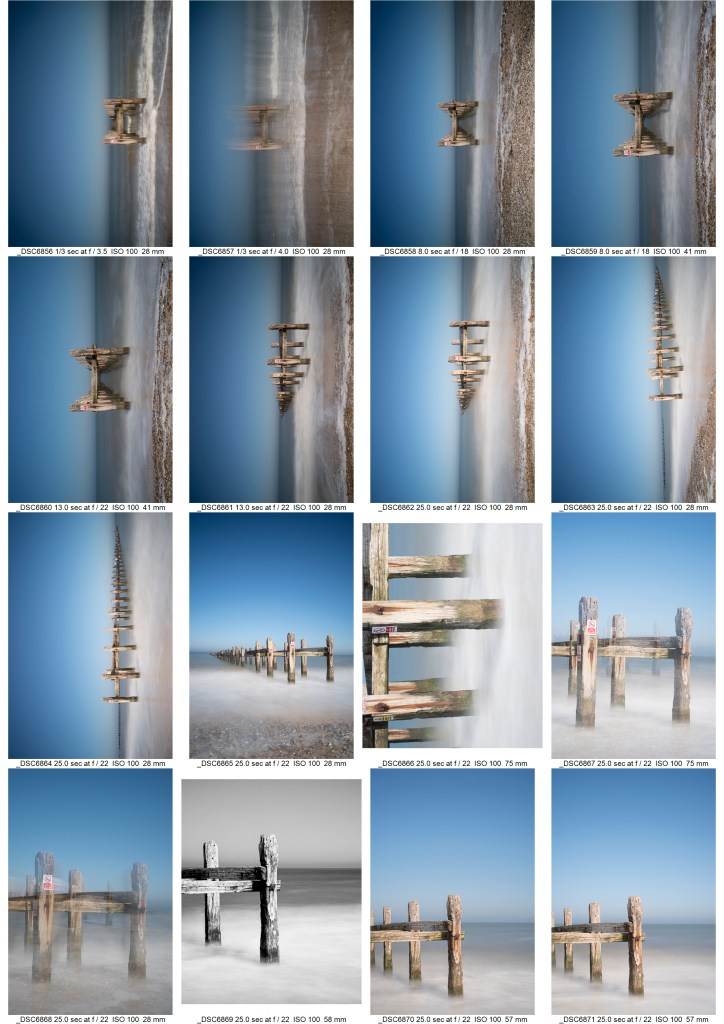
Method: I didn’t have much of an idea of what to shoot here prior to arrival – it was a beach I hadn’t been to before but knew it would be relatively quiet. I wanted to use the 10 stop filter to get some longer exposures but other than that I was winging it. It was such a bright day however that even the 10 stop filter couldn’t give me really long times but I managed to get upto 40 seconds. Time was limited as it was a family day out so I had around 40 minutes,
Outcome: I initially experimented with images of the groynes on the beach – these were boring due to lack of clouds and being unable to get the exposure long enough because of the bright sun. I was happy with one of the images that despite being massively overexposed actually looked ok when tweaked in lightroom, there is blur on it which gives an abstract feel. A couple of the others are ok but nothing special – they blur the sea but lack interest. I then moved off the beach and took a couple of images down the beach at the few people there, I didn’t think much in camera but realised later that they showed some interesting movement of people literally leaving traces of themselves – it took me several attempts to get a crop I liked in post . A few others of a boy sitting not wanting to get in the water with his friends were also interesting as he hardly moves but again you see traces of his friends in the water. A still seagull gives added interest but I found that compositions foreground was a bit dull, I found another angle to shoot him from which has less dead space which I think I prefer but I also like the diagonal line literally cutting the other image in two.
Images:
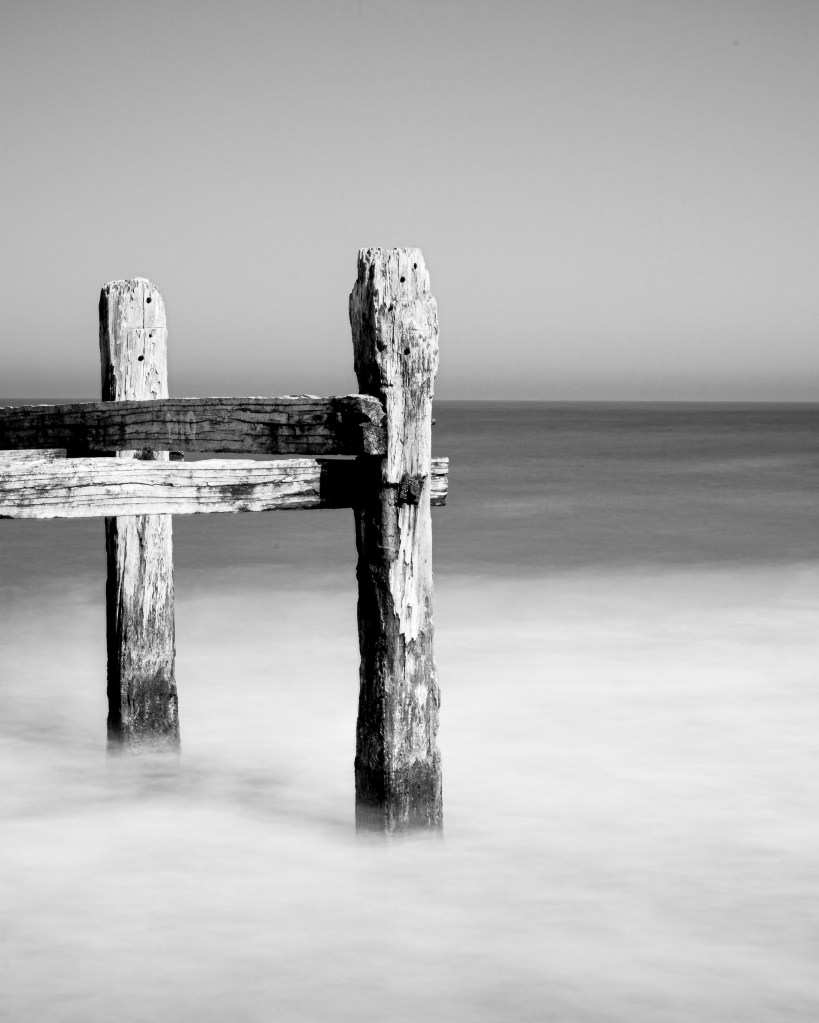
25 secs / f22 /ISO 100 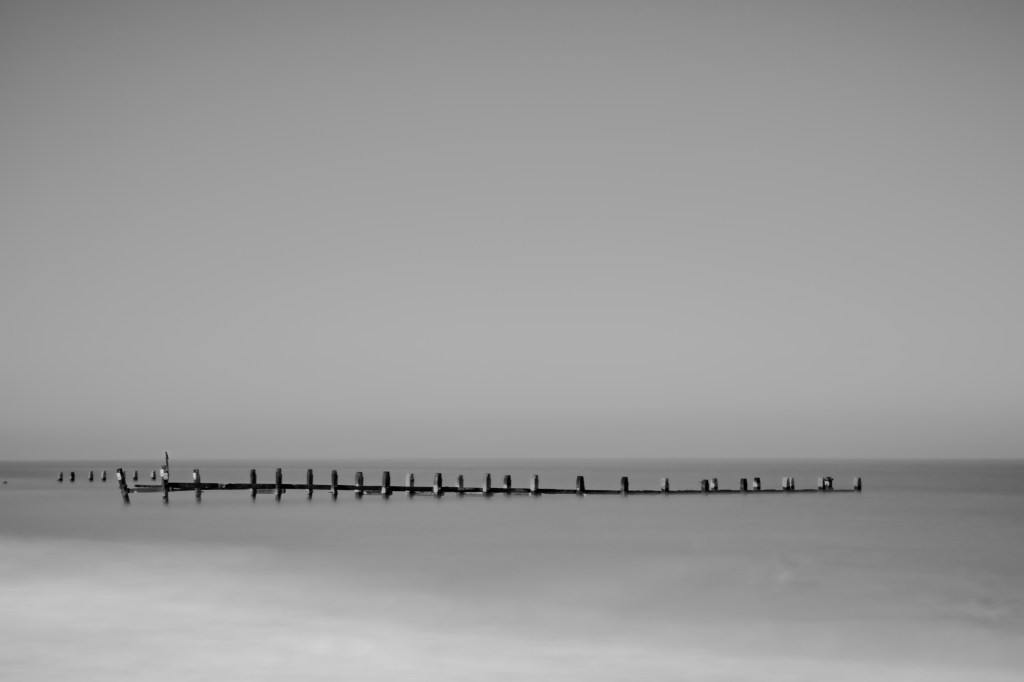
20 secs / f22 / ISO 100 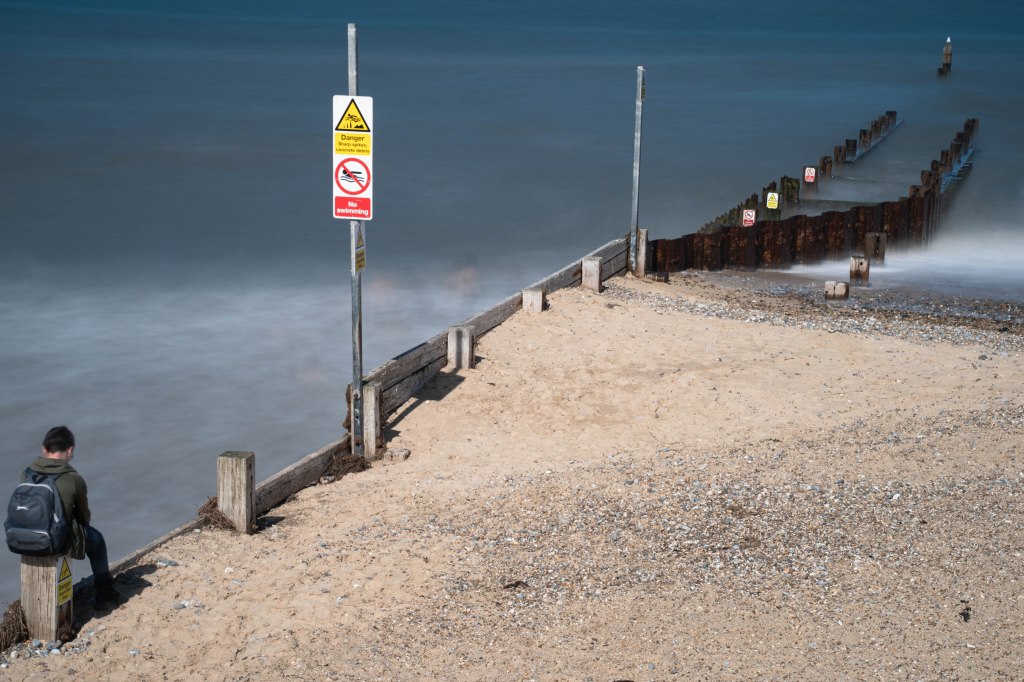
25 secs / f22 / ISO 64 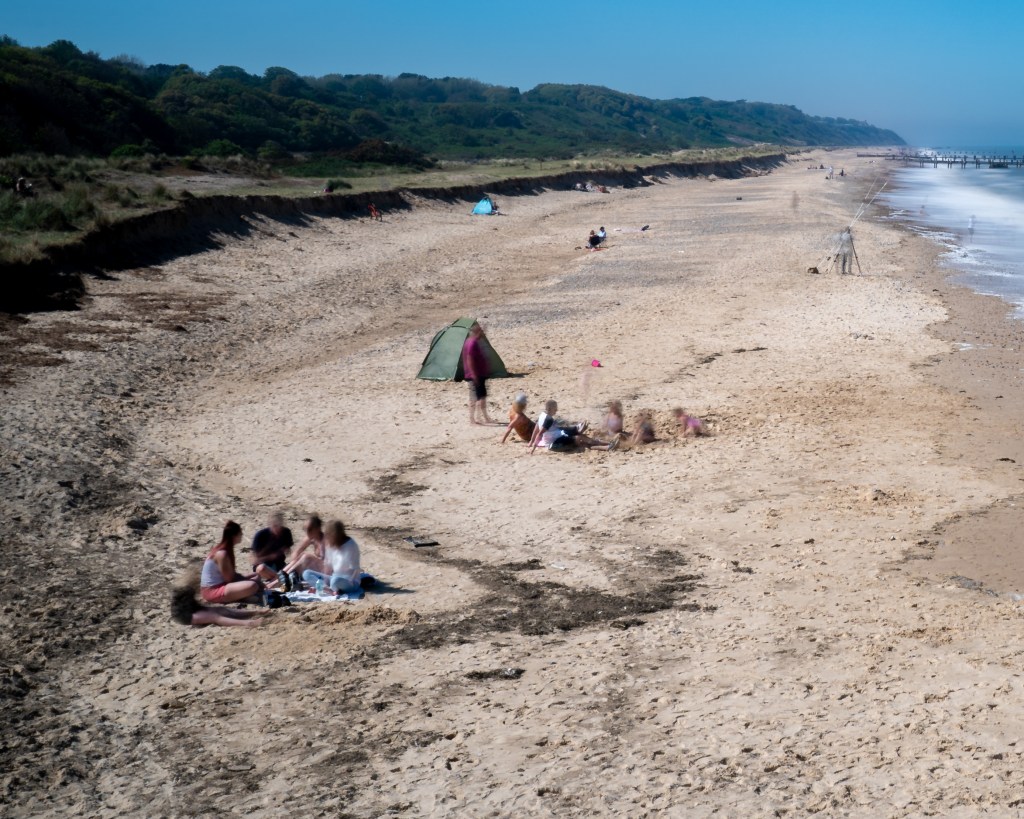
25 secs / f22 / ISO 64 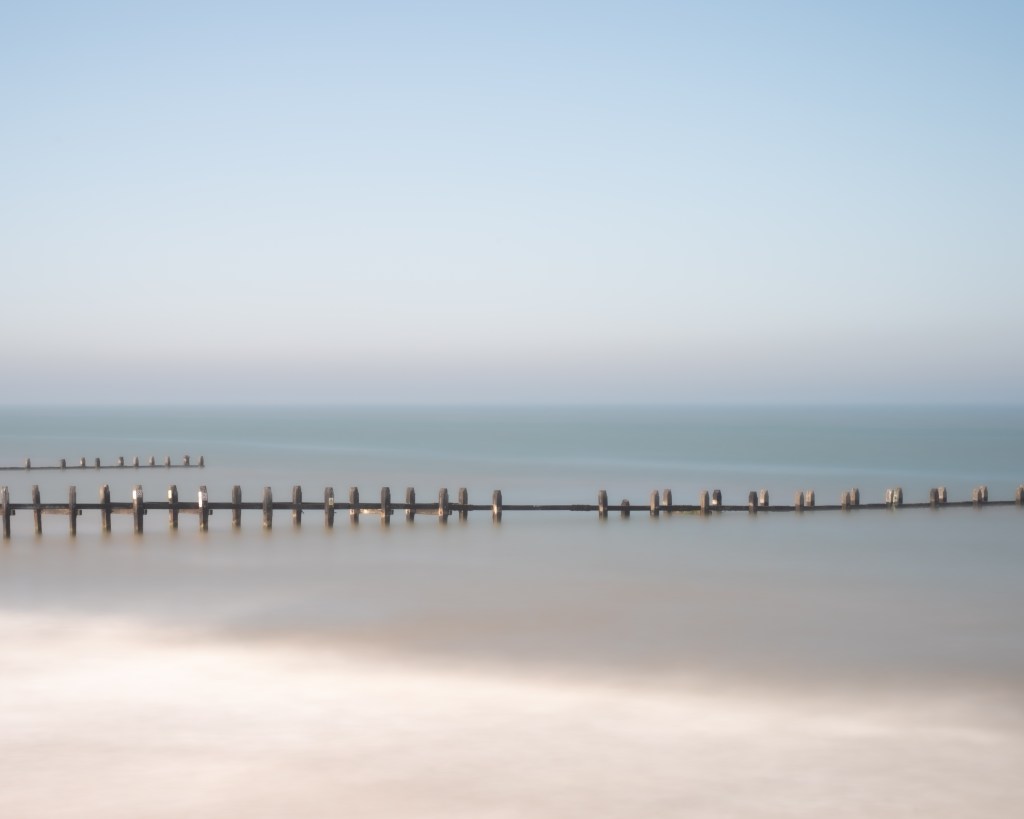
25 secs / f22 / ISO 64 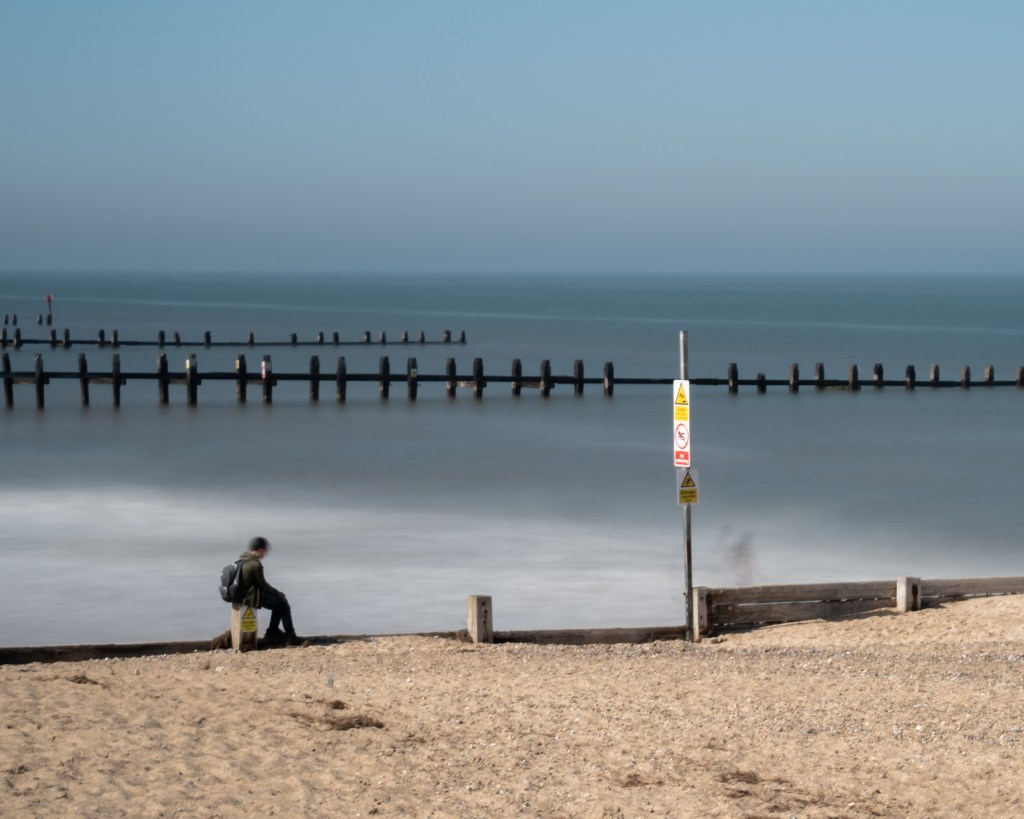
30 secs / f22 / ISO 64 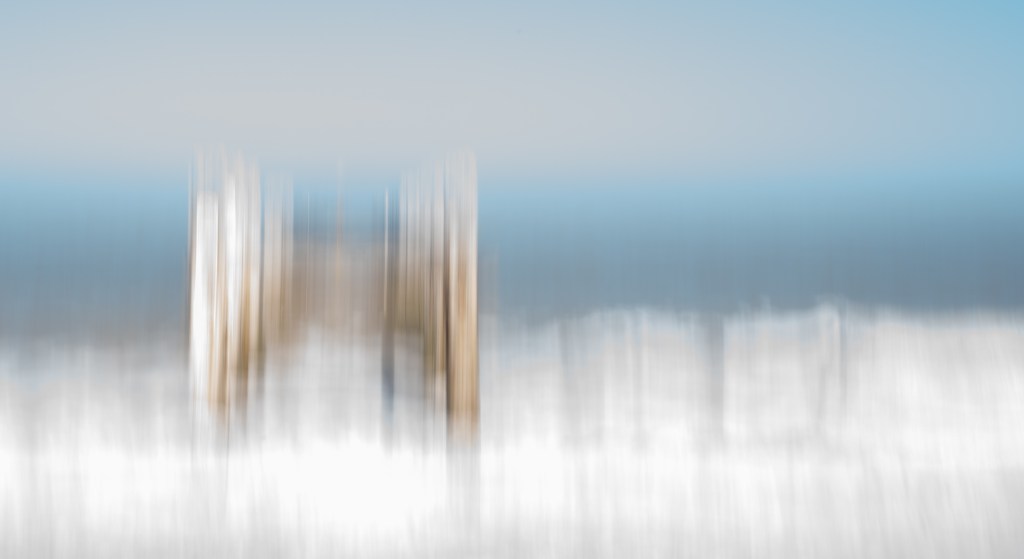
1/5 sec / f22 / ISO 50
Reflection: The most successful images are those containing people – they all show traces of movement which add much more interest. Apart from the bottom image the other ‘landscapes’ are derivative and quite boring – I include them here as examples for my own learning.
Shoot Two
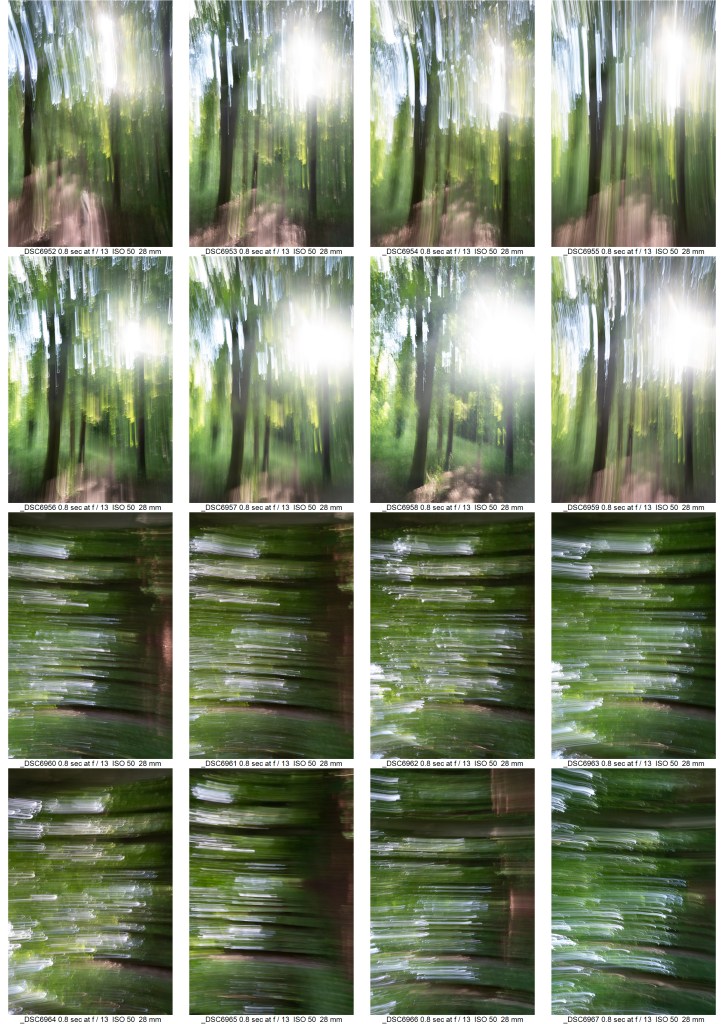
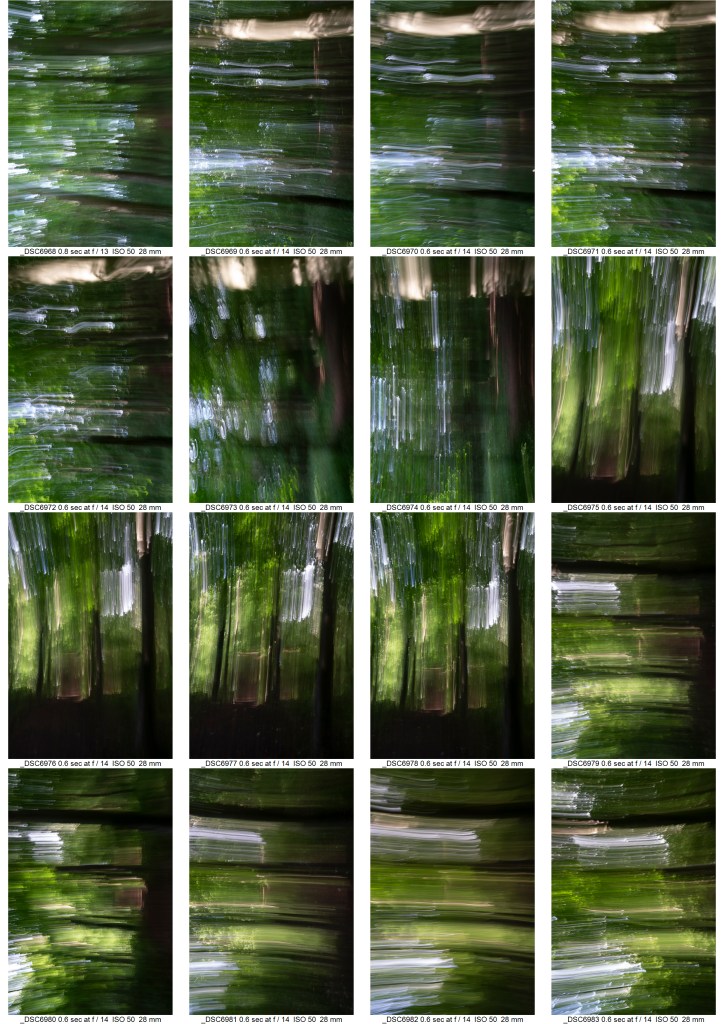
Location: Local wood, Suffolk
Equipment: Camera / 28-75mm lens
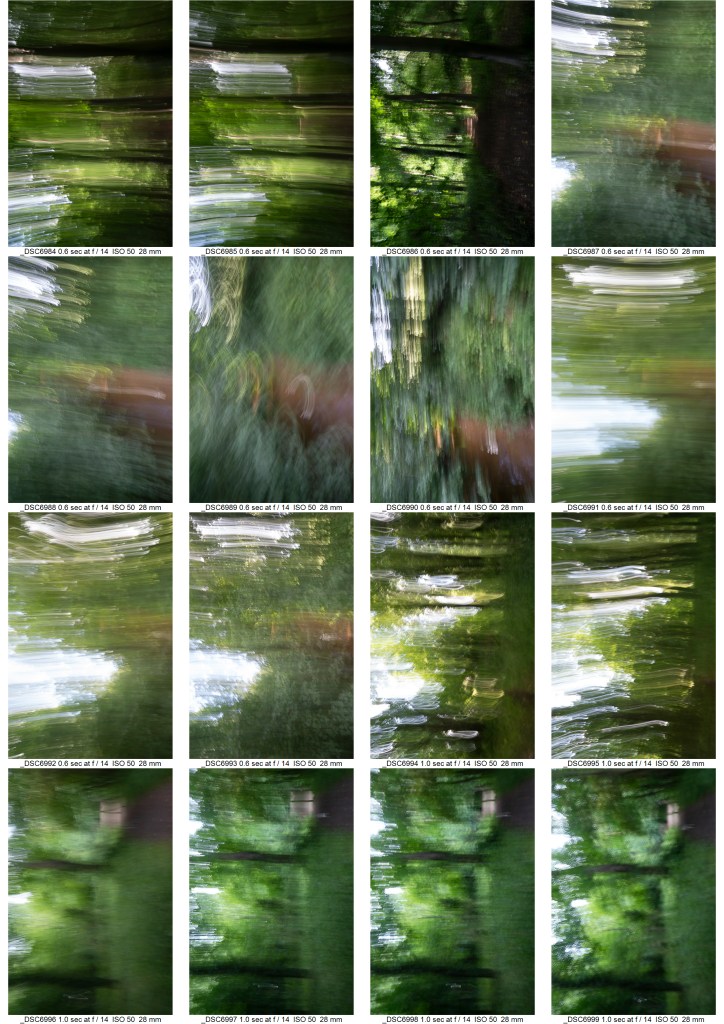
Method: I wanted to photograph the wood on a sunny day at slower shutter speeds with various degrees of hand movements on the camera. I wanted it to be bright to allow variations in greens and therefore hopefully interest. I was hoping for something slightly abstract but still recognisable and perhaps even impressionistic. Most of the images employed up and down movement to follow the lines of the trees. In some I took the images deliberately out of focus.
Outcome: I was happier overall with this set of images. Experimentation largely worked and going in with a better understanding of what I was going to do helped. When producing abstract like images there is no right or wrong so picking favourites was quite hard – I’ve included an example below of the exact same scene with three different techniques. The middle image is neither one thing or the other and just looks like a badly taken snap. I could make a case for either of the 1st or 3rd image. The 1st is more painterly but the patch of light in the middle looks odd here. The 3rd is deliberately de-focussed as well as shaken and I think there is a certain mystery to the image so that one of the three would get my vote.
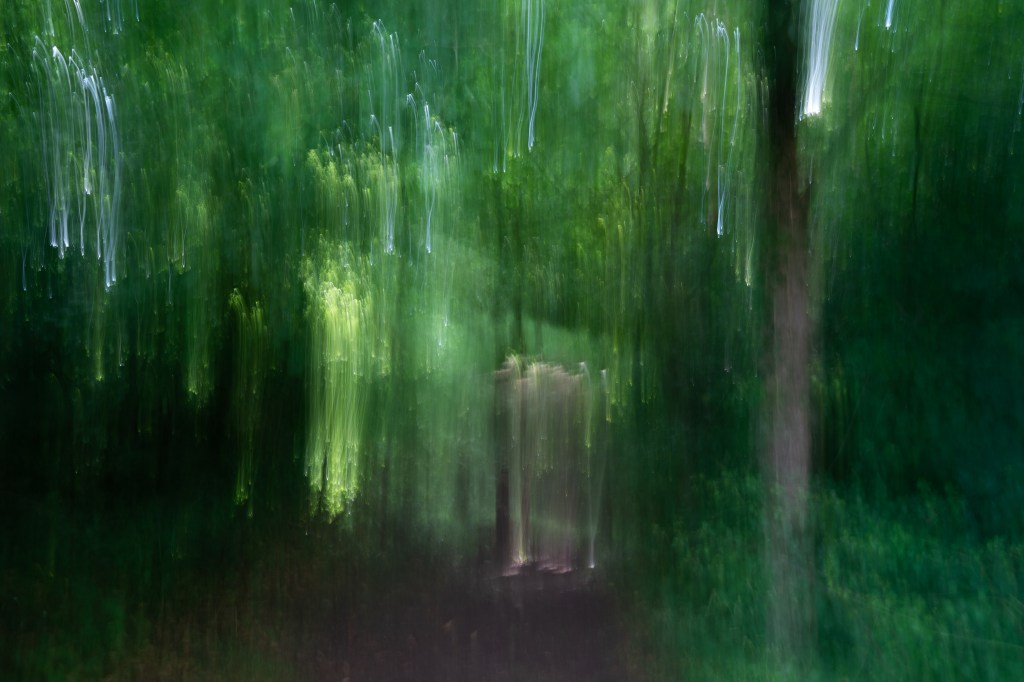
0.8 sec / f13 / ISO 50 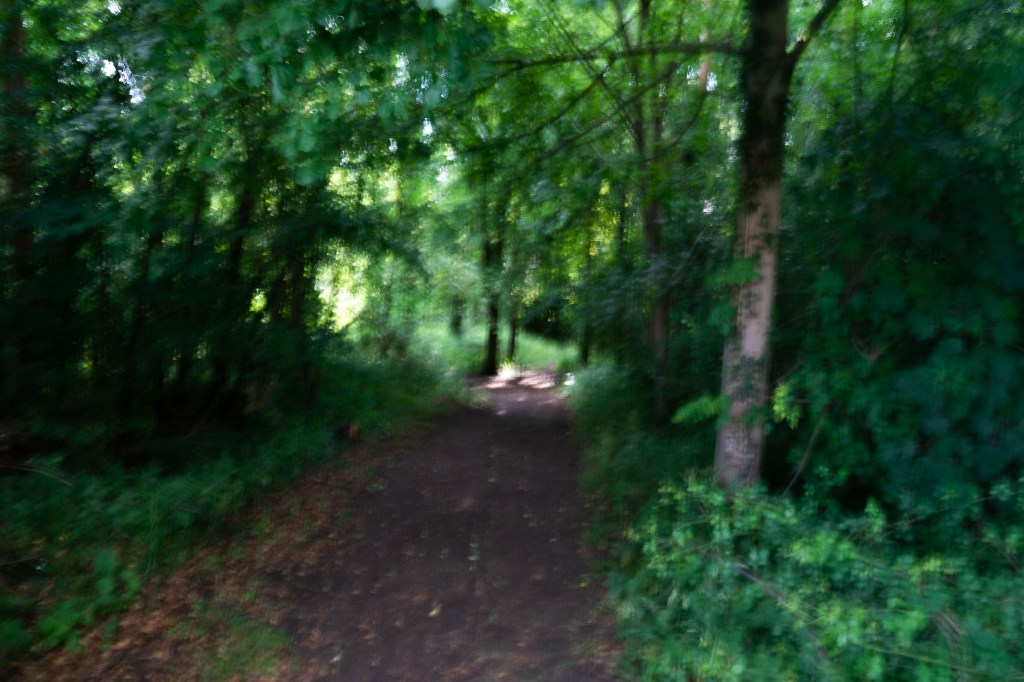
0.8 sec / f13 / ISO 50 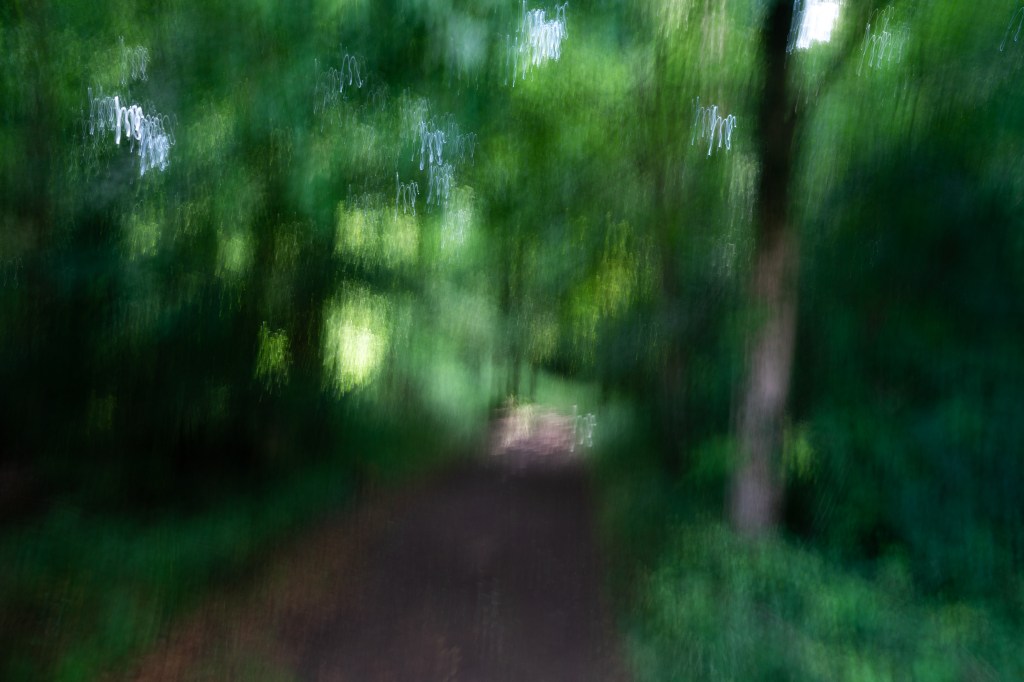
0.8 sec / f13 / ISO 50
The last images from this set are my favourite from the shoot. I have used texture and clarity on two of them to accentuate the traces of light left by moving my hands up and down.
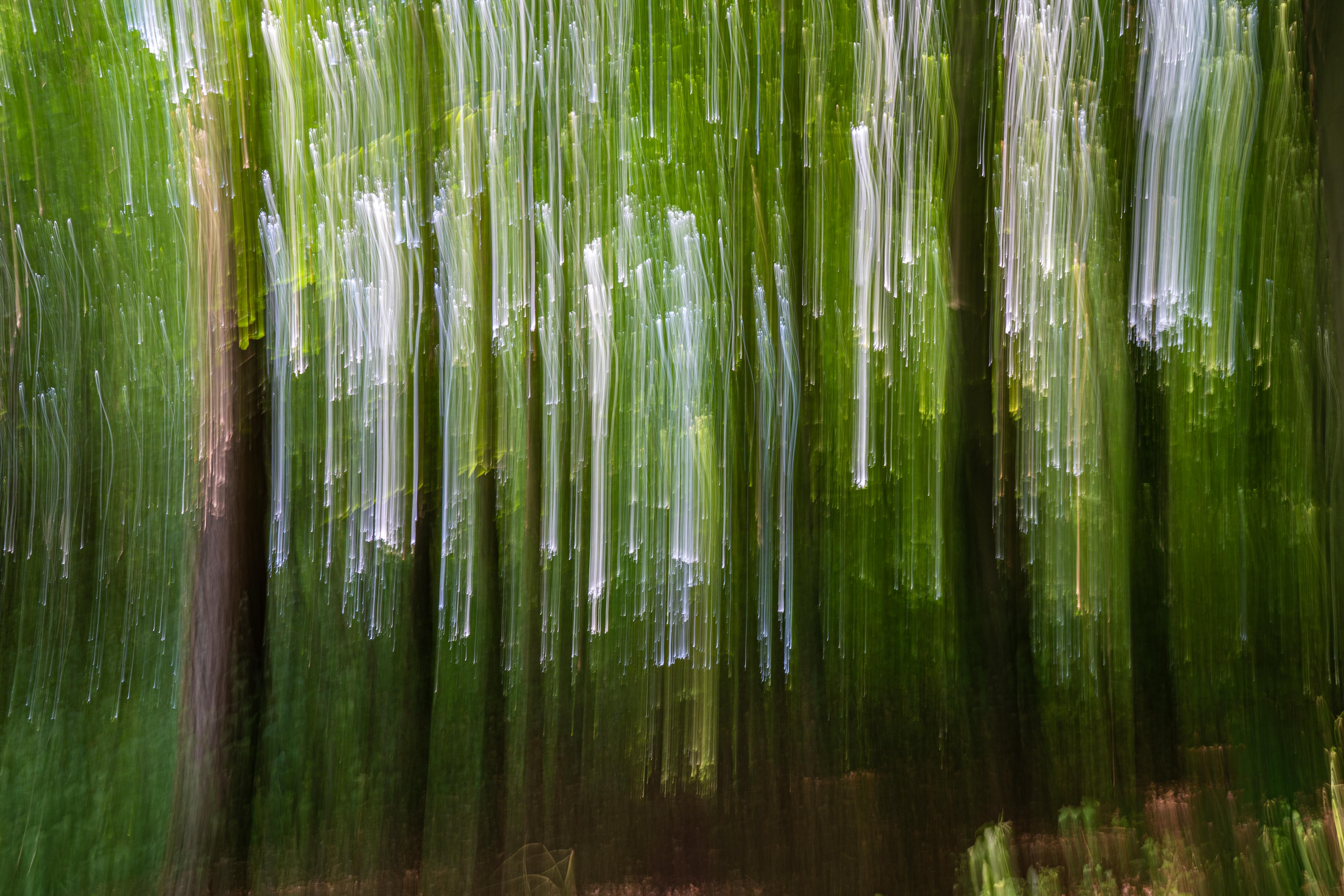
0.8 sec / f13 / ISO 50 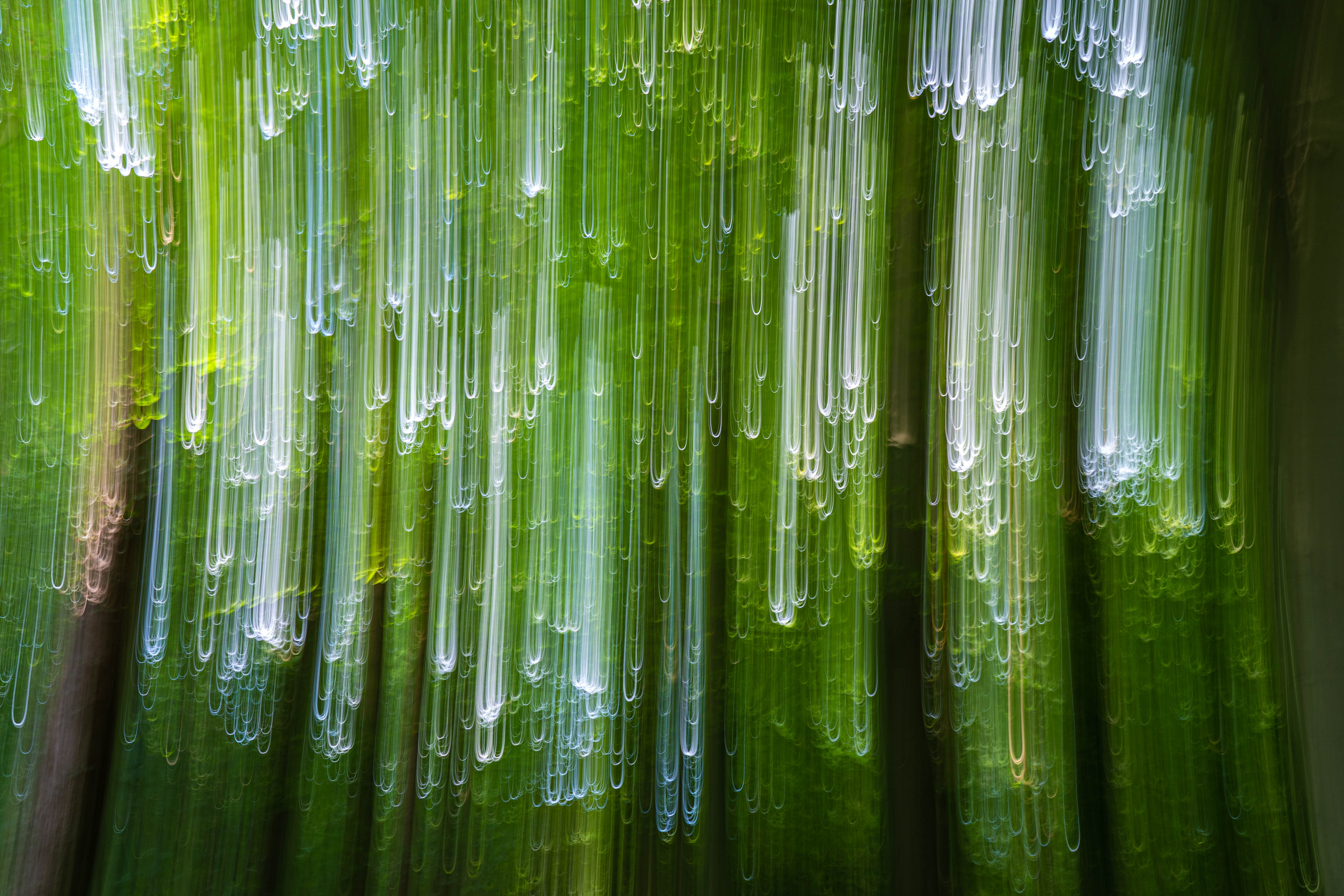
0.8 sec / f13 / ISO 50 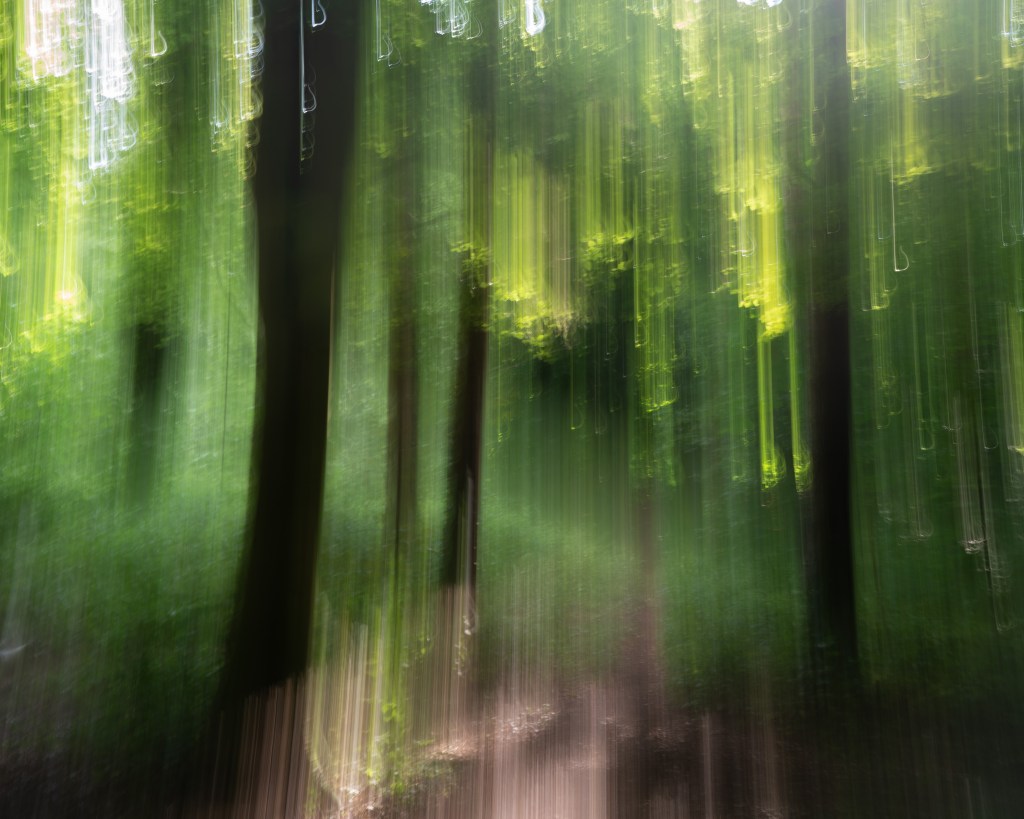
0.8 sec / f13 /ISO 50
Reflection: I need to do more of this – I think there is potential for some really interesting shots and trying different hand motion techniques and shutter speeds will yield interesting results. ICM – intentional camera movement – I knew there was a name for it. I’ll spend some time seeing how others do it.
Shoot Three
Location: Home
Equipment: Scanner/Printer
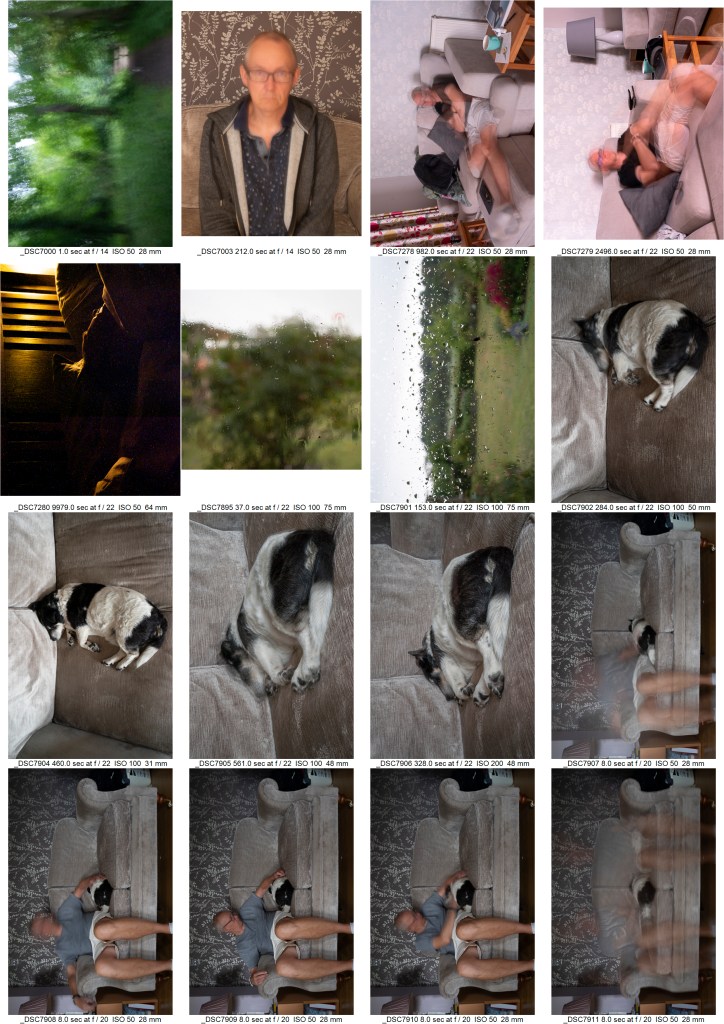
Method: I had tried slitscanning via a mobile app but didn’t produce anything worthwhile. I then saw how someone had used a scanner to make interesting movement images and decided to try it using my face. Taking them was a slight faff as my printer wouldn’t talk to the pc at the time which meant it was sending each image via email. Otherwise I would have taken lots more images (i took around 20).
Outcome: Surreal and scary and interesting. I think the results and my actions whilst making them were a surprise to me. I had no idea what I was going to do and so to pull the faces I did was a little odd but experimentation is key!! I have to say I really like the results and would try it again but perhaps include objects. The last of these 6 is my favourite along with the third. None of these have been retouched at all.
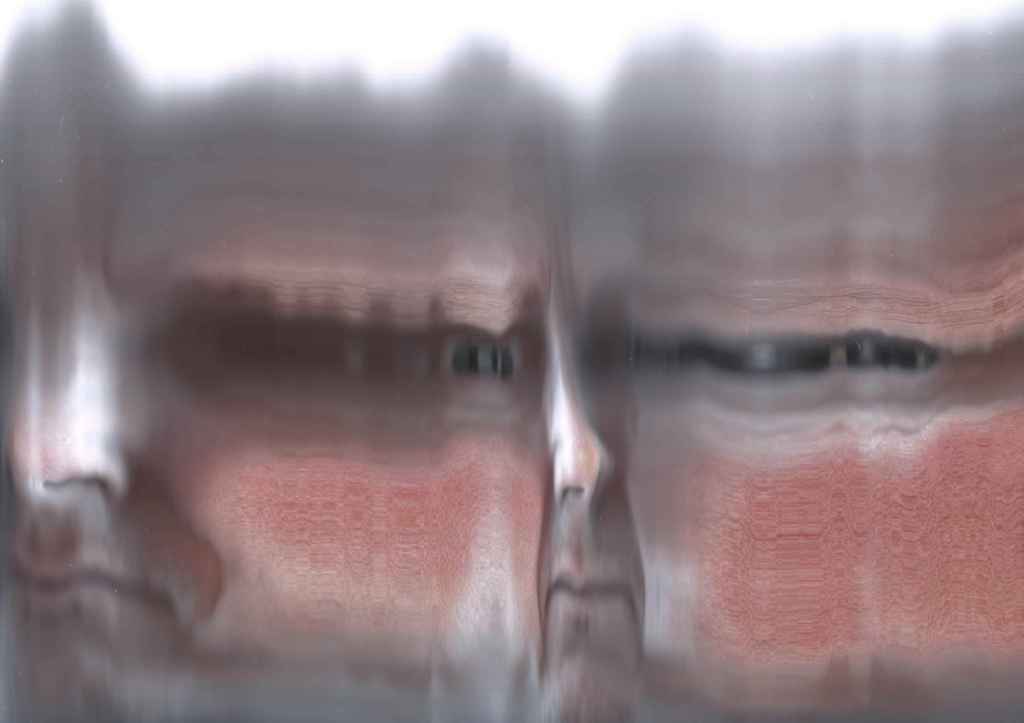
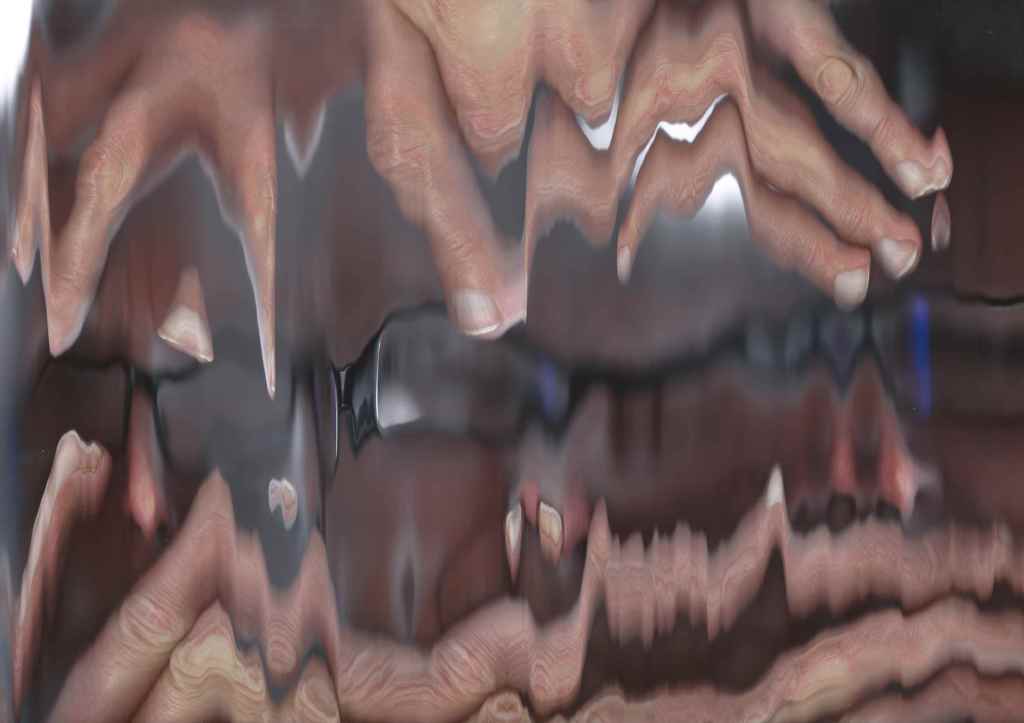
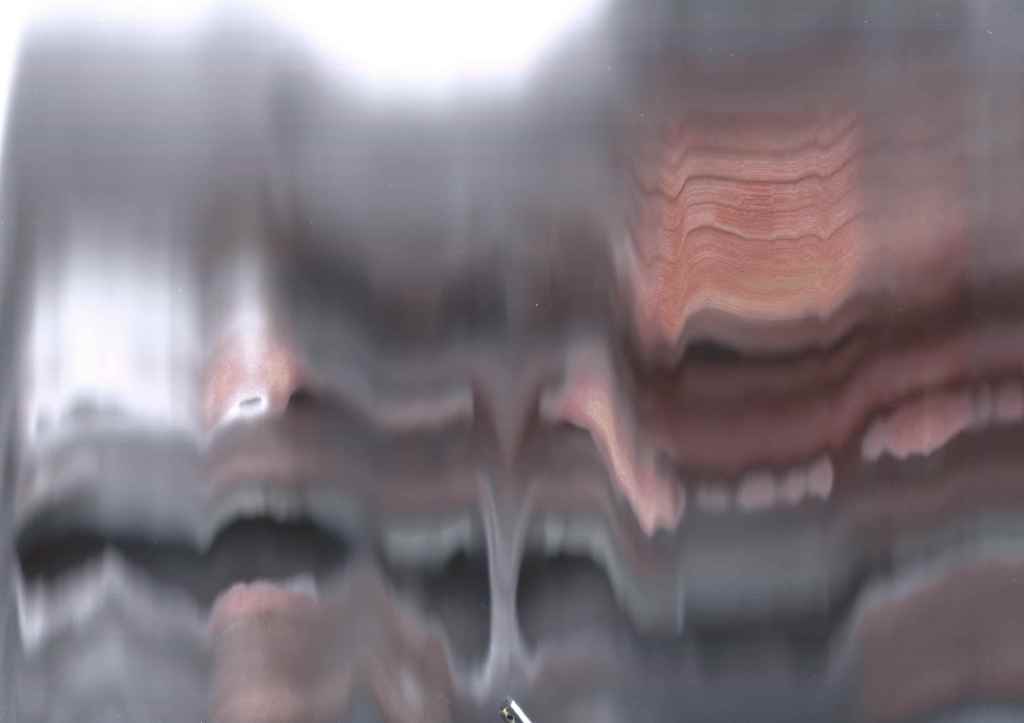
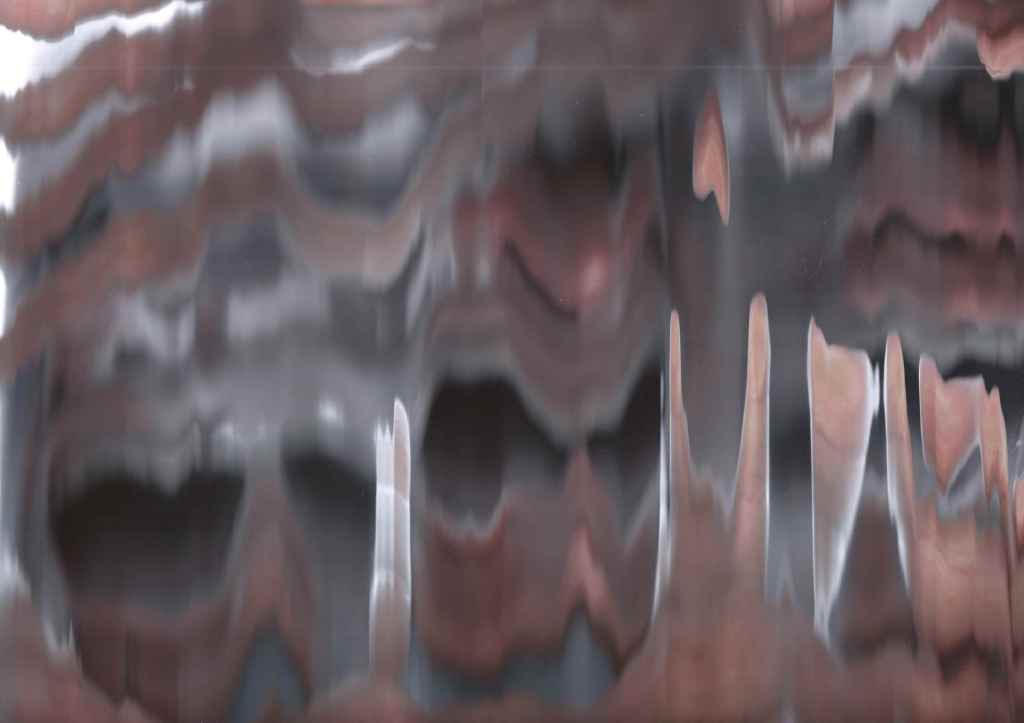
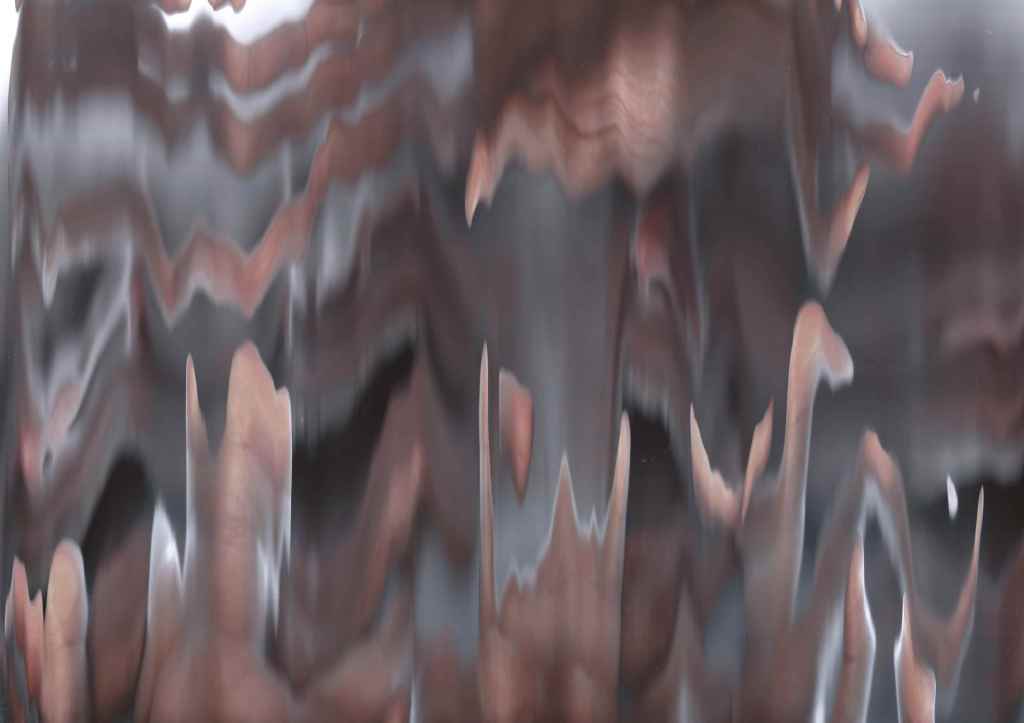
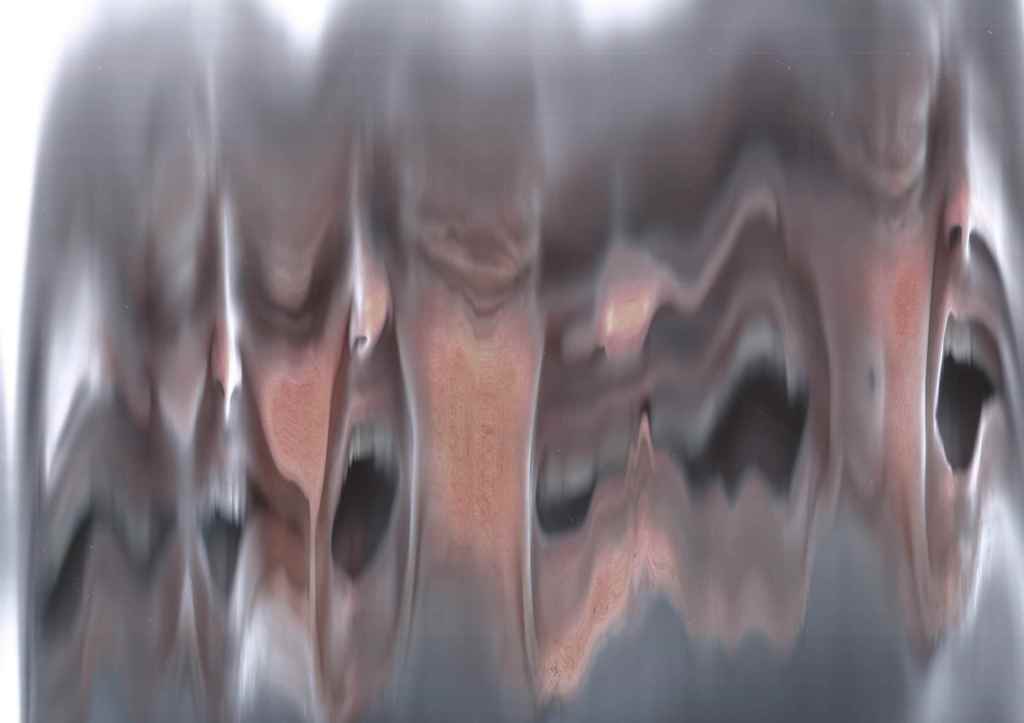
Reflection: It’s great to discover something, experiment with it and be pleased and surprised by the results so my only reflection for this is that I perhaps should have spent more time experimenting with other objects. I know I was not flat to the scanner in most of them and so the images are slightly out of focus but I didn’t want a load of squashed face images. I wish the colour pallette was different rather than just greys and flesh tones so next time I would spend some time adjusting the look in photoshop.
Shoot 4
Location: Home
Equipment: Camera, 28-75mm lens, tripod, Ten stop ND filter (on some)
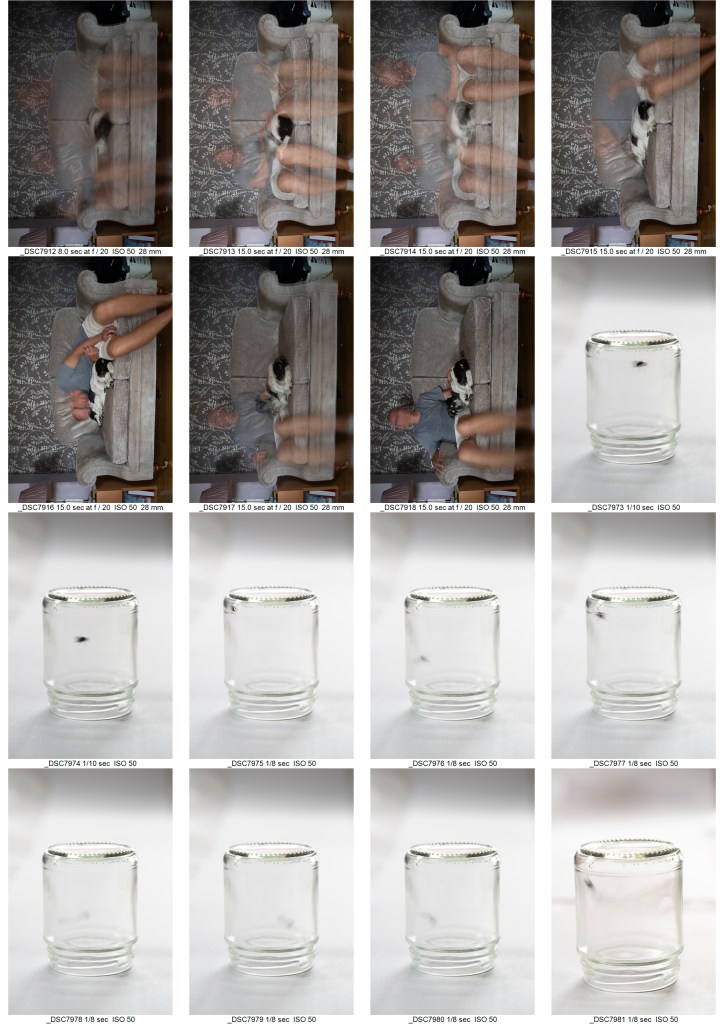
Method: This was more of an ongoing experiment to try and get really long exposures indoors. I was looking for passing time images like a limited version of the modified camera images taken by Michael Wesely. As well as this there were other images of exposures in seconds rather than minutes trying to catch the ghost like qualities of Francesca Woodman. Most images were taken using only natural light in the room, if it was night it may have meant next to no light or a reflected light from a screen. Depending on the exposure I was after I chose to employ an ND filter to get longer shutter speeds.
Outcome: Not great. I had long exposure noise reduction turned off in camera as to have it turned on would double the exposure time. I didn’t want that – being concerned bout the time it would take and even if the battery would last that long. A mistake – several of the images have so many digital artifacts that they are worthless other than as an attempt and a learning not to do it the same way again.
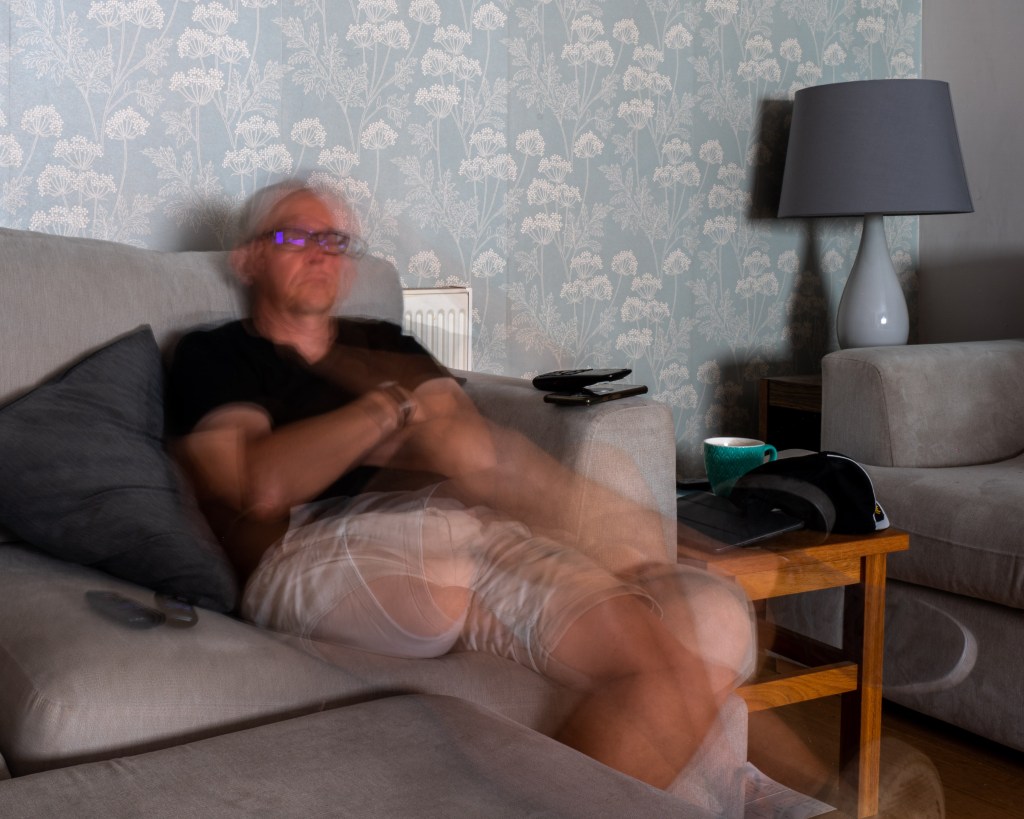
40 mins / f22 / ISO 50 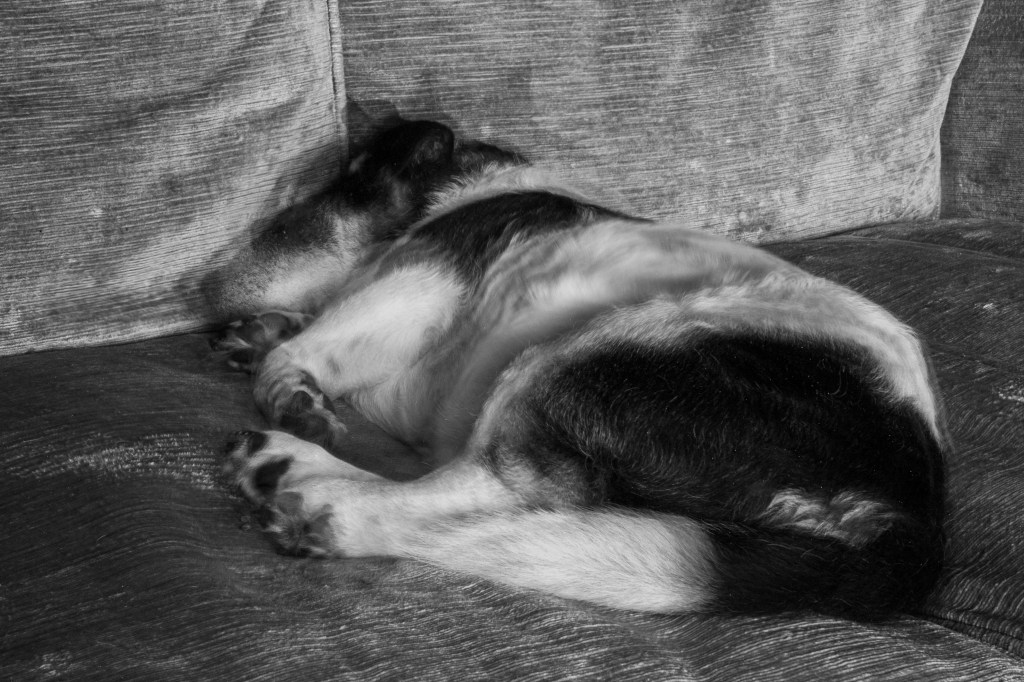
9 mins / f22 / ISO 100 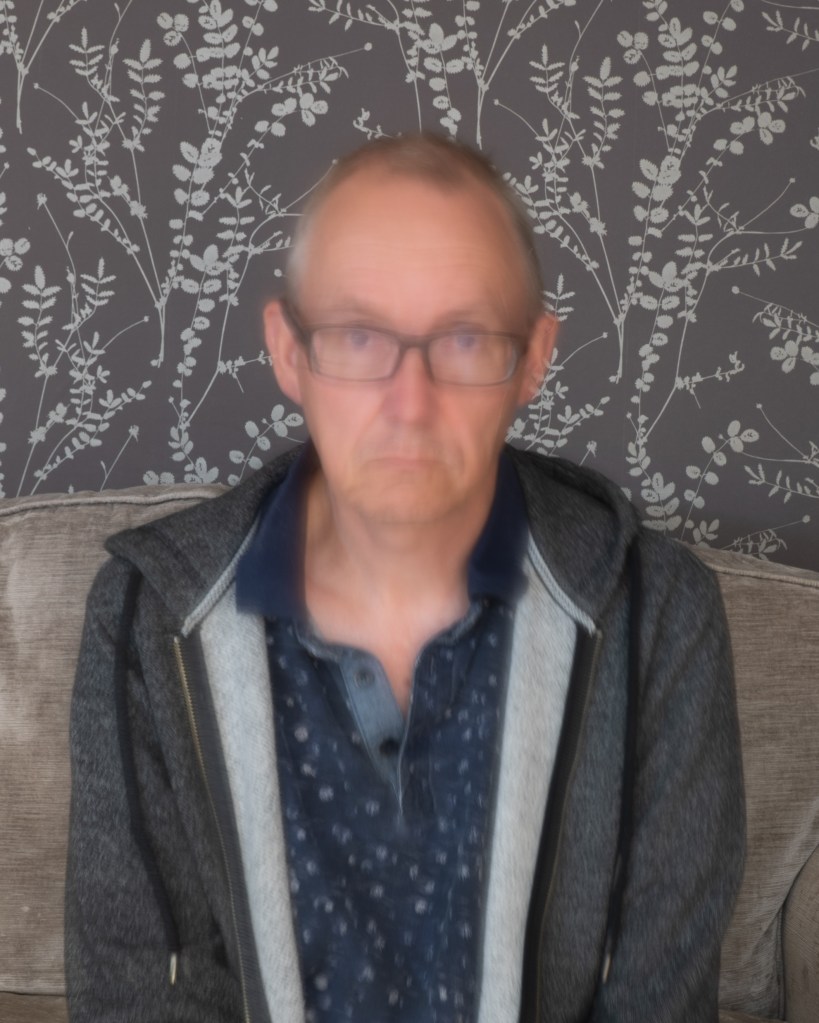
212 secs / f14 / ISO 50 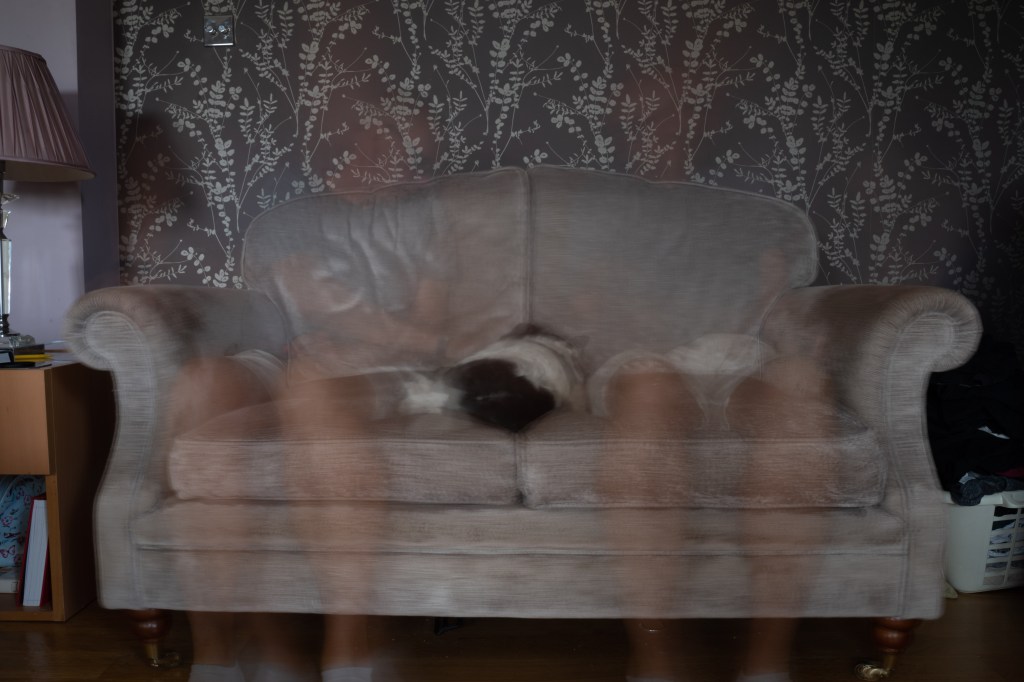
15 secs / f20 / ISO50
Reflection: Because this wasn’t a specific planned shoot the piecemeal nature of it meant that I was taking just one or two images at a time for the most part spread over several days. I think the lack of planning exactly what I wanted worked against me a little. The first of the four is my favourite purely because over the course of 40 minutes I actually nod off. I think to attempt something like this again requires more thought and planning before execution. The long exposures mean that time taken before pressing the shutter is well spent.
Shoot 5 (Final Shoot)
Location: Home
Equipment: Camera 90mm macro lens, tripod, two flash lights
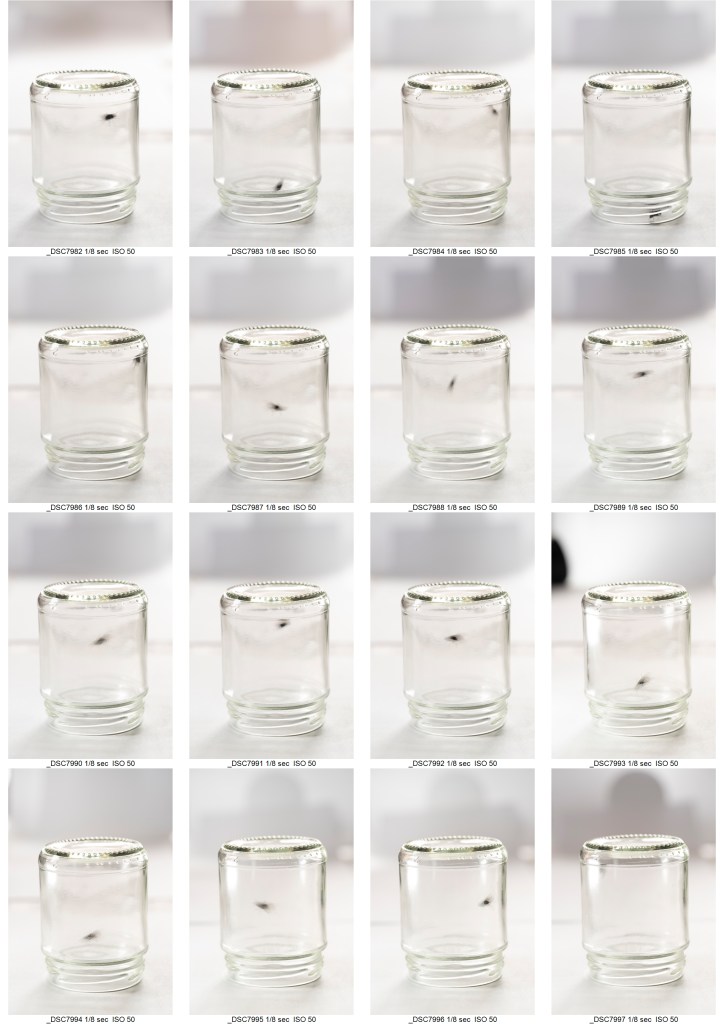
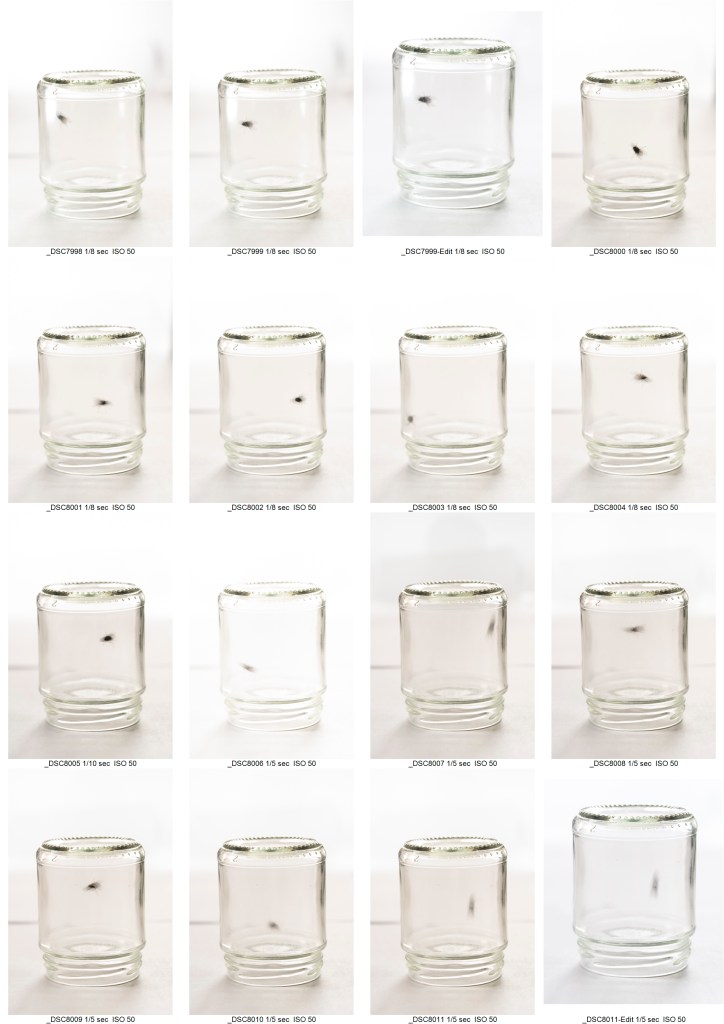
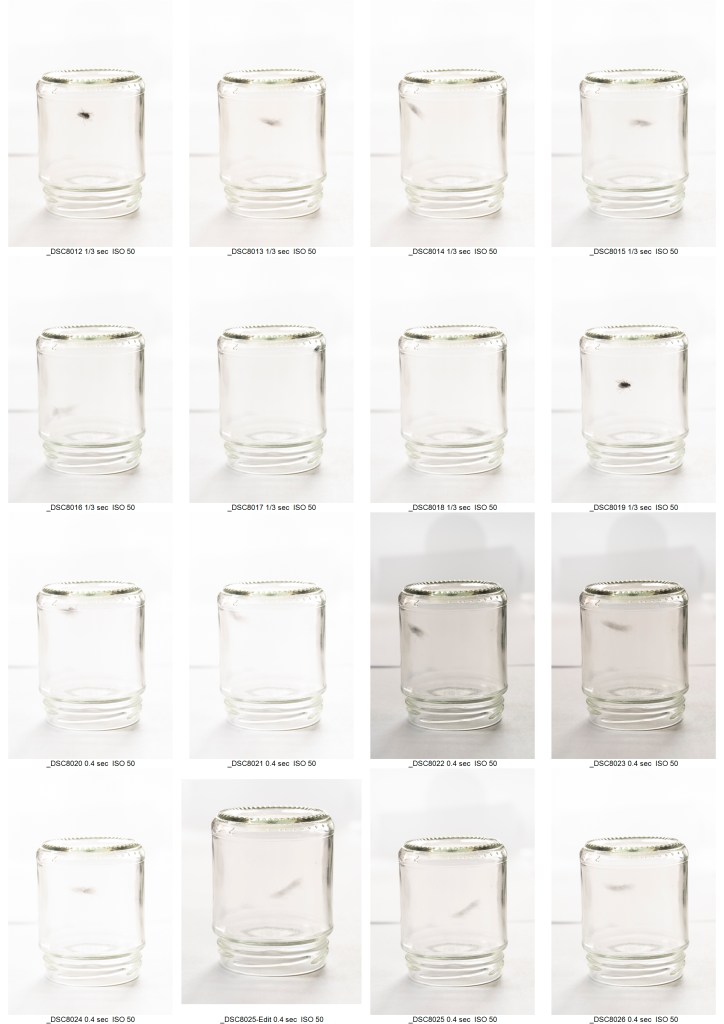
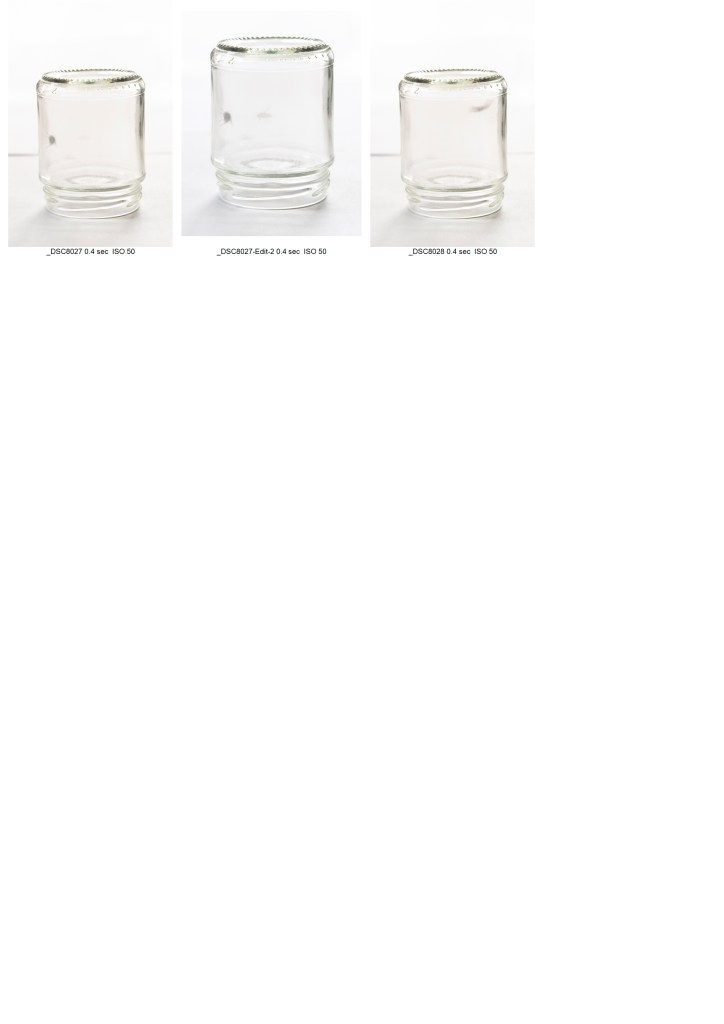
Method: This was out of the blue but ended up being my favourite of the bunch. I kept being annoyed by a fly whilst sitting at my desk typing when the idea jumped into my head to catch a fly in a glass and photograph it moving around using longer exposures. Ok weirdo! Anyway catching one was easy enough. I used an old jam jar for the shots and took about twenty before realising that I hadn’t prepared properly again as the white table cloth was too distracting. Remedied I continued for another twenty shots before realising that I needed extra light in the background and the foreground. So with this fixed I tried again. All images were captured with a remote control.
Outcome: Long exposures perhaps turned out the worst – I had thought that perhaps the continued movement of the fly in the jar on a long exposure would result in lots of black streaking but it showed nothing as the fly does not stay still for long enough at all. Pretty soon it was clear that long exposures in this case would still be in fractions of a second rather than seconds – from 1/5 to 1/2 of a second seemed to be the sweet spot. Once I had captured enough I thought how I would use them. Initially I thought of a triptych which looked ok but there was a lot of emptiness in that jar. Eventually I thought it would be a good chance to try some compositing and so I took some of the more interesting fly movement images and combined them into one shot. I’m really happy with the result but the only thing I can’t decide is whether I should have left the shadow under the jar. In the end I left it off for a much cleaner look.
No fly was harmed during the making of these images!
Examples of originals
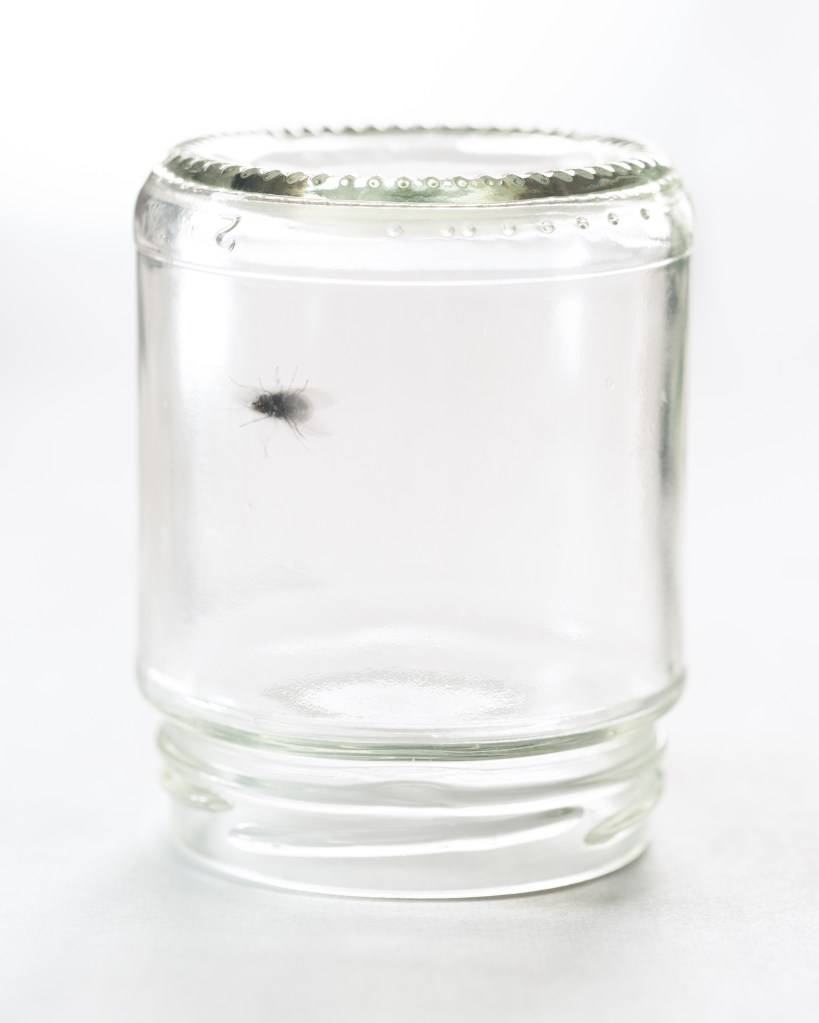
1/8 sec / f16 / ISO 50 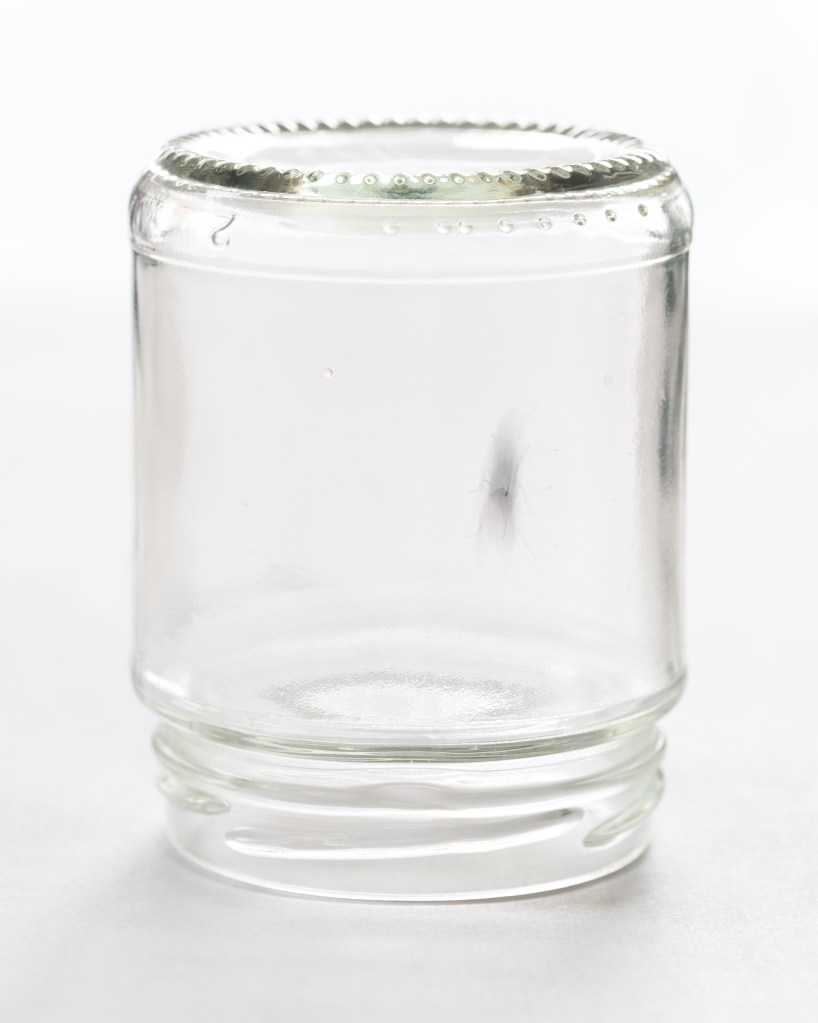
1/5 sec / f16 / ISO 50 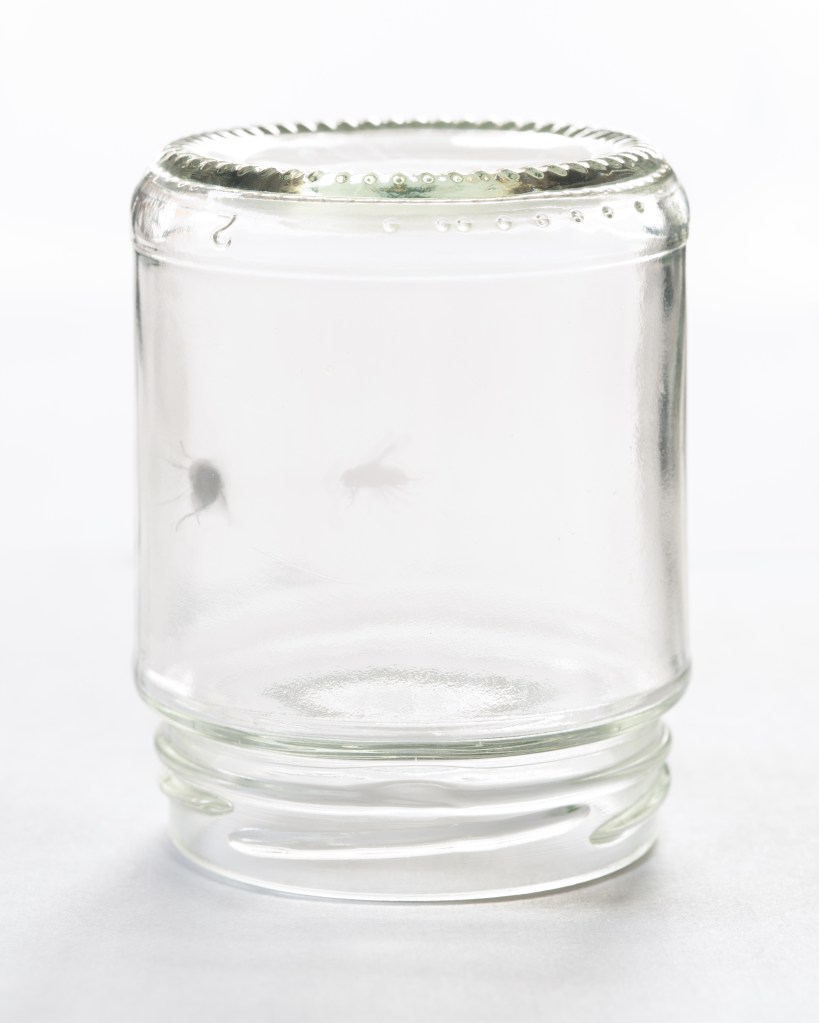
0.4 sec / f 16 / ISO 50
Final Composite
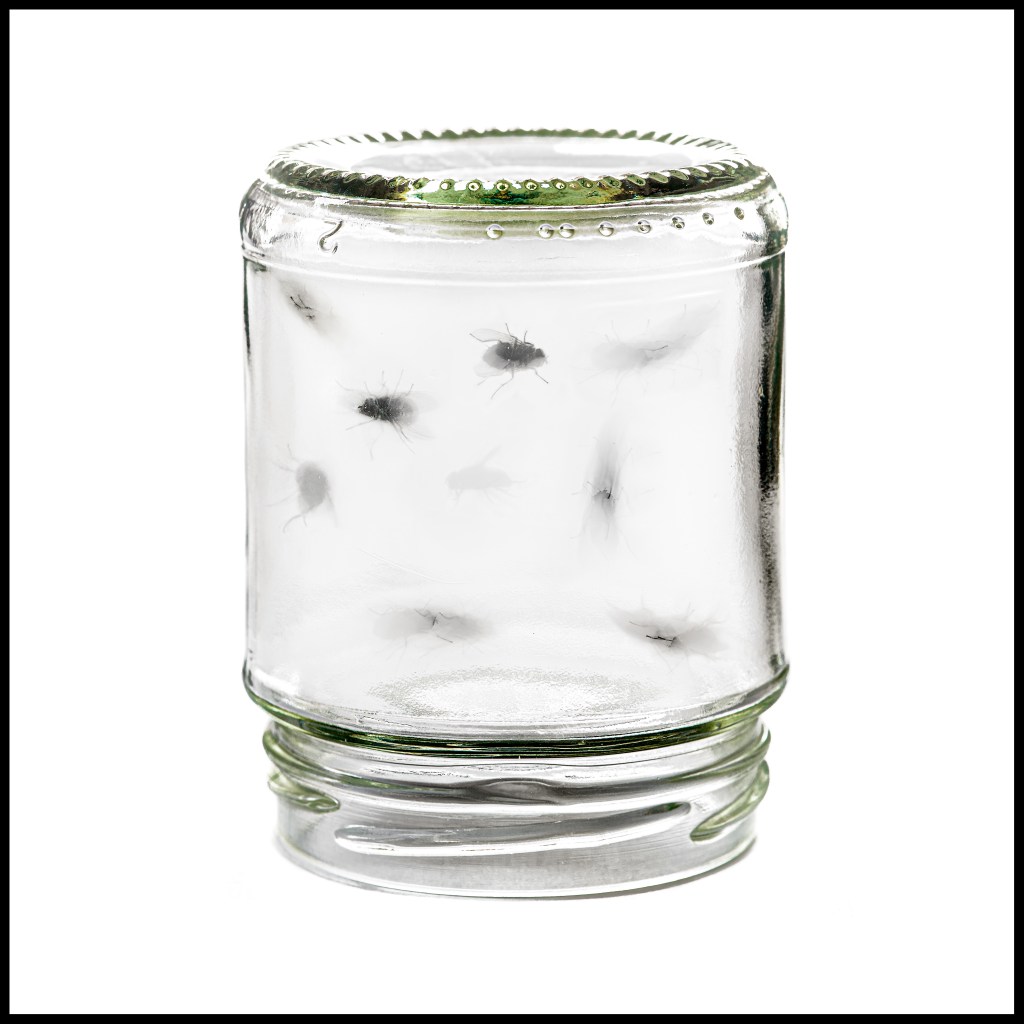
Reflection: I was really happy with the final image. I added a border purely for the website so you can see the image in place. Considering this was a completely off the cuff exercise I was really pleased with how it turned out. I used what I had learned from previous work and also enjoyed a photoshop session for a change (which I will probably forget how to do within a week). If I was to change anything from this final exercise I think again it would come down to a little more planning and therefore avoid wasted shots – It’s fine because it was a ‘studio’ situation but next time I might be somewhere where time is an issue so I just need to think a little bit more before execution.
As an overall exercise I really got the creative juices going and implemented nearly everything I wanted covering many techniques all of which are inspired by the EYV Book. I’m happy that for the first time I have really done an exercise justice – not for the course but for myself.
Contact Sheets
 Lee Abbey OCA Photography Degree
Lovely pictures Lee, I love the intentional hand movement, really interesting and artistic
LikeLike
Hey Lee, so happy to see your great experimentation. This part of the coursework has turned out to be the most fun for me as well. I love all your work, but my most favourite has been the one on the beach and the woods – maybe because am a nature person, but the wood exercise is something else. I absolutely loved it. It talked to me – I think inspired by the scary series. Overall a great job done Lee. You must be so proud.
LikeLike