Look at the image below and think about what you see?
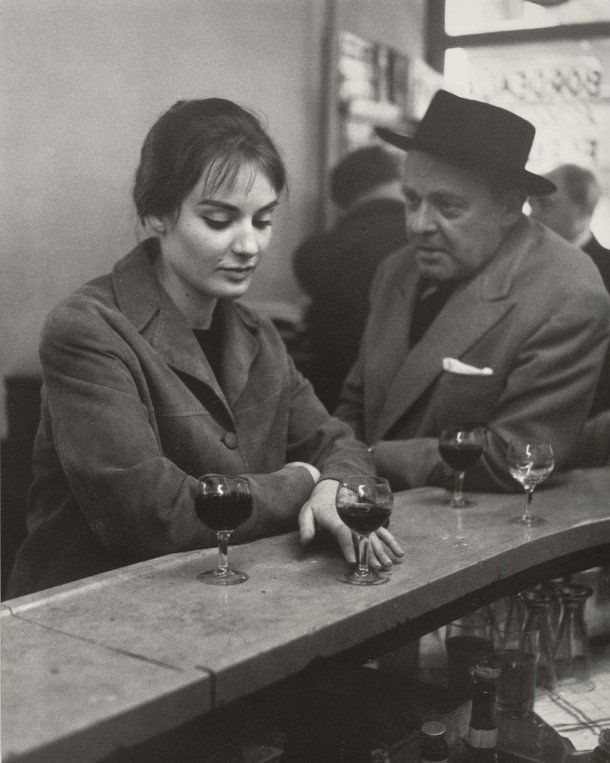
Now consider these words, pick one from each line and then look at the image again – the context of the image changes because of this.
Who? PERVERT / PROSTITUTE / FATHER / FRIEND / ALCOHOLIC
Where? LUNCH / AFTER WORK / FUNERAL / BIRTHDAY / DATE
What? INTIMIDATE / ARGUMENT / PROPOSITION / CONVERSATION / DECISION
I’ve given a crude example of how context changes what we perceive to be the truth from an image and how we can be easily manipulated to fit the narrative of the publisher. The image above was appropriated five times according to Terry Barrett’s essay which suggests that you cannot take a photograph at face value and instead need to apply some rules.
According to Barrett, in order to view a photograph correctly and without adding your own assumptions three things need to be considered – internal context, external context and original context. Described in the article as follows…
Internal context includes the picture, its title, if it has one, date, and maker. External context refers to the picture’s presentational environment. Original context refers to the picture’s causal environment,namely, that which was physically and psychologically present to the maker at the time the picture was taken.
Terry Barrett (1997) ‘Photographs & Contexts’
I’m not sure I fully understand what he means by psychologically present – what they were thinking? their intention? If so it’s something you either know as a viewer or don’t. He actually starts with what is a clearer way to describe it as ‘information evident in the picture, information surrounding the picture in it’s presentation and information about the pictures making‘
Ah…this makes more sense but I feel it’s only likely we will fully understand the third principle if it is on the artists terms in a gallery for example, rather than for example printed in a magazine or newspaper. It’s far more likely we would understand the context of the image in a gallery than any other format as you would expect the artist to ‘sign off’ on how it’s displayed – though I guess this would only be the case in an exhibition and certainly only to modern art. I am reminded of interpretations I have read of american civil war images where the photographer Matthew Brady included himself in the image and the interpretation Graham Clarke’s ‘The Photograph’ gives to for him doing so as opposed to what his actual intention may have been at the time.
A book by Ossian Ward called ‘Ways of Looking’ also introduces the code of TABULA RASA (clean slate in latin) which he changes to an acronym described as
T for time (take a few breaths to examine the image)
A for association (can I relate to it? a gut reaction, considered insight or visual attraction)
B for background (what is the back story of the image to help with context)
U for understanding (do you get the intention)
L for look again (spend the extra time to re-examine)
A for assessment (is it any good?)
This way to examine art is reasonable and worthwhile and it demonstrates in the end above all else (at least for modern art) that your final assessment will be personal to you.
Having digested all this I think you can probably also describe it as Who? What? Where? How? and perhaps to add further context When? If you can answer three of those you have a decent chance of understanding the context of the image but I suspect you would need all five to be able to get the context and the narrative.
Then again – you could easily argue that its the very ambiguity that makes the image. If we knew every detail of the Mona Lisa’s life would it be as special? Depending on the purpose of the photographer this ambiguity can be deliberate but when you are dealing with slithers of time it is also inherent, at least as far as photographs of people are concerned – a downward look of contemplation captured amongst inumerable ignored moments in an evening of laughter and joviality. Perhaps.
Bibliography
Barrett, T. (1997) ‘Photography and Contexts’ In: David Goldblatt, Lee B. Brown, Stephanie Patridge (ed.) Aesthetics: A Reader in Philosophy of the Arts. (s.l.): Routledge. pp.110–116.
Robert Doisneau. At the Café, Chez Fraysse, Rue de Seine, Paris. 1958 (s.d.) At: https://www.moma.org/collection/works/57506 (Accessed 26/01/2021).
Ward, O. (2014) Ways of looking : how to experience contemporary art. (s.l.): Laurence King Publishing Ltd.
Clarke, G. (2002) The photograph. Oxford [etc.]: Oxford University Press.
On Ambiguity (2018) At: https://www.magnumphotos.com/theory-and-practice/stuart-franklin-ambiguity/ (Accessed 26/01/2021).
 Lee Abbey OCA Photography Degree