Repulsive and beautiful. Much of the work of Maisie Cousins could be described with those two words. I came across her a year or two ago by accident listening to Radio 4 talking to young female artists of which Maisie was one (along with Juno Calypso I think). When I looked her up I was instantly hooked on her oozing, close up images so when I came to 5.2 I knew who I wanted to pay homage to.
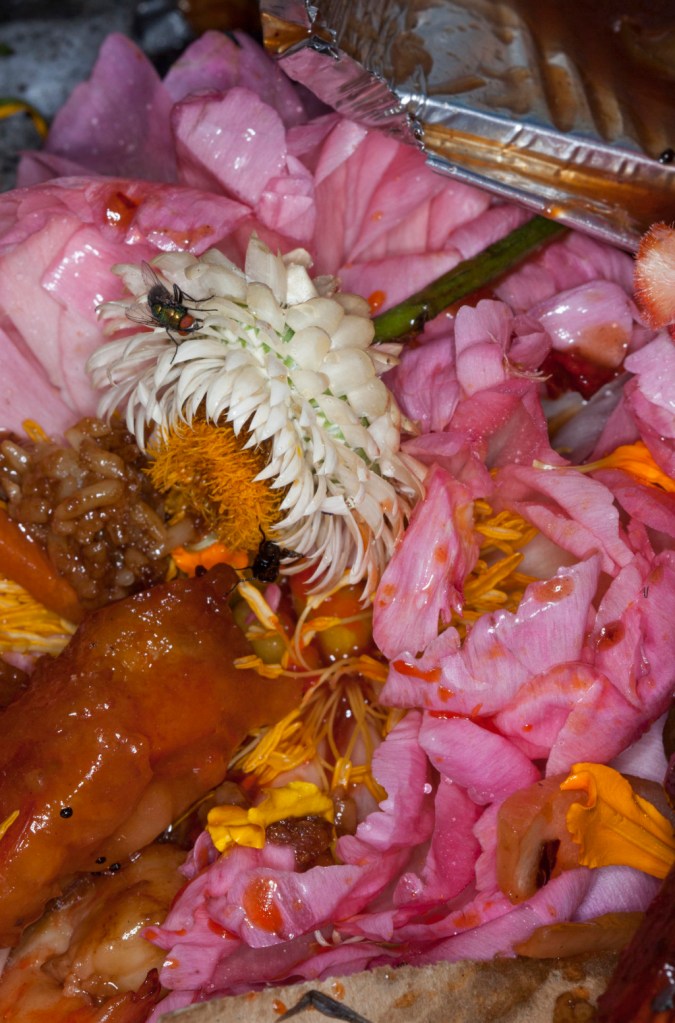
If I think back to the research point of Barrett their is only one possible way to react to these images and that is using the Internal context – in my opinion this happens twice. Firstly when you see the overall glistening image you are unable to work out fully what you are looking at but it looks ‘wrong’, wrong in the sense that this is not an image your brain has seen thousands of times before – it’s not like looking at another landscape where your brain already identifies with aspects of the image. Here your face has been pushed into (and by your reaction it may even feel forcibly so!) the image covering your field of vision and you may want to look away. Then you have a second reaction as you begin to extract the information in the image, you start to recognise individual elements that do make sense and this in turn enables you to complete a kind of mental jigsaw that enables you to re-assess the image as a whole. This forced macro viewpoint is absolutely key – it’s showing you a semi authored miniature world that only the camera can truly show. You can put the elements together but because your eyes can’t really see the detail this close you need the camera to show you the possibilities. This is what makes the work so fascinating – there is no way you could ever create this in your head – you have to let it come together almost on it’s own then scan the camera over the top almost surveying the landscape below.
Titles are perhaps a little arbitrary, at least in so much as they only give part of the information about the picture. In the above example you can see that yes there is an old takeaway carton which is a clue to some of the other squishiness in the image but that is just a starting point and rightly does not lead me as a viewer to interpret the image any further based on that title. I don’t want to either – I want to explore the details on my own.
Response
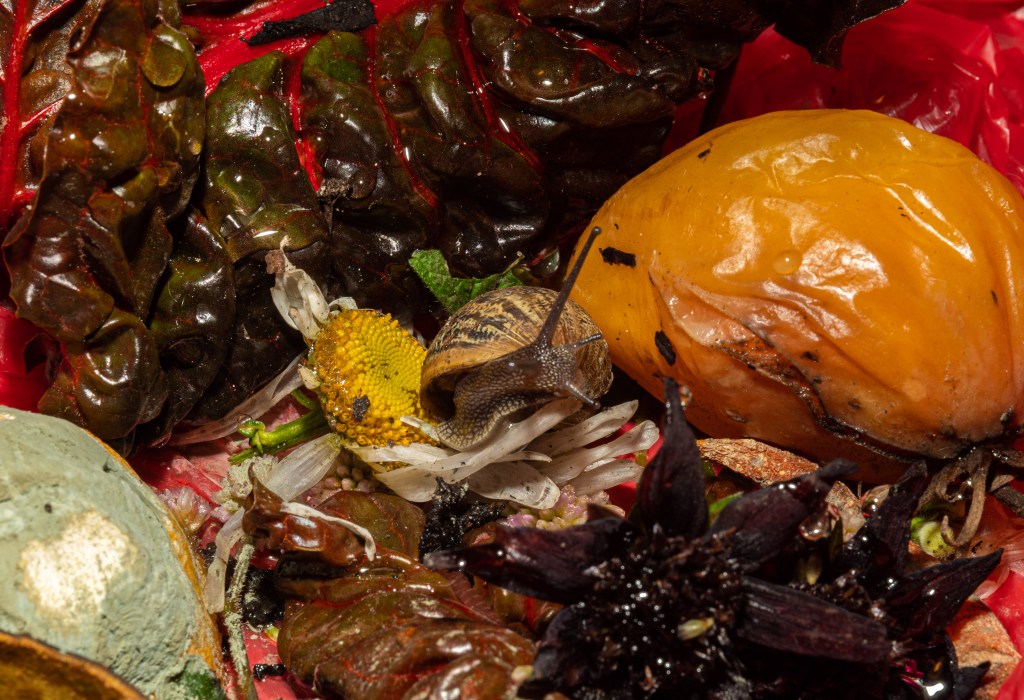
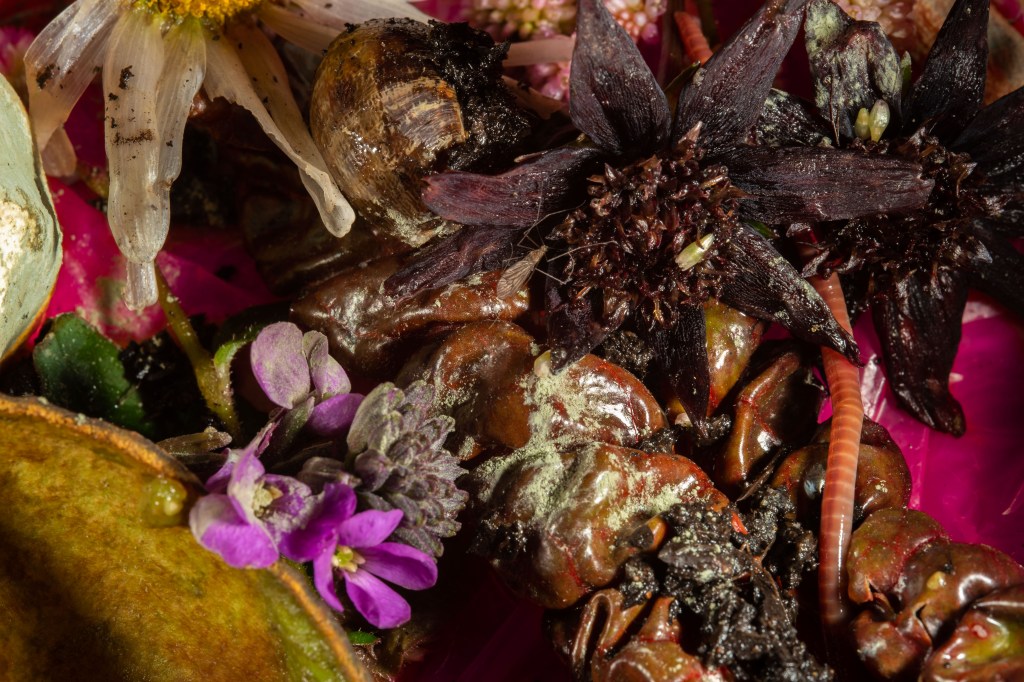
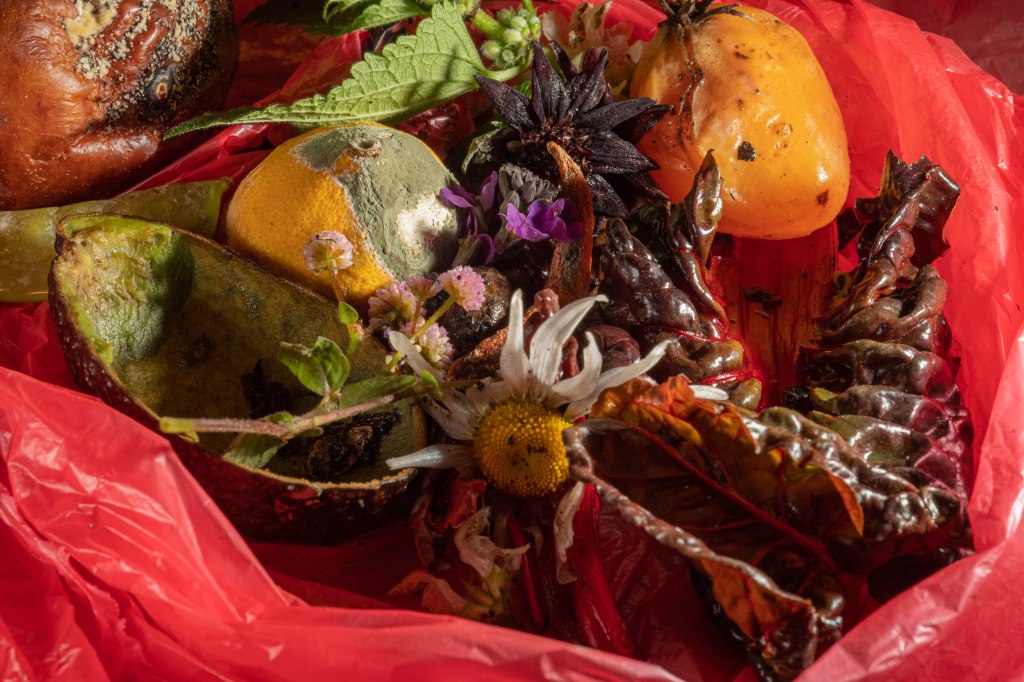
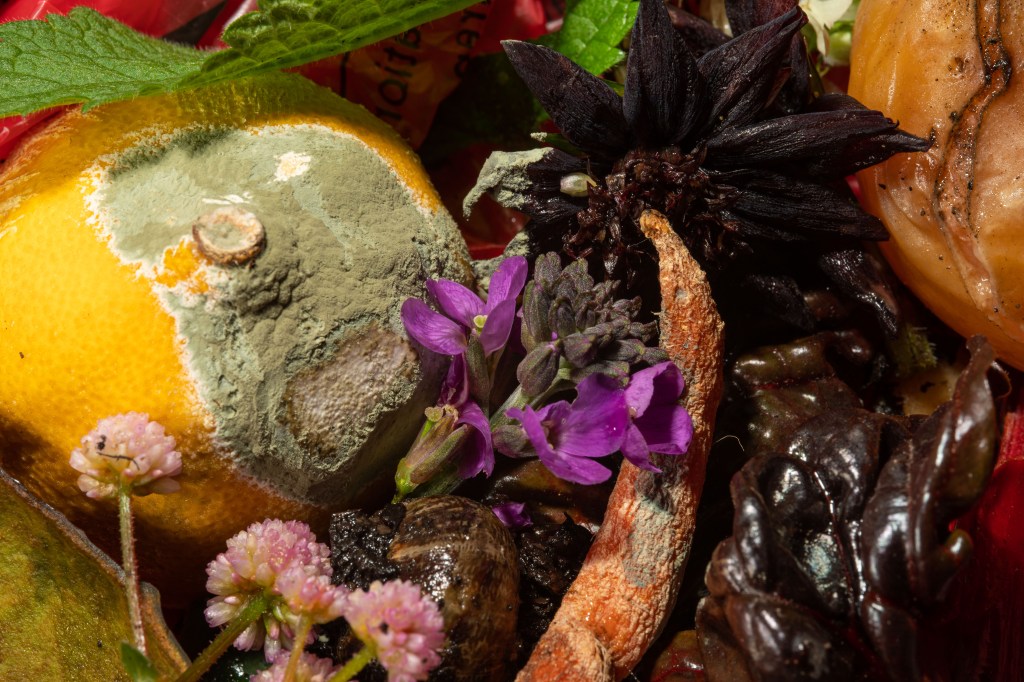
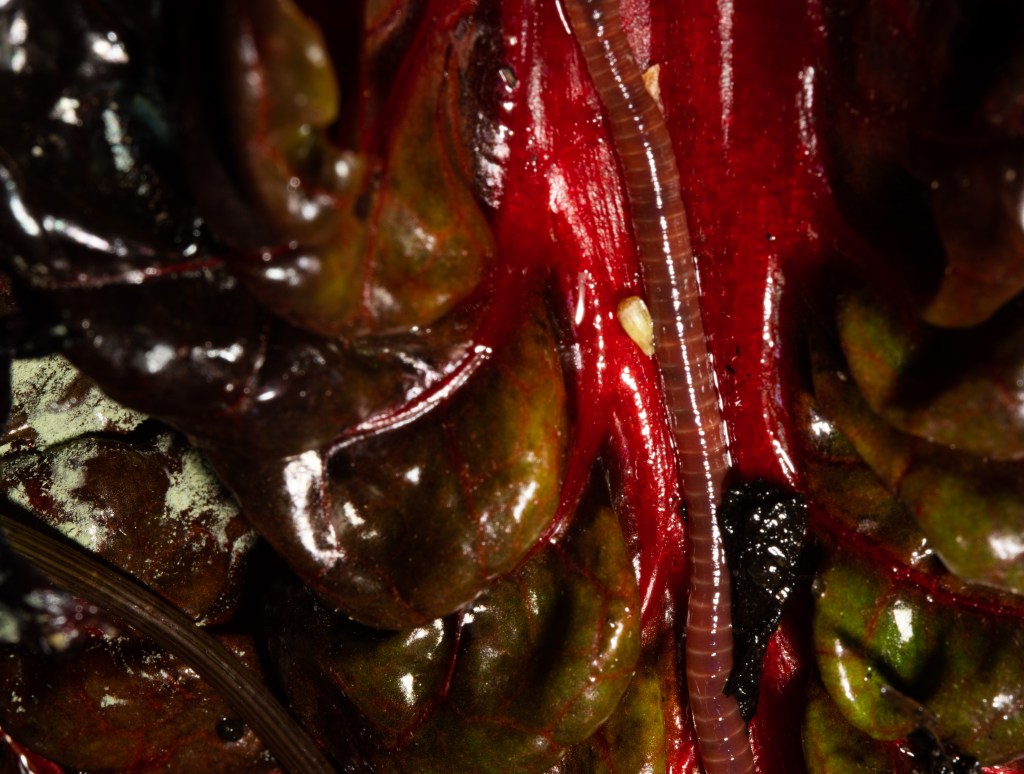
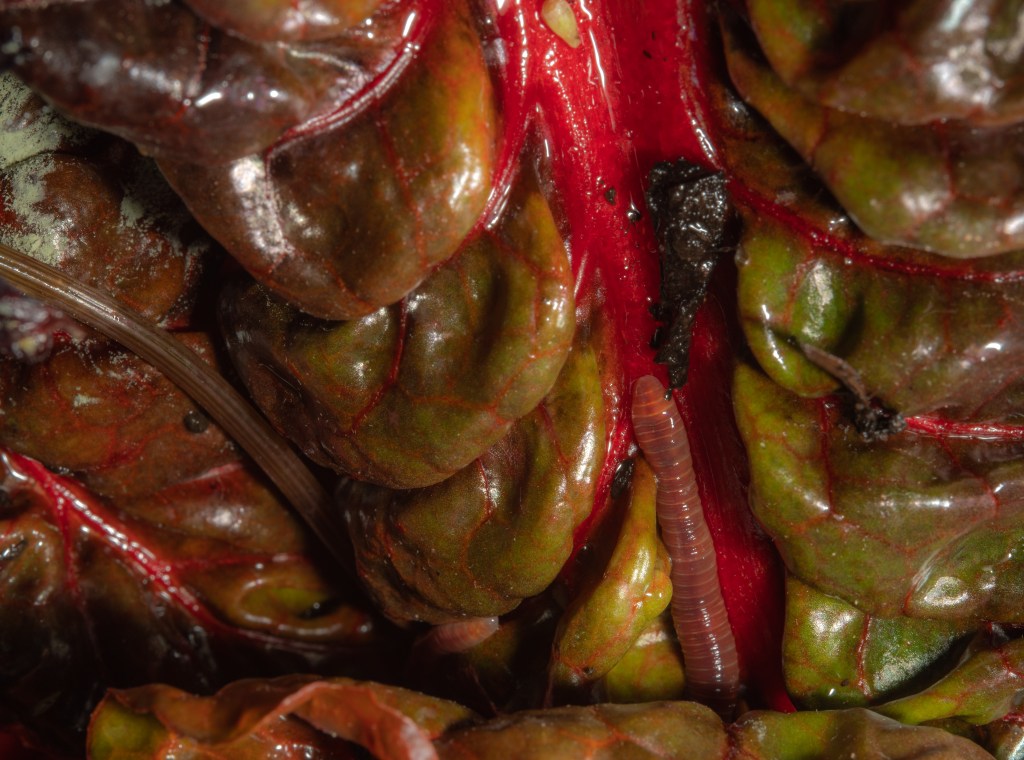
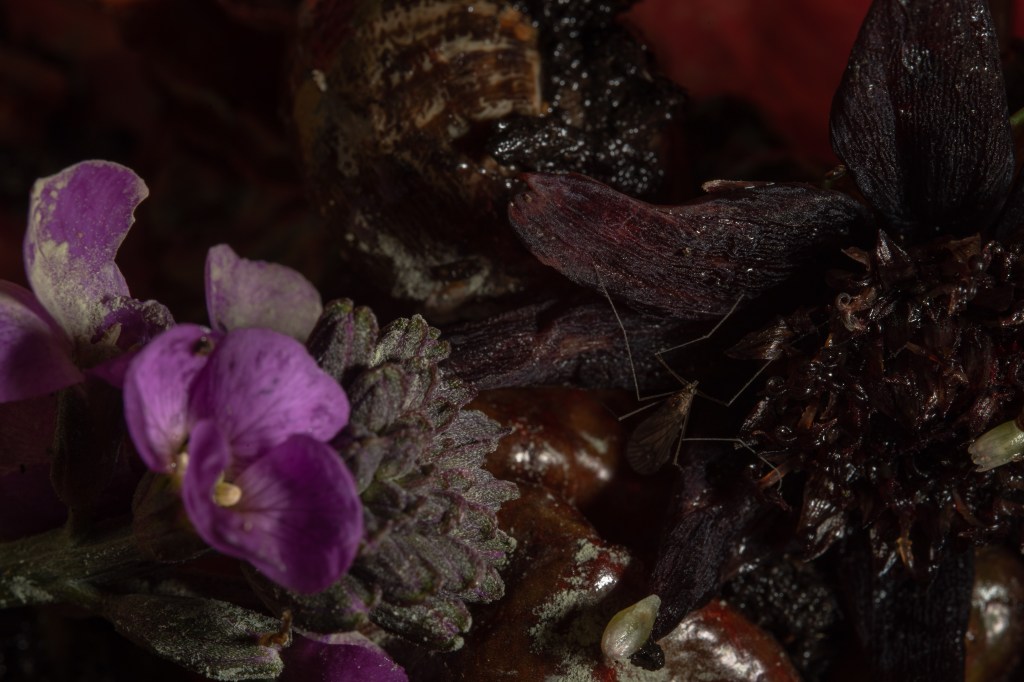
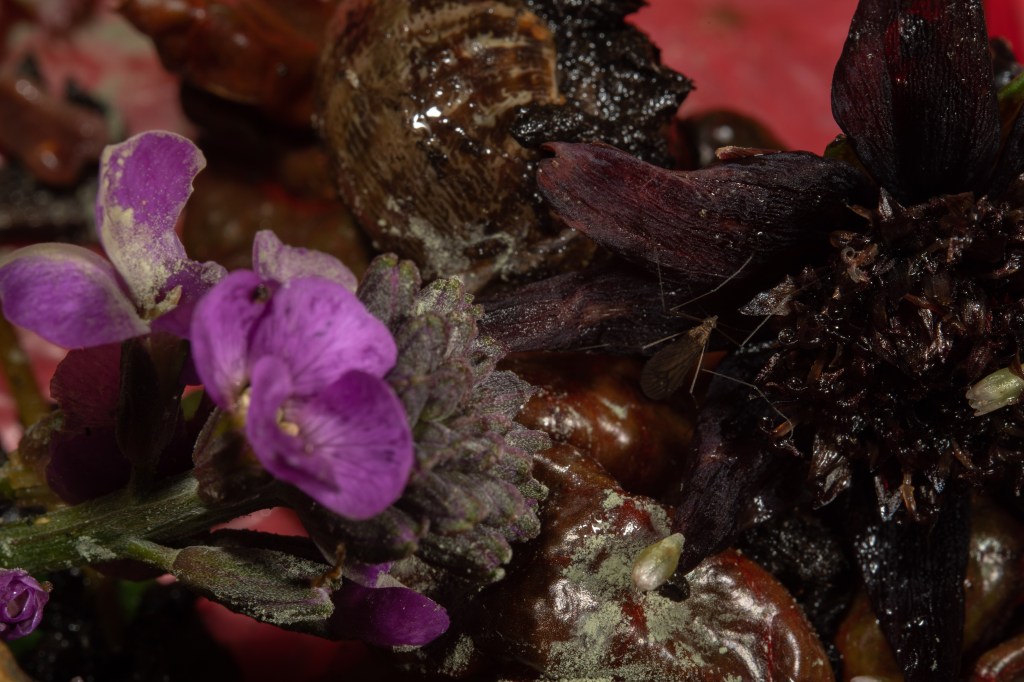
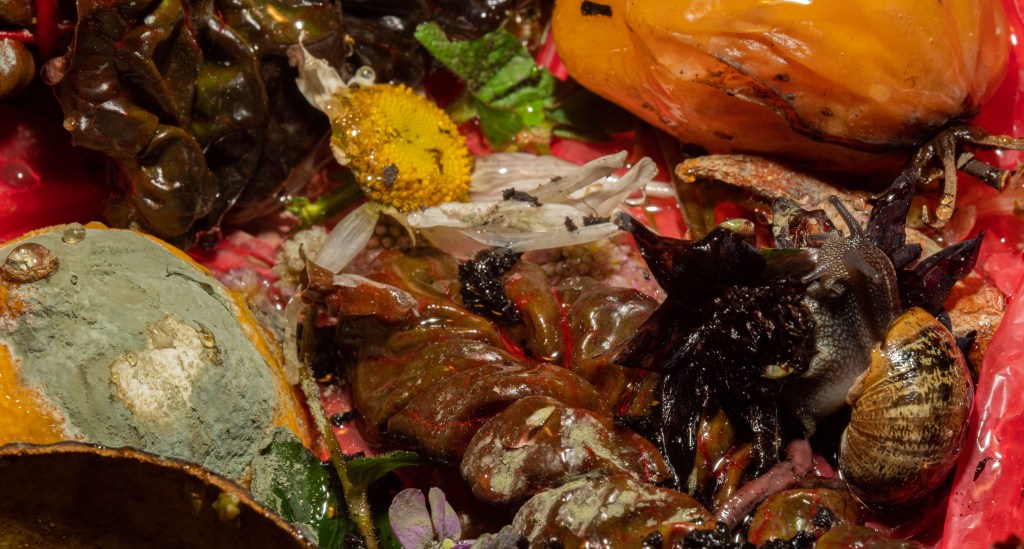
Above all else it was critical to replicate the double reaction in my homage. The second of my images may be a better example of that – if I look again at the first example below with the snail in the center it perhaps give the viewer something to focus on too quickly whereas the second has many different elements to consider but hopefully still invokes an uneasy reaction at first before you start to piece together those elements – it may take some time for example before you see a worm, snail shell and the gnat.
Secondly it was important to fill the image – it had to show something up close with no distractions with as much in focus as possible. This is semi successful – I’m happy with how I have filled the frame but I would have been happier if I could have got more of the subject in focus – there is some lovely detail in the rotting lemon that I didn’t capture in these two fully. I could have moved the camera back but then I would have lost the intimacy and ‘in your face’ look I was after. Shooting at f22 I had no room to stop down further.
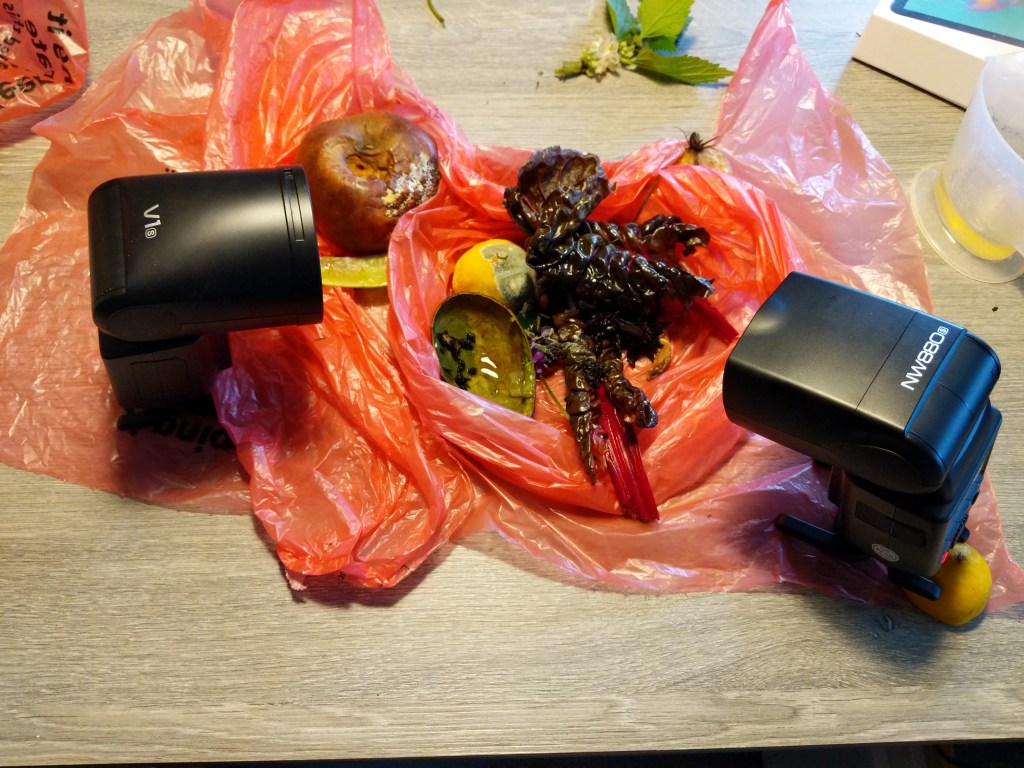
Thirdly the glistening effect and the lighting were important to these images. I shot them them on a kitchen table using two flash heads with one held above and another to the side. I made up some sugary solution and dripped that where I wanted it.
Lastly is the beauty of it. Disgust is a learned behavior and that first reaction to these images hopefully subsides to allow you as a viewer to explore the beauty of the rotten and visceral (real or implied) thats never normally looked at or engaged with. Everything here will become compost and life will grow in it and thrive and then it will be reused to grow fruit vegetables and flowers again next year.
I called the images Chard as that is the biggest component of both images – everything apart from the plastic bag I put everything in is either from old fruit and vegetables left to rot which would have ended up in the compost, from the compost bin itself, our allotment or flowers picked from the garden (which in a way are garden waste too because it’s rare to walk around the garden in winter so from a selfish viewpoint they themselves are a waste).
Reflection
I realise after shooting these that perhaps I haven’t given myself much room to explore the idea of context in this homage due to the specific nature of these images. A portrait or a landscape shot for example would probably open up more avenues to explore both in terms of homage and in exploring context in a more detailed way. However I loved taking these images so whatever I have missed in terms of thoughts around this have been made up for in my eyes by the experience of shooting images like these and I think overall that will help me in my photography and particularly when I consider further macro work.
Perhaps images created like this should just be enjoyed for what they are rather than having to stand for something; though as I alluded to above – you could also extrapolate a never ending cycle of life from death if you so wished. Maybe if I change the title or put an image next to a newborn baby and a graveyard?
Contacts & Other Images
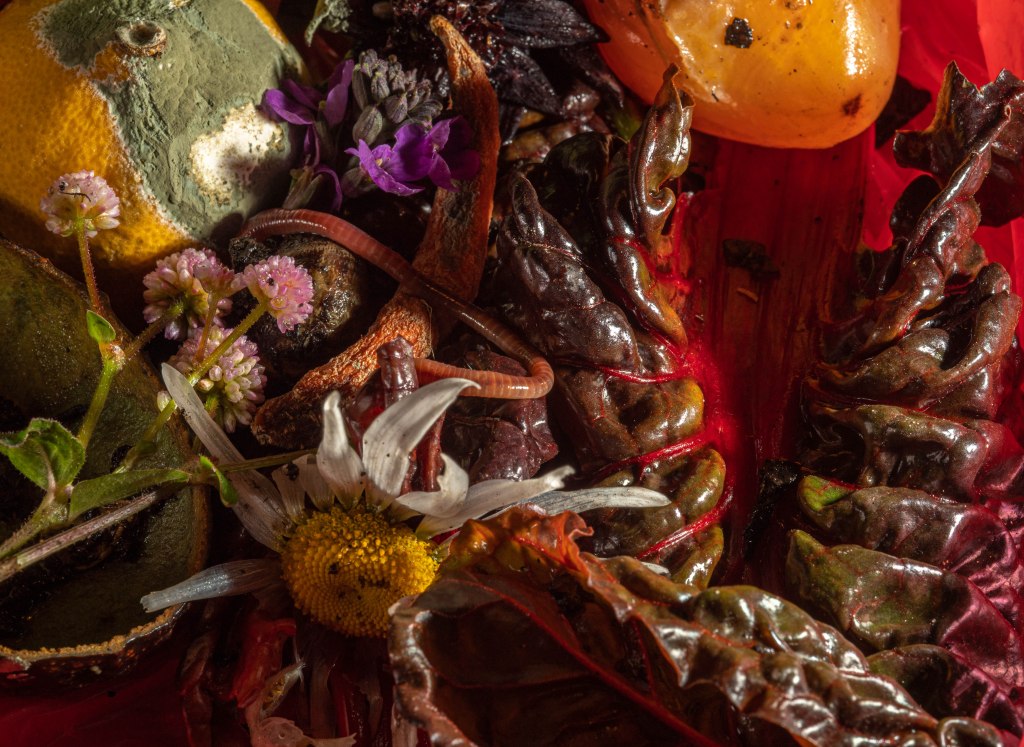
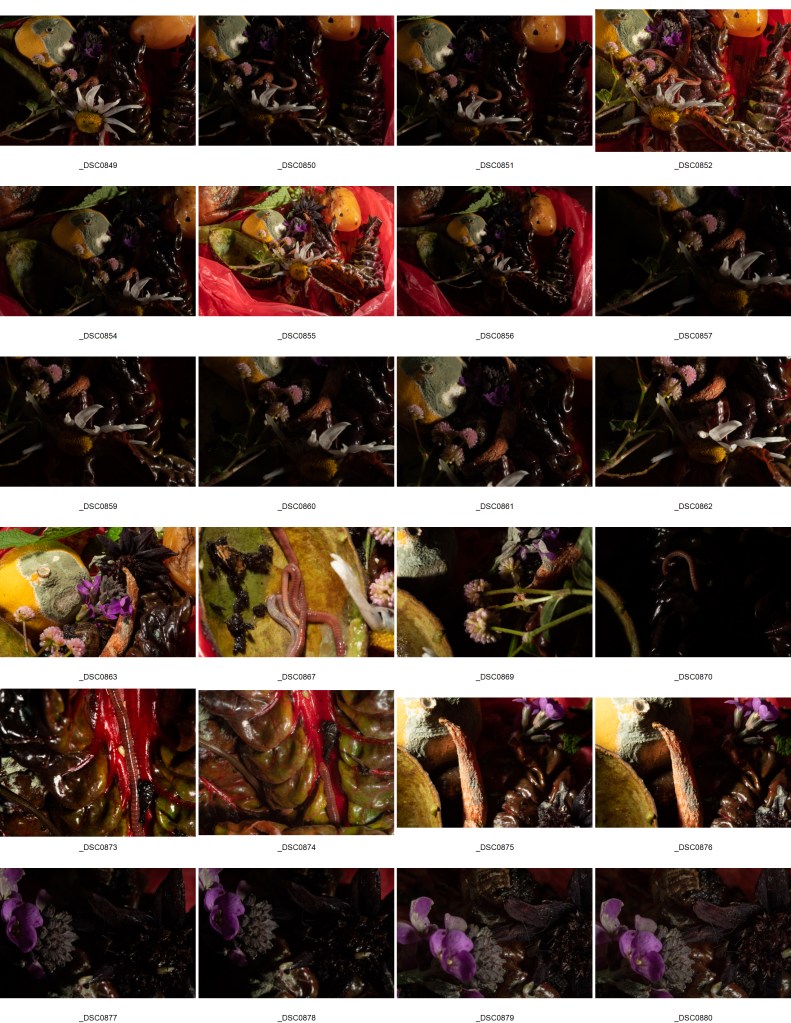
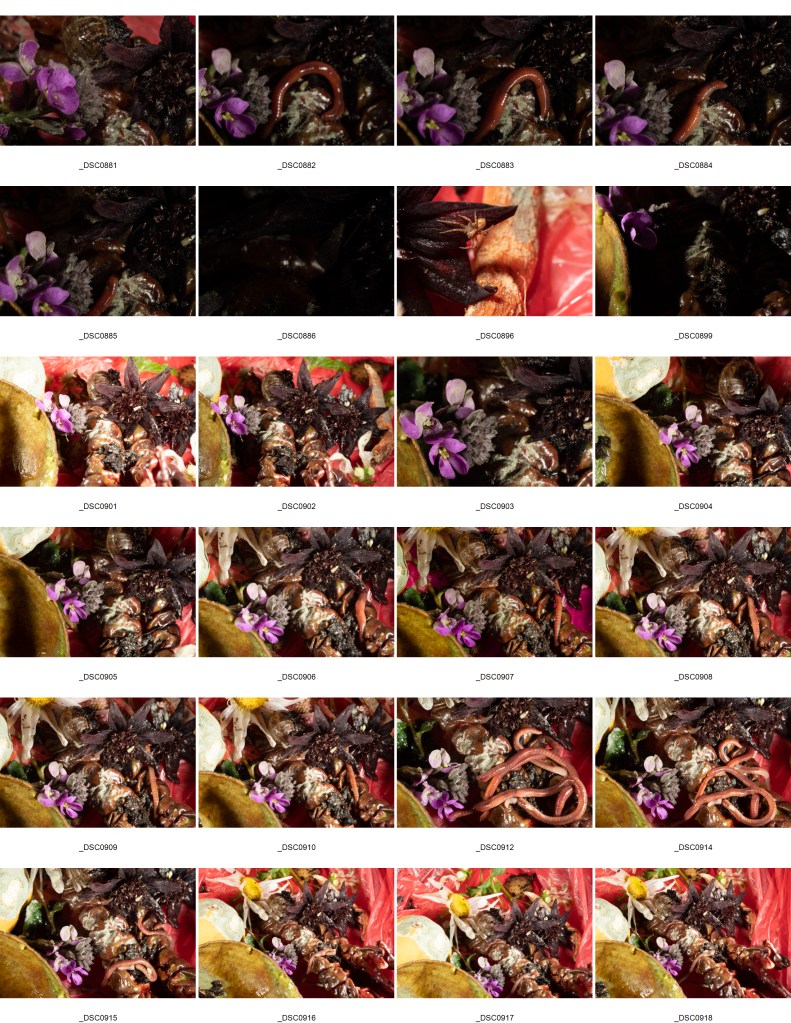
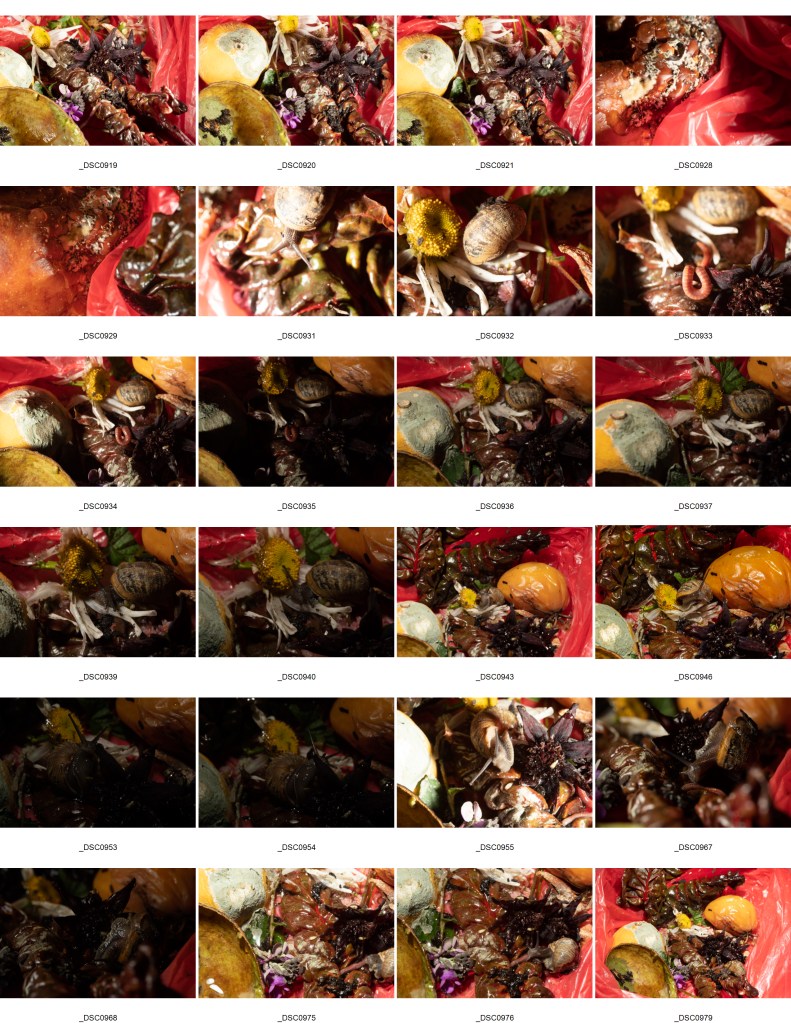
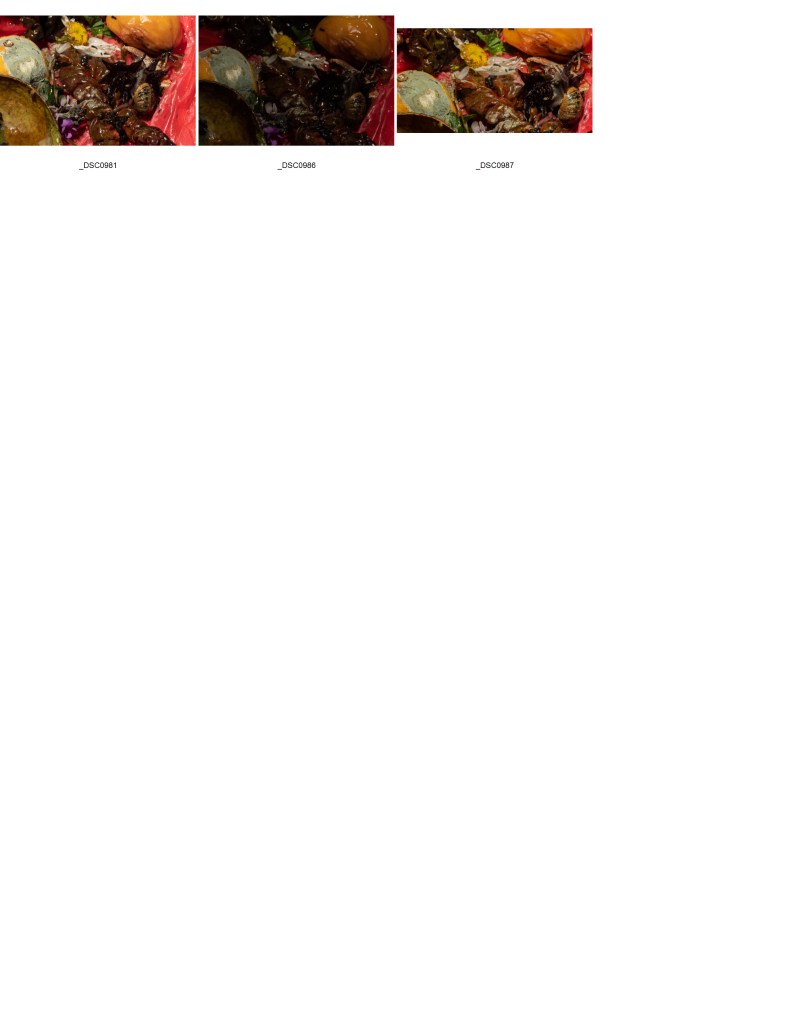
Some other images considered and one of the shoot, followed by contact sheets
Bibliography
A photographic homage (s.d.) At: https://www.photopedagogy.com/photohomage.html (Accessed 08/12/2020).
Barrett, T. (1997) ‘Photography and Contexts’ In: David Goldblatt, Lee B. Brown, Stephanie Patridge (ed.) Aesthetics: A Reader in Philosophy of the Arts. (s.l.): Routledge. pp.110–116.
Eyes On: Maisie Cousins – Wonderland (2017) At: https://www.wonderlandmagazine.com/2017/05/16/eyes-maisie-cousins/ (Accessed 09/12/2020).
Krisch, J. A. (2018) Kids Are Disgusting Until Parents Teach Them To Feel Digust. At: https://www.fatherly.com/health-science/kids-are-disgusting-learning-gross/ (Accessed 21/12/2020).
Mourning FDR: In a Classic Photo, the Face of a Nation’s Loss (2013) At: https://www.life.com/history/mourning-fdr-in-a-classic-photo-the-face-of-a-nations-loss/ (Accessed 12/12/2020).
‘Nobuyoshi Araki is a pervert like me’ — Maisie Cousins on why photography needs obscenity (s.d.) At: https://www.sleek-mag.com/article/maisie-cousins-unseen/ (Accessed 15/12/2020).
Robert Doisneau. At the Café, Chez Fraysse, Rue de Seine, Paris. 1958 (s.d.) At: https://www.moma.org/collection/works/57506 (Accessed 14/12/2020).
rubbish – maisie cousins (s.d.) At: https://www.maisiecousins.com/rubbish (Accessed 15/12/2020).
Rubbish, Dipping Sauce, Grass, Peonie, Bum (s.d.) At: https://www.fotografiska.com/sto/en/news/rubbish-dipping-sause-grass-peonie-bum-maisie-cousins/ (Accessed 09/12/2020).
Viviane Sassen: Hot Mirror (2018) At: https://www.youtube.com/watch?v=-A76d2biTDk (Accessed 08/12/2020).
Watch: Shoair Mavlian in conversation with Maisie Cousins (2020) At: https://photoworks.org.uk/digital-event-shoair-mavlian-in-conversation-with-maisie-cousins/ (Accessed 09/12/2020).
 Lee Abbey OCA Photography Degree