This was originally written as part of Exercise 5.1 but I have stripped out this large section for clarity as a learning log post around empathy.
This exercise seems to make a big deal of empathy which in reality is dragging you towards shooting human subjects – I had a hard time with researching both Alexia Clorinda and Ariella Azoulay. I didn’t particularly like any of their work and thought that one was politicised so much as to be a complete turn off and the other’s body of work was so small I couldn’t get a feel for what I was supposed to see or feel and I didn’t connect with the images or in most cases with Clorinda it seemed to be video. I realise I am being incredibly unfair. Maybe today isn’t the right day to be writing this?! I’m not sure. I’ve looked into this project on previous days and still hit a brick wall with researching the two artists – it just seems to be the first exercise where I’m struggling to connect with it. Where’s my empathy?!
There is of course nothing wrong with being political in photography; Ariella Azoulay is passionate but it all seems to be governed by the Israeli / Palestinian conflict and her worldview – I’m not taking sides but I find it difficult to engage with anything presented in this way. If I feel I’m being led politically I tend to back away. Having said that – the point quoted in the EYV course does make sense. Looking at a photograph can be as imaginative as taking it. Seems kind of obvious to be honest. Otherwise why look in the first place?
I tried researching it – had no idea it’s a relatively new word coined from the german Einfühlung and translated by Edward B Titchener in 1909 to the english word Empathy – (from latin En – in/at and Pathos – passion or suffering). Interesting.
The slight problem I have is that in general you need people. That narrows it down abit in lockdown when I needed to shoot this. I wondered (partly from my probably incorrectly labelled feelings for the rocks in my previous assignment) if you could feel empathy for inanimate objects or at least animals and plants? If I’m supposed to be sharing their ‘pain’ or ‘feelings’ don’t they have to have them in the first place?
I could take pictures of my wife or daughter – my daughter in particular is going through a tough time, having to contend with covid, lockdown and studying with mock GCSEs being done as we speak but I really didn’t want to for this assignment – it felt too obvious.
I had feelings for a piece of scrubland opposite my house that is actually a plot but is currently overgrown. When it was purchased a year or two ago the plot was completely cleared last year but nothing has been built since so for the last 12 months it’s just gone wild. It’s ugly and raw and screaming out for attention but as I walk past it most days I can still pick out little bits of beauty. It’s these tiny elements that I feel ’empathy’ for. Little pieces of colourful hope that have grown amidst this ugly miniature landscape. I could use it as a clunky metaphor for all the shit we are currently in and how there is an escape hopefully around the corner. I decided I couldn’t use the images I took for this exercise as ultimately whatever I feel for the little flowers amongst the overgrowth it CAN’T BE EMPATHY – I’m putting my feelings into something that can’t understand or even feel (electrical impulses aside) in a kind of bastardised anthropomorphic way. I’ll include the images just because I’ve spoken about them….
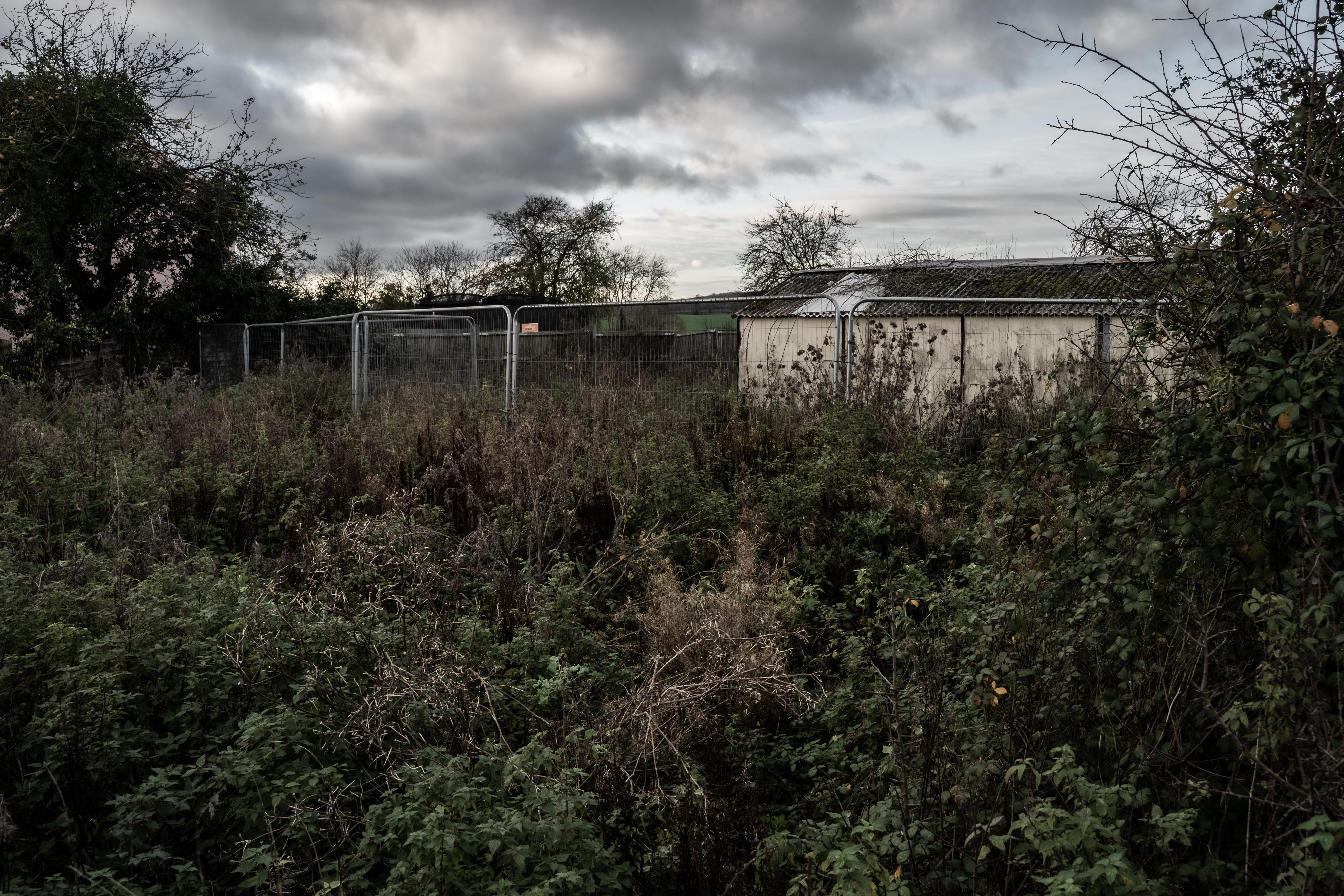
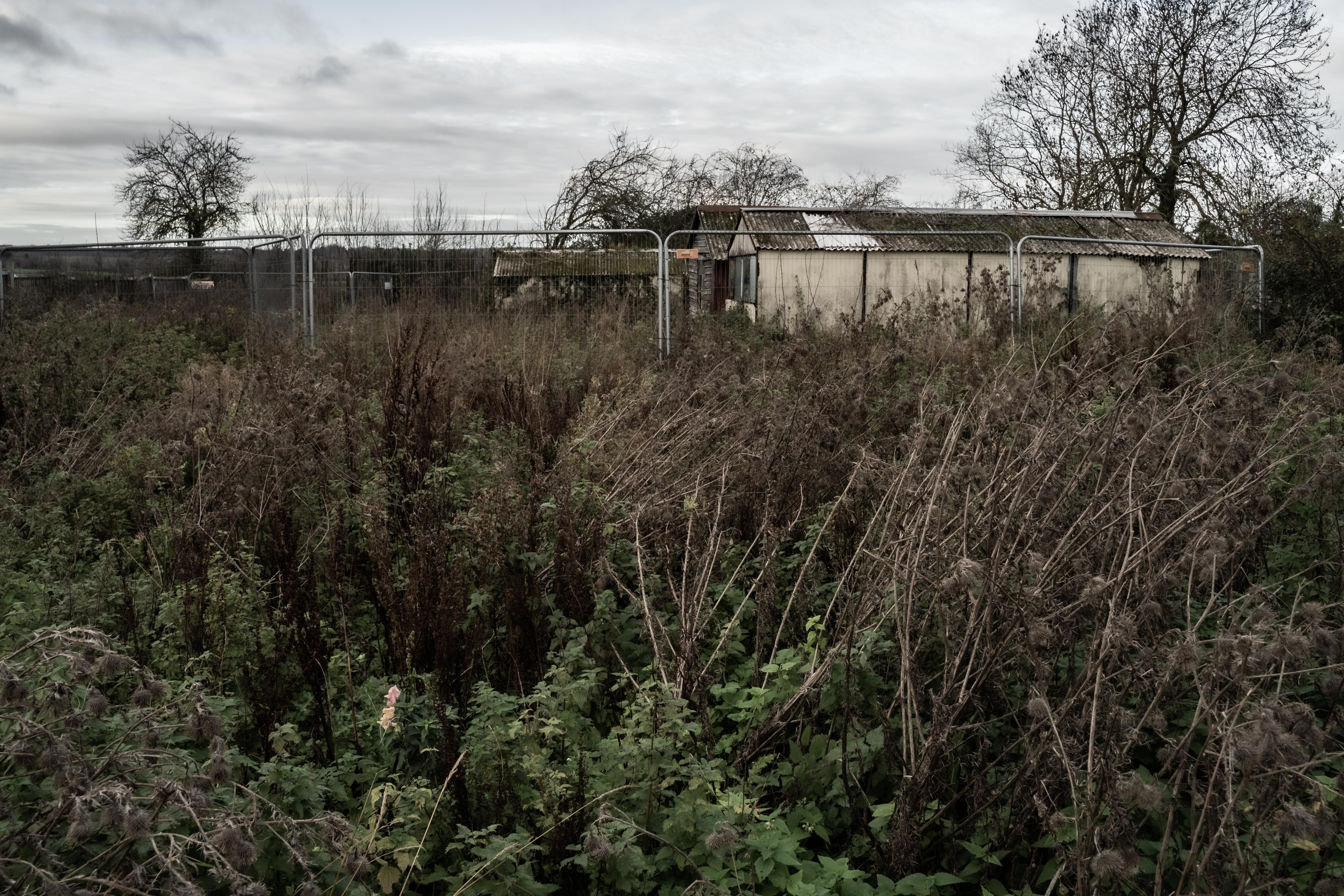
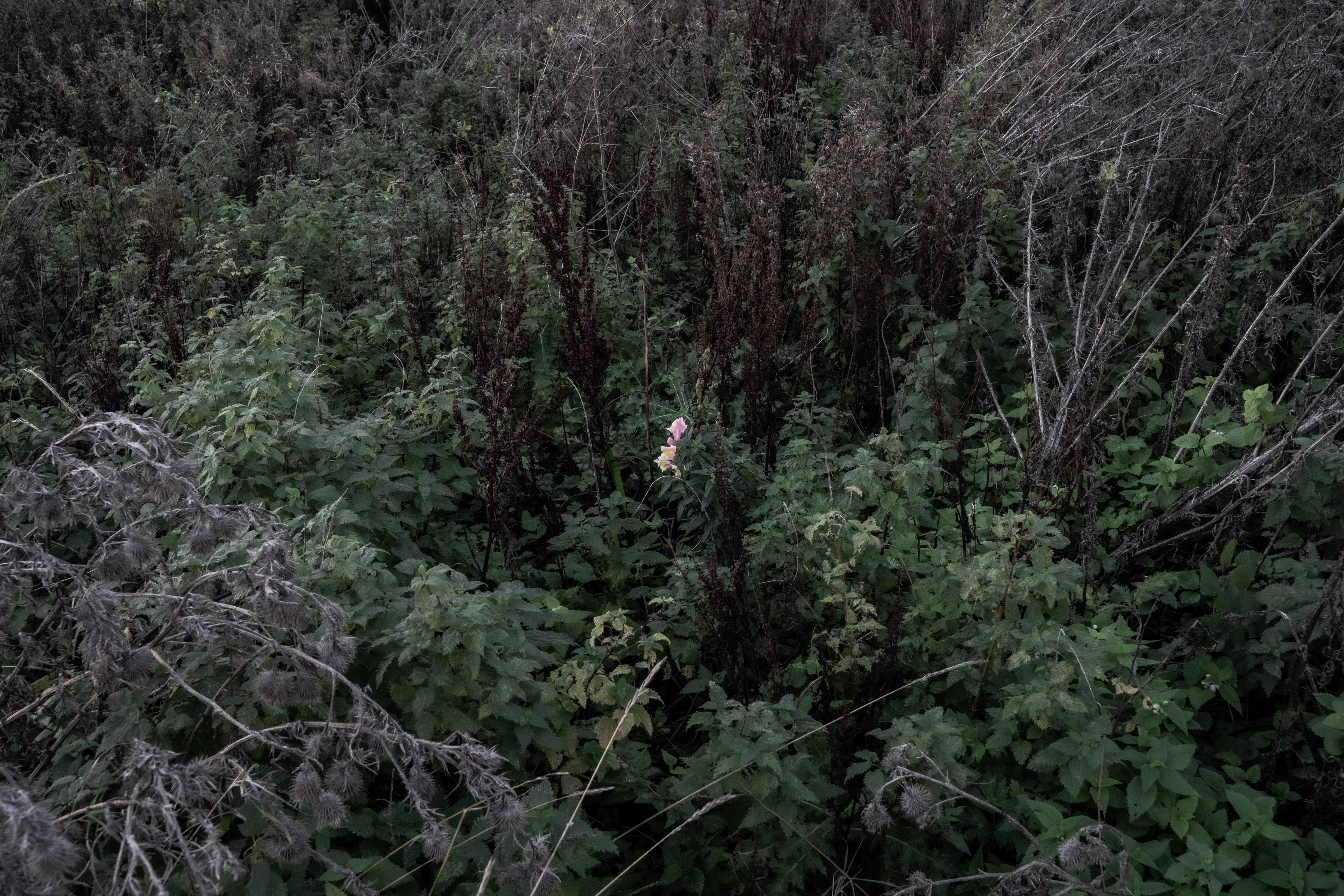

I wonder how that Antirrhinum grew here? Was it the result of a bird dropping, wind or more romantically was it the act of clearing the plot and digging it over which gave the dormant seed life (for a beautiful parallel look at this recent story… Ghost Pond)
Research
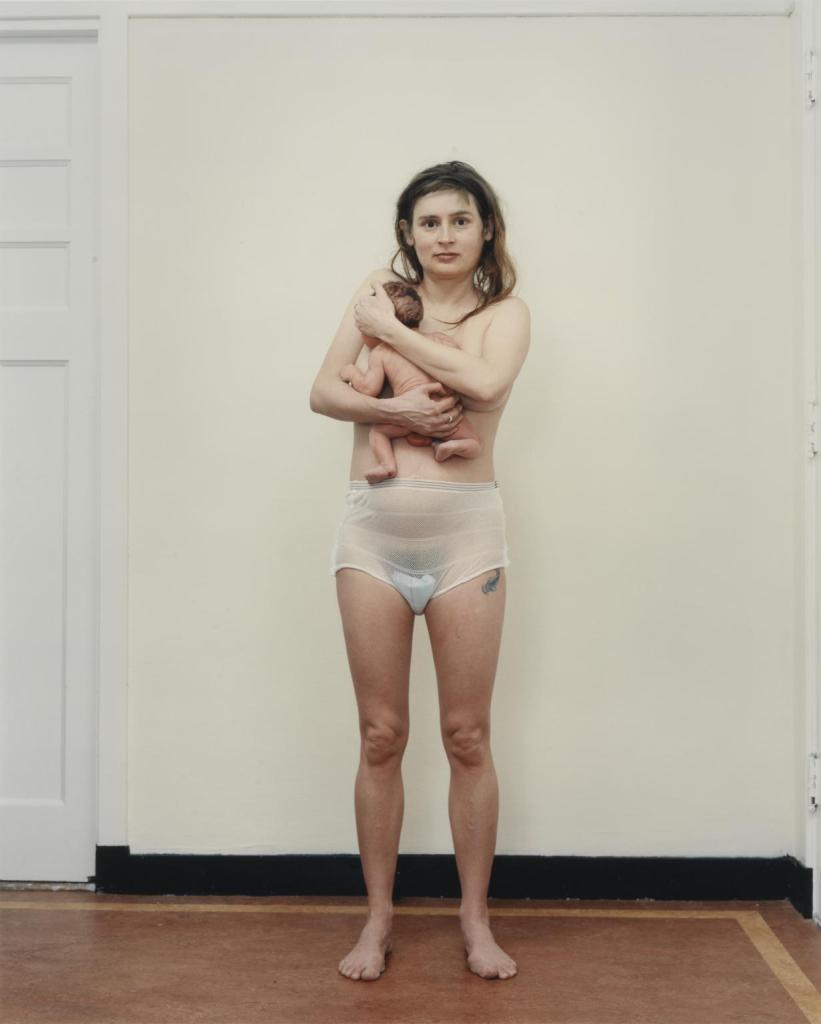
I had seen the images by Rineke Dijkstra of three postpartum women taken shortly after giving birth (one hour, one day, one week) before and my first thought was why?! Why would you a) agree to do it and b) what is it showing? There was certainly no feeling of empathy there; was there? Looking again made me think of my singular event of childbirth of our daughter which because it was cesarean was more akin to watching a live operation than a fully invested childbirth experience (don’t get me wrong, it’s still the most emotional experience you can go through but it must be less so than hours of painful labour) I remember walking down a delivery ward corridor glancing sideways and seeing viscera on a bed and thinking ‘Shit! This is real’, this is about to happen to us – What is going to happen? Will everything be ok? Everything will be ok! You reflect on the whole experience – you watch your partners body change; an incredible change, metamorphic even. You plan, you decorate, you organise, you read (ha! as if that prepares you!!) then at some fuzzily defined point that arrives like being fired from a cannon everything, everything, changes. The three women in the images by Dijkstra are captured just after that seismic moment, they are raw and real – they are displayed in a way that should make them look vulnerable but they look anything but. When I look at them now you can sense the elation, confusion, the lack of sleep and the relief but also a mother’s focus, love and protection of a noisy little bag of cells that now means more than anything else in existence and you as a viewer feel it too and also, if you are lucky enough, perhaps remember it.
Looking again works.
Bibliography
Andrea (2017) The distance between us: Exercise 5.1. At: https://eyvlog.wordpress.com/2017/08/21/the-distance-between-us-exercise-5-1/ (Accessed 20/11/2020).
Art and Empathy (2019) At: https://www.youtube.com/watch?v=zOW4YVEaTKI (Accessed 03/12/2020).
Briggs, H. (2020) ‘Surprise discovery of rare plant at Norfolk ‘ghost pond’’ In: BBC 28/11/2020 At: https://www.bbc.co.uk/news/science-environment-55104153 (Accessed 01/12/2020).
Empathy and Photography (2017) At: https://www.magnumphotos.com/theory-and-practice/empathy-photography/ (Accessed 03/12/2020).
Empathy and Photography (2018) At: https://vivasocialimpact.com/2018/12/18/empathy-and-photography/ (Accessed 03/12/2020).
Empathy through the Lens | Raghuraman Rangarajan | TEDxSSE (2015) At: https://www.youtube.com/watch?v=SzkYpDo9xHg (Accessed 03/12/2020).
Guggenheim Symposium – Empathy, Affect, and the Photographic Image (2013) At: https://www.youtube.com/watch?v=tFeBRCk3xns (Accessed 03/12/2020).
Mourning FDR: In a Classic Photo, the Face of a Nation’s Loss (2013) At: https://www.life.com/history/mourning-fdr-in-a-classic-photo-the-face-of-a-nations-loss/ (Accessed 12/12/2020).
Nan Goldin – ‘My Work Comes from Empathy and Love’ | TateShots (2014) At: https://www.youtube.com/watch?v=r_rVyt-ojpY (Accessed 03/12/2020).
Rineke Dijkstra: A Retrospective (s.d.) At: https://www.guggenheim.org/exhibition/rineke-dijkstra-a-retrospective (Accessed 03/12/2020).
Sea Garden – Susan Derges (2019) At: https://www.youtube.com/watch?v=nmm5e8Zm6K0 (Accessed 01/12/2020).
The New School (2013) The Photographic Universe | Photography and Political Agency? with Victoria Hattam and Hito Steyerl. At: https://www.youtube.com/watch?v=kqQ3UTWSmUc (Accessed 20/11/2020).
The Psychology of Emotional and Cognitive Empathy (s.d.) At: https://lesley.edu/article/the-psychology-of-emotional-and-cognitive-empathy (Accessed 20/11/2020).
Alexia Clorinda N – Photography and Multimedia (s.d.) At: https://www.alexiaclorinda.com/home/ (Accessed 13/01/2021).
Embodied Self by Alexia Clorinda N (2013) At: https://www.youtube.com/watch?v=hpW_RYX8cyQ (Accessed 13/01/2021).
Alli, S. (2020) Ariella Aïsha Azoulay: ‘It is not possible to decolonize the museum without decolonizing the world.’ At: https://www.guernicamag.com/miscellaneous-files-ariella-aisha-azoulay/ (Accessed 13/01/2021).
 Lee Abbey OCA Photography Degree
One thought on “Empathy in Photography”