‘Photography investigates no deeper relief than surfaces. It is superficial,in the first sense of the word; it studies the shape and skin of things, that which can be seen.’ (Papageorge, 2011, p.14)
So opens the piece on Surface and Depth in Expressing Your Vision. An interesting and true assessment – but is this any different to a drawing or painting? Depth in photography is inherently implied by light and dark on a two dimensional surface be it screen or print. This together with our visual experience gives depth where there is none. The photographer can ‘trick’ the viewer with the subject and their technical skills into perceiving an image is flat (as with abstract) and vice versa (shallower depth of field). It can show texture but it has no texture of itself – it differs from paintings in this way. The medium specificity of painting was about the texture created by the paint, the paint itself and the canvas.
Beginning in the second half of the 19th century, many artists and critics felt that for painting to be relevant to modern life, it needed to throw off the tradition of illusionistic depth and historical narrative and instead re-establish the flat surface of the canvas. Painting was no longer an illusionistic window to look through but an announcement of its construction out of canvas and paint (“Medium Specificity & Flatness – Terms and Concepts | TheArtStory,” n.d.)
The medium specificity of photography must come down to the initial decision process of the composition, the decision on opening the aperture and for how long and the development of that image (and the ability to defer ever looking at or developing a fully formed image). At least that’s what it seems to be. In the 21st century the specificity of art is blurred. Today artists can create paintings on ipads and alter photographs digitally to look like paintings (and print them on canvas) and create hyperrealism paintings indistinguishable from a photograph.
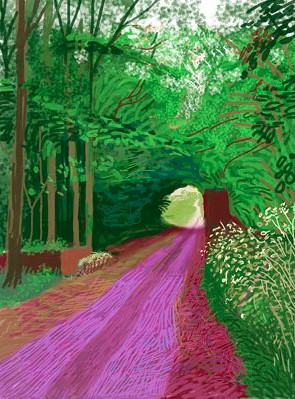
David Hockney The Arrival of Spring in Woldgate – 31 May, No.1 2011 (ipad). hockney 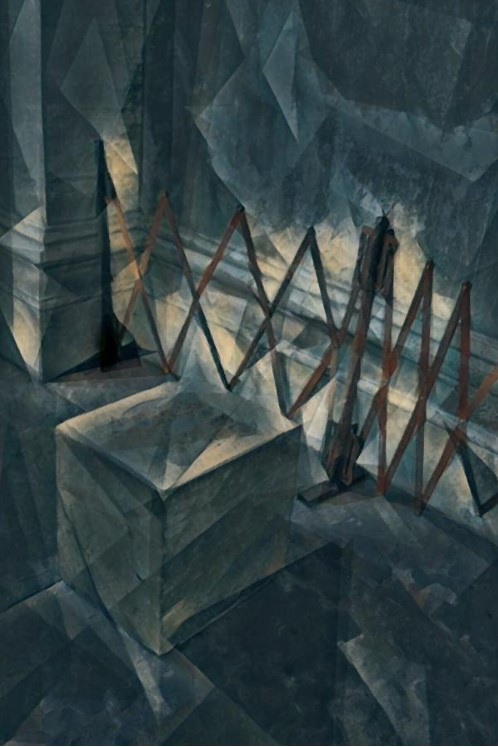
Lee Abbey – Instapainting Conversion 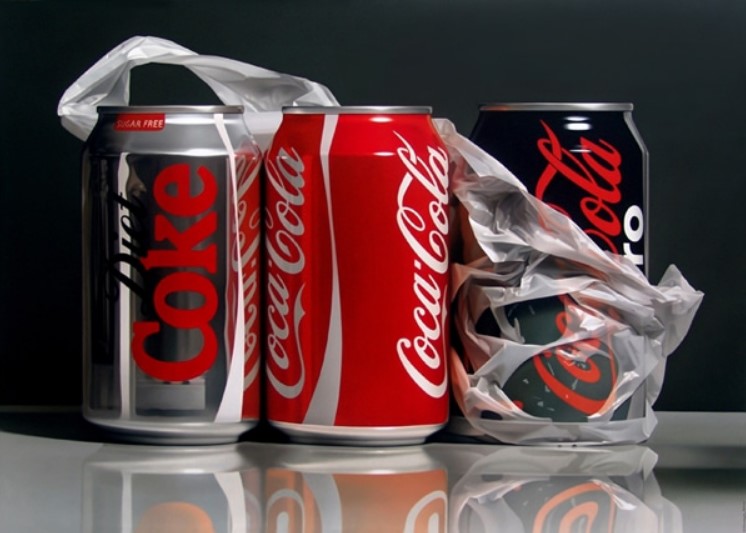
Pedro Campos – Oil on Canvas pedrocampos
One aspect of photography that is unique to the medium is the ‘darkroom’. This exists both in the real and digital sense and although you can argue about the craft of both and it’s ability to manipulate an image it has been used in its simplest form of crop / dodge / burn for decades.
You could also say that the single specific thing about photography is that the device itself has to be there to record an image (the photographer themselves can be remote) this is true of course but the OCA course observes that one of its properties is ‘digitals ability to be stored, retrieved and transferred across networks’ EYV p33. In the case of Thomas Ruff he didn’t have to be the actual photographer at an event, instead he took compressed digitally shared images and saw beauty in the artifacts that compression and re-saving / re-sizing can give.
One day in 2000 I was downloading pictures from the internet to use in my work, and I noticed some of them were broken up into little squares. It created quite a painterly, impressionistic structure, and rendered parts of what was often an ugly image very beautiful. I looked into it, and found the Jpeg file-compression software was responsible . (Benedictus, 2009)
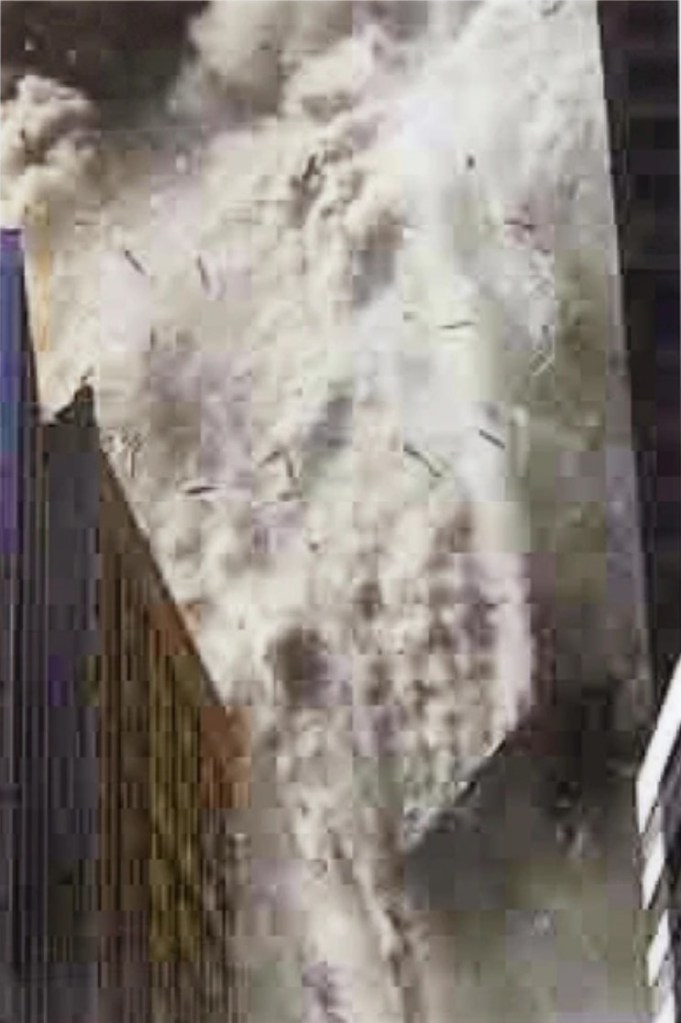
In his review of the book jpegs Joerg Colberg understood that despite his creativity and inventiveness he might not actually be considered a photographer by many traditionalists (this points back to the blurring of the medium specificity of photography). It’s clear that Colberg appreciates the beauty of the images in book form (more so than the ‘pretentious’ gigantic prints) but struggles with the idea behind the series. He feels that despite trying to convince him otherwise the concept remains ‘thin’ and the message obvious. It seems that Colberg is in two minds here. He thinks the images are beautiful but the message behind is not convincing enough. He wants more than just the beauty, he wants a deeper meaning, a grander idea. Sometimes you can’t have both.
David Campany agrees that the photos are beautiful but takes a far deeper dive and in a real sense offers the complex background, meaning and interpretation of ‘jpegs’ that Colberg couldn’t find. He talks little about the actual images but offers us a history of how we got to this point from use of the structure of archives to the grid systems used by artists, through the acceptance of grain as authentic to the as yet (of 2008) unaccepted pixel that give the feeling that it was inevitable someone would deliver this work – it feels like a great prosecutor setting the scene out for the jury leaving them with no doubt of the accused’s guilt only to find the jury scratching their heads and shrugging their shoulders. It does come across as pretentious – far more so than viewing gigantic prints in a gallery. He feels that the representation of unpredictable elements (like smoke / water etc) cannot be mapped or modelled in detail – I’m assuming he means because of there immutability but doesn’t say – that the pixels switching between abstraction and figuration create tension and drama and somehow have something to say about rationality and irrationality in modern life.
I have to say I prefer the frankness of Colbergs review, I can have the same sense he had when viewing ‘jpegs’. Campany offers so many links to get from A to Z you need a far greater understanding of art history than I possess. I smiled when I read the authors note at the end of Campanys review which says that Ruff’s JPEG series doesn’t work very well on the internet or computer screen: the images need to be experienced as printed matter, moving from screen to page or wall (Campany 2008).
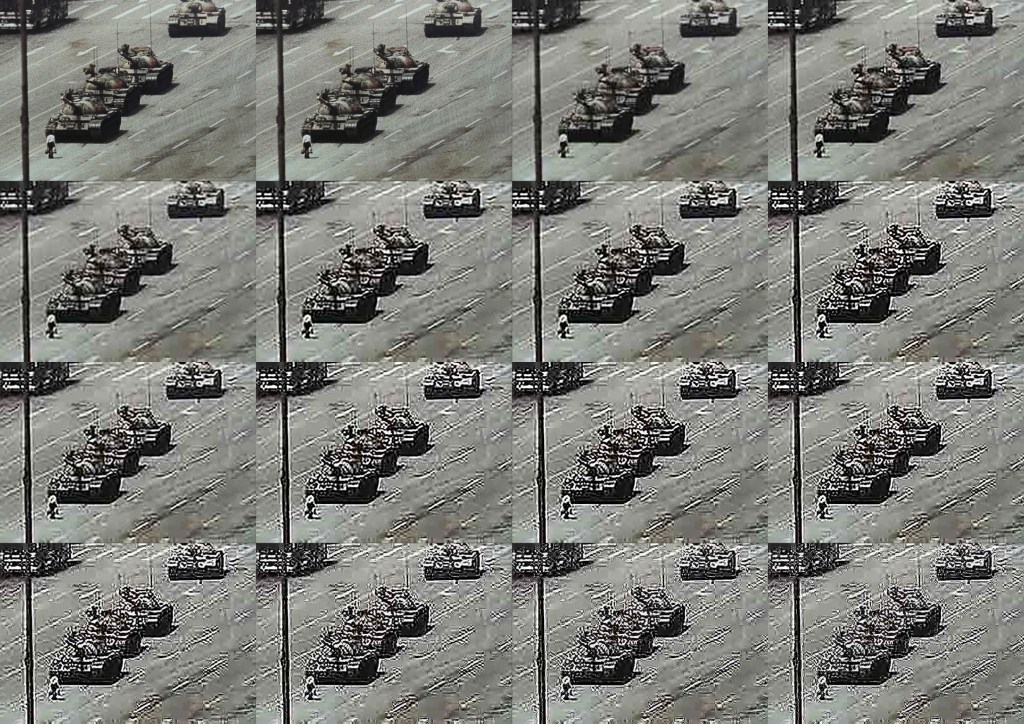
As suggested I tried a few compressed JPEGS. One of my own and a couple of well known images.
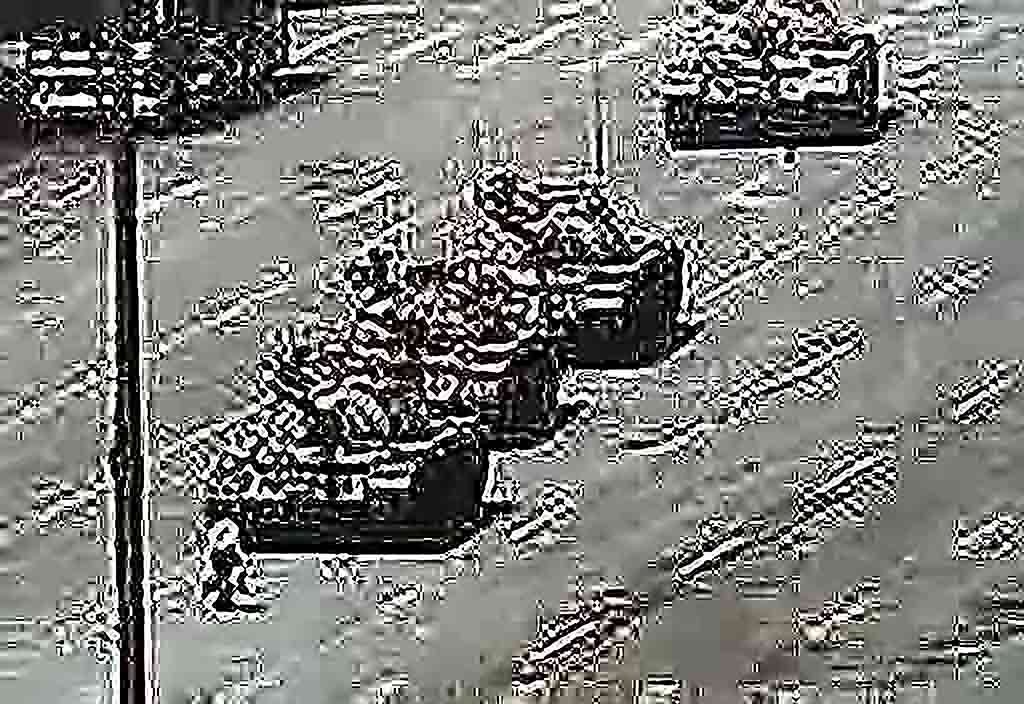
I tried to destroy any means to identify this image without being left with a handful of pixels by continually resizing/saving. I think I failed. This was the 16th resized / compressed saved version. I then asked my daughter if she recognised anything in the picture and immediately she said tanks. Our brains propensity to compare and interpret images with our memories never fails to amaze.
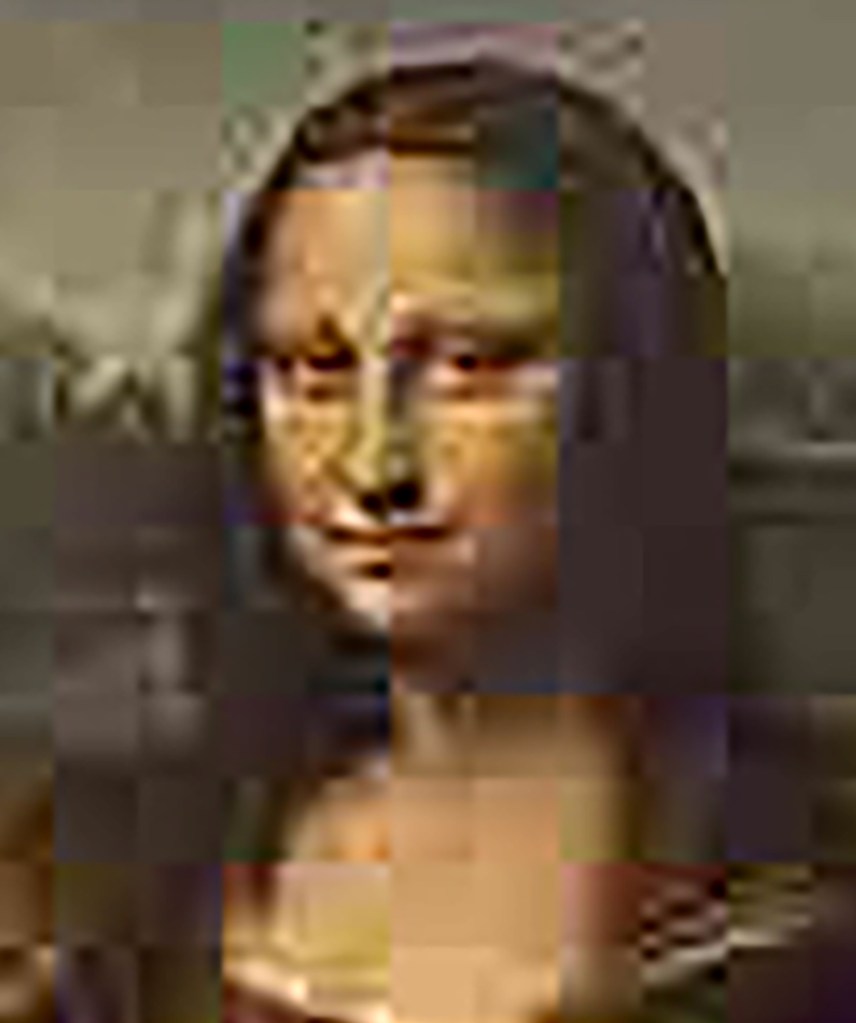
I took the most recognised image in the world distorted it into a dead eyed sneering hag. But it still looks like the Mona Lisa from about 10 ft away.
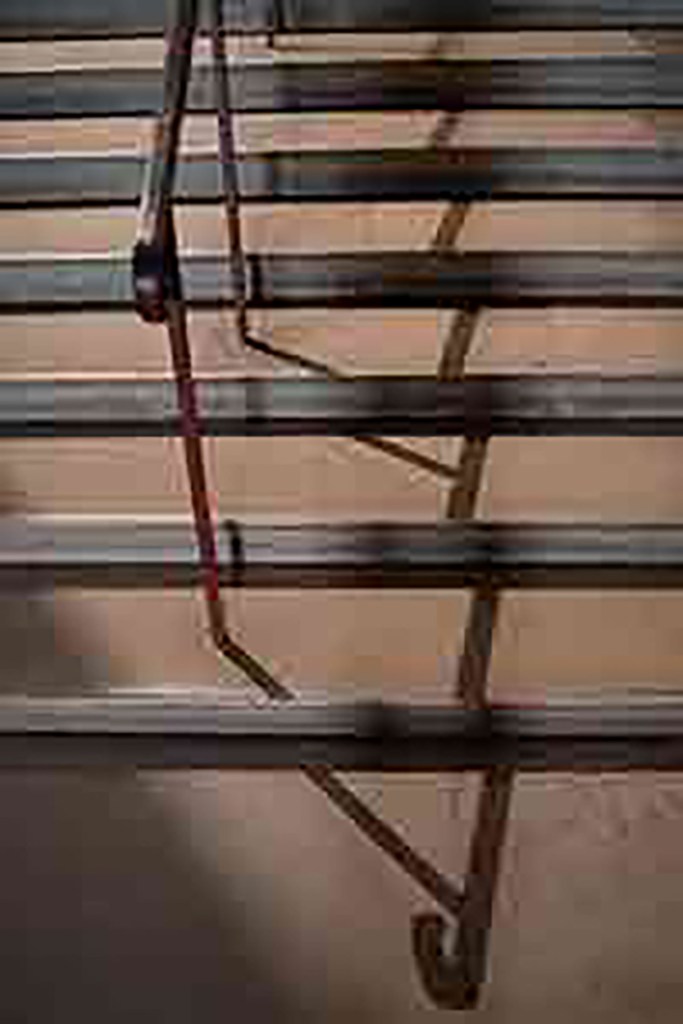
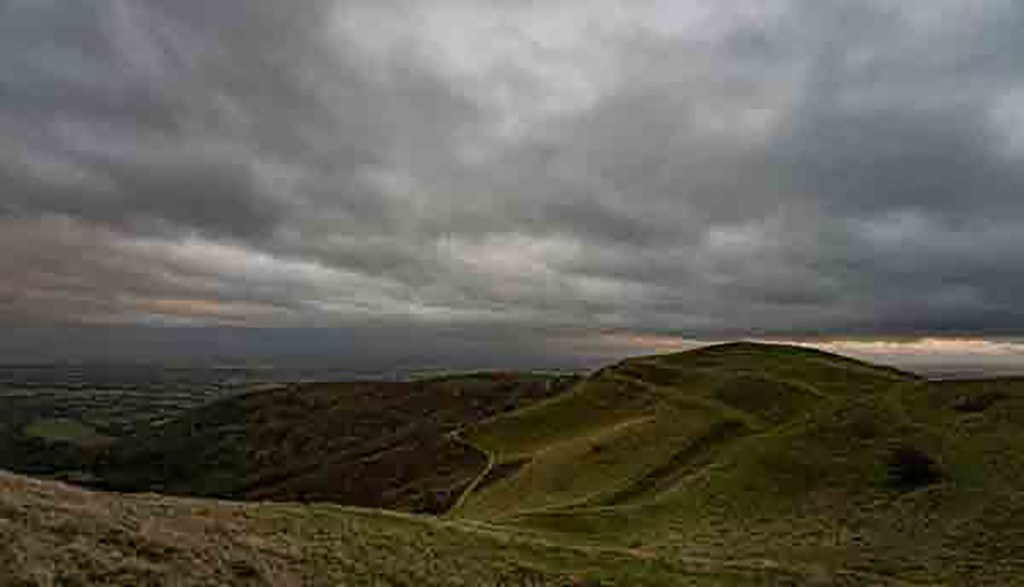
Of the two of my own images I think the first one works best probably because it is already abstract in nature. I chose the second one because many of the ‘jpeg’ images are of mutable phenomenon like smoke and thought it might work because of the amount of cloud but it hasn’t. At least to me. It left me interested to know how many experiments Ruff attempted and whether he found a ‘recipe’.
Bibliography
9/11—Thomas Ruff Reinvents Photography, n.d. 9/11—Thomas Ruff Reinvents Photography [WWW Document], n.d. URL https://fineartmultiple.com/blog/thomas-ruff-photography/ (accessed 3.4.20b).
Benedictus, L., 2009. Thomas Ruff’s best shot: “Pixellated images can be beautiful. I took this in Japan – through a hotel curtain.” The Guardian. Conscientious | Review: jpegs by Thomas Ruff, n.d. Conscientious | Review: jpegs by Thomas Ruff [WWW Document], n.d. URL http://jmcolberg.com/weblog/2009/04/review_jpegs_by_thomas_ruff/ (accessed 2.28.20b).
jpeg bb03 – Thomas Ruff | The Broad, n.d. jpeg bb03 – Thomas Ruff | The Broad [WWW Document], n.d. URL https://www.thebroad.org/art/thomas-ruff/jpeg-bb03 (accessed 2.29.20b).
Ruff Thomas | Jpeg co 01 (2005) | MutualArt, n.d. Ruff Thomas | Jpeg co 01 (2005) | MutualArt [WWW Document], n.d. URL https://www.mutualart.com/Artwork/Jpeg-co-01/B39CAC18BFA8580C (accessed 2.29.20b).
Snapshot, n.d. Snapshot, n.d. Snapshot, n.d. Snapshot, n.d. Tate, n.d. Surface tension – Essay [WWW Document]. Tate. URL https://www.tate.org.uk/art/artists/thomas-ruff-2602/surface-tension (accessed 2.29.20a).
Tate, n.d. Thomas Ruff born 1958 [WWW Document]. Tate. URL https://www.tate.org.uk/art/artists/thomas-ruff-2602 (accessed 3.4.20b).
Thomas Ruff: Aesthetic of the Pixel [WWW Document], 2008. . David Campany. URL https://davidcampany.com/thomas-ruff-the-aesthetics-of-the-pixel/ (accessed 2.28.20).
Arrival of Spring in Woldgate : Digital : Works | David Hockney [WWW Document], n.d. URL http://www.hockney.com/works/digital/arrival-of-spring-woldgate (accessed 3.4.20).
Artwork by Pedro Campos, photorealistic still life paintings,Madrid [WWW Document], n.d. . pedrocampos. URL https://www.pedrocampos.net (accessed 3.4.20).
Dodging and burning, 2019. . Wikipedia.
Instant Photo to Painting Converter Online | Instapainting.com [WWW Document], n.d. URL https://www.instapainting.com/assets (accessed 3.4.20).
iPad : Digital : Works | David Hockney [WWW Document], n.d. URL http://www.hockney.com/works/digital/ipad (accessed 3.4.20).
La Hija de los Danzantes, 1933 | The Photographers’ Gallery [WWW Document], n.d. URL https://thephotographersgallery.org.uk/print-sales/explore-artworks/la-hija-de-los-danzantes-1933 (accessed 3.2.20).
Manuel Álvarez Bravo. The Daughter of the Dancers. 1933 | MoMA [WWW Document], n.d. . The Museum of Modern Art. URL https://www.moma.org/collection/works/52772 (accessed 3.4.20).
Medium Specificity & Flatness – Terms and Concepts | TheArtStory [WWW Document], n.d. . The Art Story. URL https://www.theartstory.org/definition/medium-specificity-and-flatness/ (accessed 3.4.20).
Photography-1-Expressing-Your-Vision-Sample.pdf, n.d. Tod Papageorge | Michael Hoppen Gallery [WWW Document], n.d. URL https://www.michaelhoppengallery.com/artists/78-tod-papageorge/overview/#/artworks/9837 (accessed 3.2.20).
Tod Papageorge – Wikipedia [WWW Document], n.d. URL https://en.wikipedia.org/wiki/Tod_Papageorge (accessed 3.2.20).
jpeg co01 by ThomasRuff (s.d.) At: http://www.artnet.com/artists/thomas-ruff/jpeg-co01-NLvwB69yc25b4NmbIWyVCQ2 (Accessed 19/01/2021).
 Lee Abbey OCA Photography Degree