Place your subject in front of a simple background, using a wide aperture and a moderately long focal length compose a headshot focussing on the eyes.
This is all about focus and blur. The idea of a long focal length with a wide open lens will generate a very narrow plane of focus throwing the rest of the image out of focus completely. Out of focus areas and the effect it has are the subject of much fervour when you read lens reviews – forget how sharp it is – thats a given! What’s the ‘bokeh’ like??
Even smartphones now employ software tricks to emulate the effect giving a ‘professional’ blurred background look to images – something previously impossible due to a combination of the exit pupil and sensor size. To work out the amount of blur you need to know aperture, focal length, distance to subject and background distance from subject. Luckily the internet can help calculate this info – the graph below shows my 2.8 lens at 75mm on my full frame sensor sony a9 against my google pixel 2 xl.
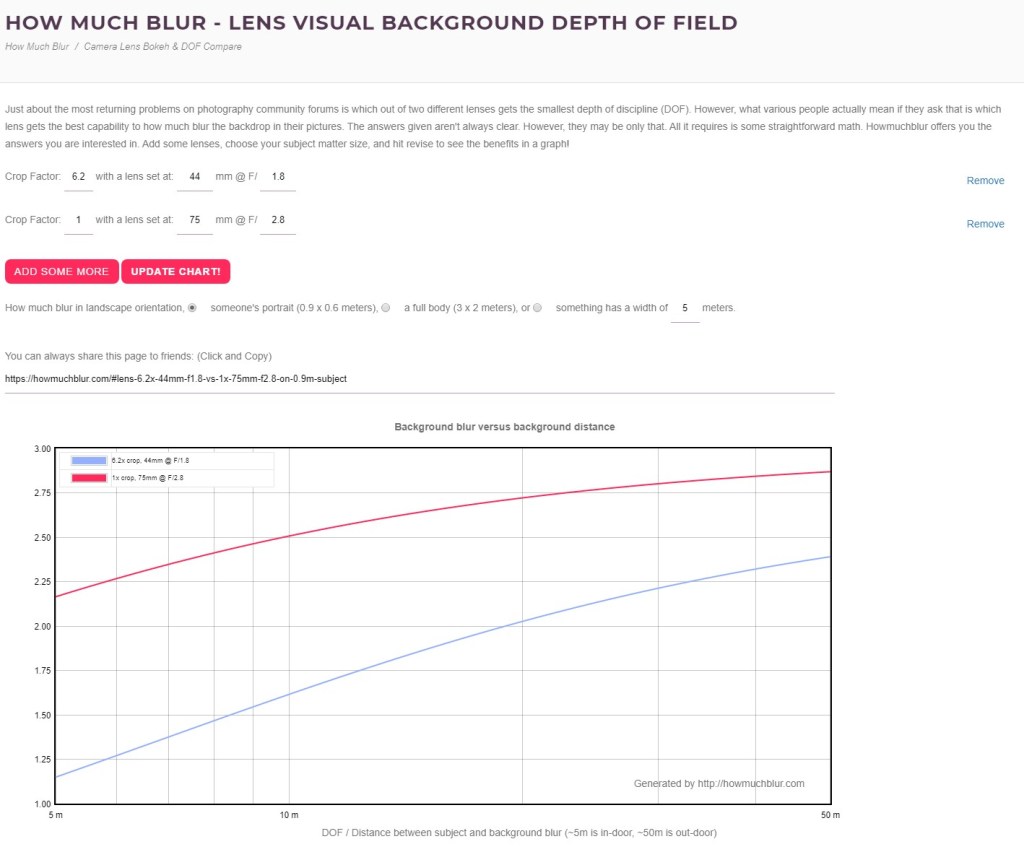
From the graph above you can see that the full frame camera far surpasses a smartphone for ‘blur’ and hence why software is needed to impart the effect on thodr devices. Anyway, I digress….
It is easy to photograph someone in reasonable light with a modern autofocus camera. Some cameras (including the one I use) have the ability to be told to autofocus on the eye (even being able to specify left or right!). Unless you have the shutter speed set incorrectly or the light is dim you should get the subject in focus using the f stop you set. However, taking a photograph in focus is one thing, if you fail to take into account the background details (even blurred) then you can end up with a terrible image…
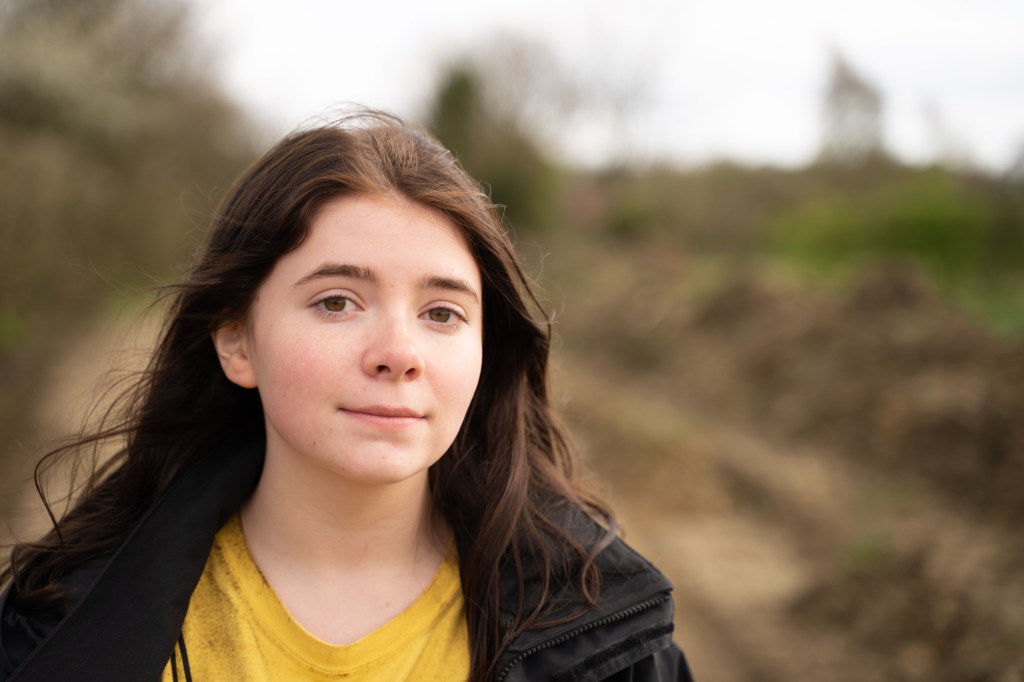
1/320 f2.8 75mm ISO100
The subject is in focus and the background is blurred but it is an ugly distraction. There are blurred bushes and trees sticking up into the white space that are drawing attention away from the subject. The brown colour in the lower half of the image works badly with the subject.
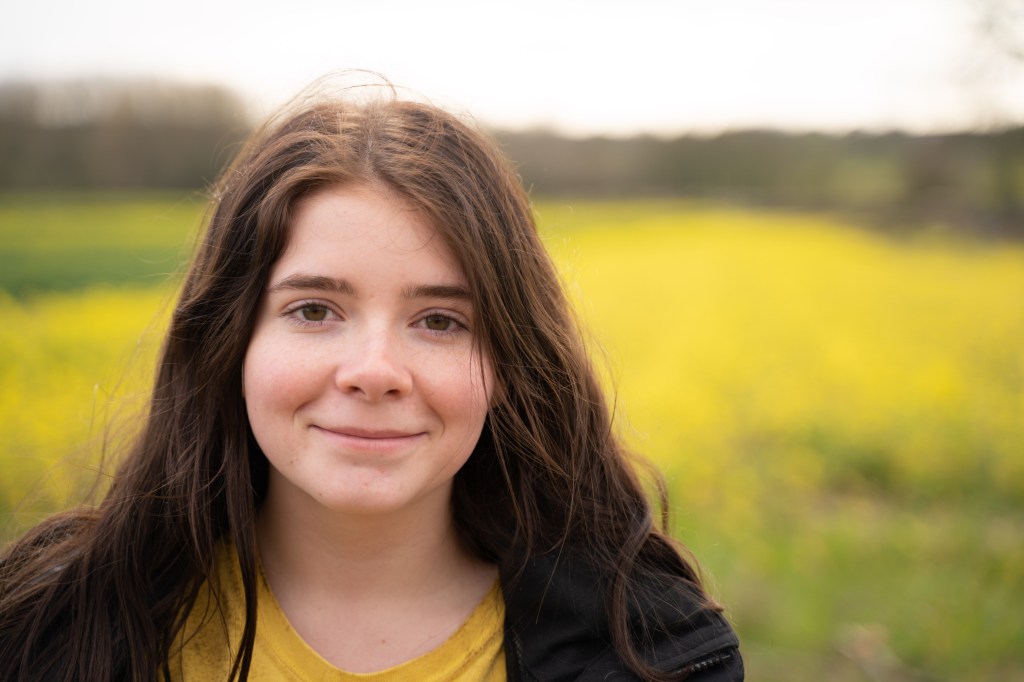
1/250 f2.8 75mm ISO100
This is better as the mess in the background has largely gone (but top right corner should be cropped) but now the composition with the differing layers of the background interferes with the isolation of the subject.
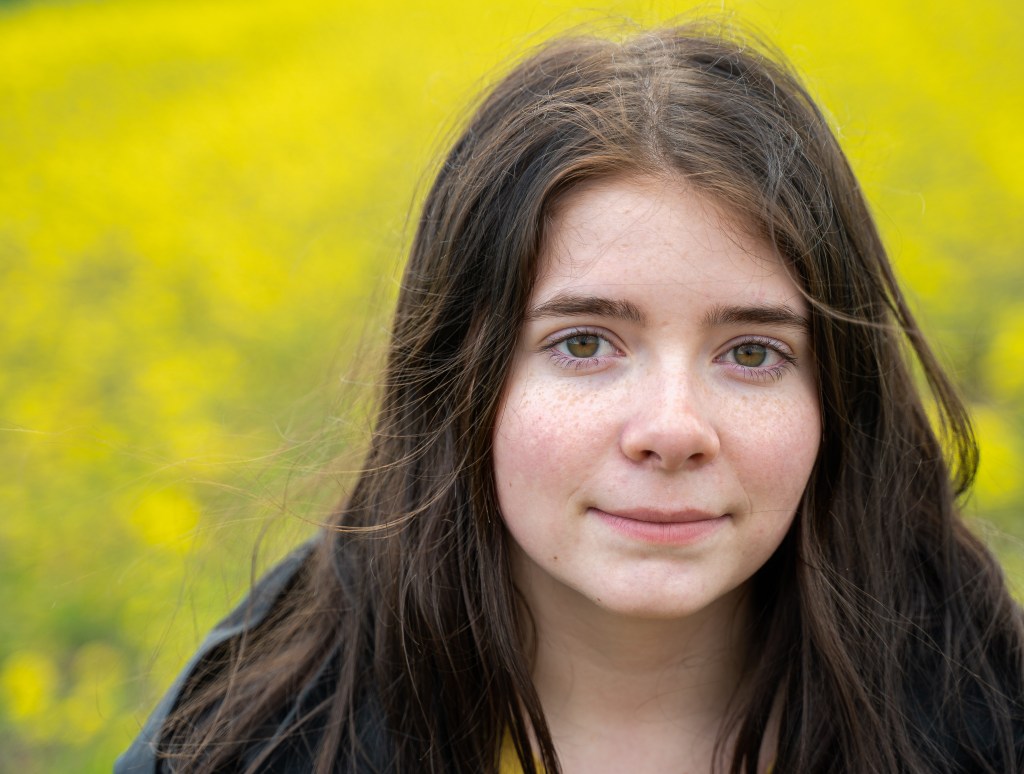
1/250 f2/8 75mm ISO100
Better! The subject is in focus and the background gives enough interest and contrast and adds to the image rather than interfering. The colours give a nice balance to the portrait. Despite being completely unrecognisable individually the elements of the background would still most likely be identified as a field of flowers which I think is important to give context – perhaps f3.5 would have worked better than f2.8.
Reflection
I have a bad habit of not looking beyond the subject when shooting images of people. It’s not something I’m really comfortable with and so I end up giving very limited instructions – I’m looking for the expression rather than thinking about the details of where they are standing and what’s in the frame – I use small talk or try to engage them in conversation to get natural expressions whenever possible. I must make a bigger effort to ensure that all elements in the frame serve a purpose or at the very least do not distract from the main image (e.g something sticking out of their head in the background!) – a couple of minutes just looking before shooting will help enormously here. Compose the image – don’t just shoot it!
 Lee Abbey OCA Photography Degree